23 September 2025
WEEKLY UPDATE ON THE SITUATION IN OCCUPIED CRIMEA – SEPTEMBER 23, 2025
Main news of the week
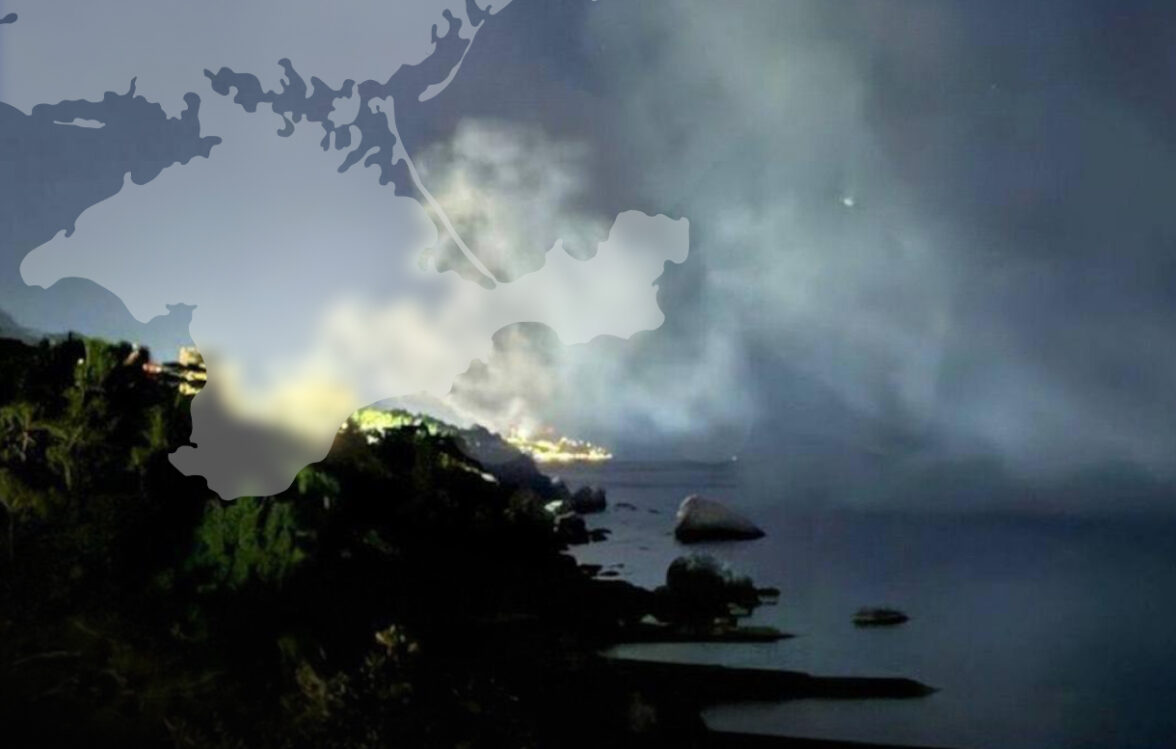
▶ On September 21, in the territory of temporarily occupied Crimea, the special unit of the Defence Intelligence of Ukraine (DIU) “Prymary” (“Ghosts”) struck down two Russian Be-12 Chaika anti-submarine amphibious aircraft. This is the first ever destruction of Be-12 aircraft in history. The Be-12 Chaika amphibious planes are equipped with costly equipment for detecting and combating submarines. Along with the two enemy Be-12 aircraft, during the raid on Crimea the DIU “Prymary” also hit another Russian Mi-8 multirole helicopter. Earlier, the special unit had reported the destruction of three Russian Mi-8 multirole helicopters as well as an expensive Russian 55Zh6U “Nebo-U” radar station.
Crimes committed by the Russian Federation
▶ As of September 2025, Russia has illegally imprisoned 222 people in occupied Crimea on ethnic, religious, and political grounds, including 133 Crimean Tatars.
▶ The occupation “court” imposed a fine of 30,000 rubles on Crimean Tatar journalist and human rights defender Lutfiye Zudiyeva for allegedly engaging in “foreign agent” activities without filing a declaration. In court, the human rights defender stressed that there was no evidence of any “foreign influence,” and that the occupiers unjustifiably labeled her civic and journalistic work as “political.” She emphasized that the case continues years of pressure for covering human rights violations in occupied Crimea and announced her intention to appeal the decision.
▶ The health condition of 65-year-old Crimean Tatar political prisoner Servet Gaziev, who is held in Colony No. 5 in Petropavlovsk-Kamchatsky, is sharply deteriorating. He suffers from chronic illnesses, the aftereffects of a stroke, intestinal problems, and severe weight loss. In the colony, he complains of denial of proper medical care and harsh detention conditions, including insufficient food and a cold climate. Gaziev is a defendant in the so-called “Crimean Muslims case.” In 2023, a Russian court sentenced him to 13 years of illegal imprisonment.
▶ A participant of the so-called “second Dzhankoi group,” Leman Zekeryaev, was unlawfully transferred from Rostov-on-Don to pre-trial detention center No. 3 in the city of Novocherkassk.
▶ The occupation “court” in Kerch sentenced activist and transgender woman Liliya Khvylka in absentia to 5 years and 6 months of imprisonment, accusing her of allegedly “spreading fakes about the Russian army” and “drug possession.” Liliya, who left Crimea back in the autumn of 2022, stated that she plans to file an appeal, explaining that she wants to force the occupation authorities to waste time and resources. The activist is being persecuted for an Instagram post about the Russian missile strike on the Kramatorsk railway station on April 8, 2022, which killed 61 people and injured more than 120. Liliya said she had to flee Crimea because of persecution by the Russian occupiers.
The use of occupied Crimea as a springboard for attacks on Ukraine and the militarization of the peninsula
▶ Spokesman for the Ukrainian Navy Dmytro Pletenchuk reported that Russia is strengthening the air defense of occupied Crimea much more actively than it protects its own oil refineries; all air-defense systems available to the Russian Federation, including the S-500 “Prometey”, have already been deployed on the peninsula. According to him, despite the dense defenses, Ukraine’s Defense Forces continue to strike the occupiers’ military facilities and reduce their rear capabilities, including in the energy infrastructure. In the night of September 11, the Ukrainian Navy hit a communication hub of Russia’s Black Sea Fleet in Crimea.
▶ According to the Ukrainian Air Force, during the week Russian occupiers carried out a series of massive combined attacks on Ukrainian territory. These included 428 strike UAVs of the “Shahed,” “Shahed-Geran,” and “Gerbera” types, as well as 12 ballistic missiles of the “Iskander-M/KN-23” type, launched in part from the territory of occupied Crimea and from the waters of the Black Sea.
Since the start of Russia’s full-scale invasion and its expansion of military aggression across the entire territory of Ukraine, occupied Crimea has been used by Russia as a military base to project aggression in various forms. From the peninsula, the occupiers continue to launch strikes on Ukrainian territory, including attacks on civilian infrastructure.
The resistance movement of Ukrainian citizens in occupied Crimea
▶ For showing solidarity with Ukraine, Russia has already persecuted 1,575 people in occupied Crimea, imposing unlawful administrative penalties in the form of fines and arrests.
▶ The so-called “prosecutor’s office of the occupiers in Crimea” announced that it has submitted to court a criminal case against a 50-year-old resident of Kerch, accusing him of allegedly “justifying terrorism” on the internet. The man allegedly left a comment on a social network in which he justified attacks on administrative buildings of Russian state authorities.
▶ Activists of the “Yellow Ribbon” movement reported that phone inspections of students have begun in Crimean schools to check for so-called “banned” applications. According to them, in several schools in Simferopol the occupation administration is demanding that students delete YouTube, VPN services, Spotify, and other programs that the occupiers label “dangerous,” aiming to use children to control families and identify those who oppose the Russian occupation regime. It is not yet known whether this applies to all schools in the city or is the initiative of individual collaborators.
▶ Activists of the “Crimean Combat Seagulls” continue to expose the personal data of collaborators and Russian war criminals in occupied Crimea.
▶ Female activists of the resistance movement “Zla Mavka” distributed leaflets in Sevastopol, Simferopol, and Alushta, reminding everyone that Crimea is Ukraine. In response to the activists’ actions, the occupation forces increased patrols, deploying additional so-called “mobile groups” to inspect the streets for leaflets, graffiti, or other symbols of resistance. Members of the movement note that such a reaction by the occupiers demonstrates the effectiveness of the Crimean activists’ work.
▶ Activists of the resistance movement “ATESH” held an action in Bilohirsk on the Day of Partisan Glory in temporarily occupied Crimea. They posted resistance leaflets near a television tower used by the occupiers to broadcast propaganda. As the movement’s participants emphasized, the message of the action is clear: the underground in Crimea is active and awaiting de-occupation. The location is also symbolic—a response to the occupiers’ attempts to drown out the voice of resistance with propaganda broadcasts.
The full-scale invasion was marked by a rapid increase in solidarity and resistance actions by residents of occupied Crimea against the Russian occupiers. Residents of occupied territories unite in resistance movements, such as the above-mentioned Yellow Ribbon, Crimean Combat Seagulls, Zla Mavka, and ATESH, or act individually. To suppress the resistance movement of residents in the temporarily occupied territory of Crimea after February 24, 2022, the occupiers actively began to prosecute and bring to administrative responsibility Ukrainian citizens under the article on the so-called “discrediting the Russian army.”
De-occupation of Crimea is integral to ending the war and restoring peace. Ukrainians are doing everything they can to stop the aggressor and protect the entire world from Russia’s criminal actions. This is not a local or regional issue but a threat to the world and international order.