24 June 2025
WEEKLY UPDATE ON THE SITUATION IN OCCUPIED CRIMEA ON JUNE 24, 2025
Main news of the week
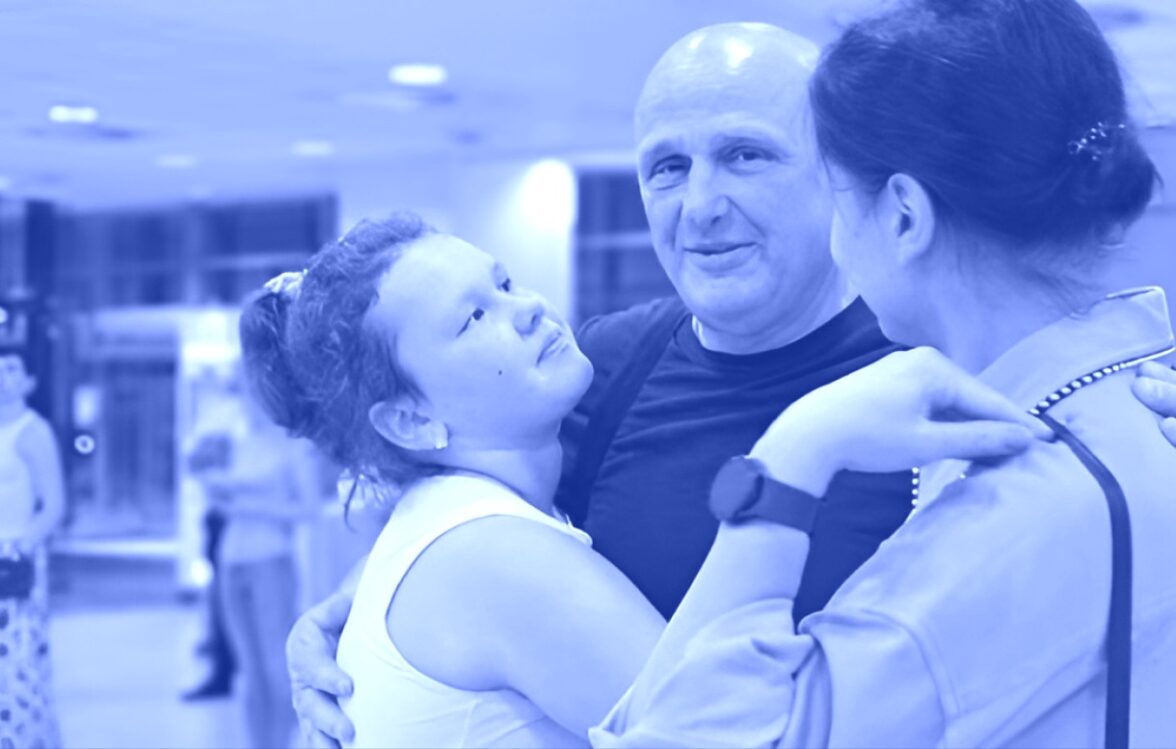
▶ On 20 June, after more than four years of unlawful imprisonment by the Russian occupiers in Crimea, political prisoner Vladyslav Yesypenko — a freelance journalist with the Crimea.Realities project (a project of the Ukrainian Service of Radio Free Europe/Radio Liberty) — was released.
Crimes committed by the Russian Federation
▶ As of June 2025, Russia has illegally imprisoned 221 people in occupied Crimea on ethnic, religious, and political grounds, including 133 Crimean Tatars.
▶ Crimean political prisoner Lenur Seidametov, unlawfully convicted by Russian occupying forces on fabricated charges, has been forcibly transferred from a correctional colony in Yelets (Lipetsk region, Russia) to Pretrial Detention Centre No. 1 in Blagoveshchensk (Amur region, Russia). He is being transported to Colony No. 3 in the village of Srednebelaya — more than 8,000 kilometres from his native Crimea. This practice constitutes a blatant violation of international humanitarian law and the Geneva Conventions. The Russian occupation administration uses such transfers as a means of pressure and psychological exhaustion, isolating political prisoners far from their families and legal counsel.
▶ Crimean political prisoner Ametkhan Abdulvapov is currently being held at Pretrial Detention Centre No. 1 in the Irkutsk region, Russia — over 6,000 kilometres from Crimea. He is in transit and awaiting transfer to a correctional colony, though the exact location of his future detention remains unknown. Earlier, Abdulvapov reported serious health issues, yet there is no confirmation that he has received medical care. The forced transfer of a political prisoner from occupied territory deep into Russia, his isolation, the uncertainty surrounding his detention, and the neglect of his medical needs constitute a grave violation of international humanitarian law.
The use of occupied Crimea as a springboard for attacks on Ukraine and the militarization of the peninsula
▶ In temporarily occupied Kerch, Russian occupation forces have launched a campaign to recruit local students into higher military educational institutions subordinate to the Ministry of Defence of the Russian Federation. From 16 June to 11 July 2025, a mobile team is operating in the city to conduct professional selection for candidates to enroll in military academies of the occupying state. Enlisting youth from occupied territories into the army of the aggressor state constitutes a gross violation of the Fourth Geneva Convention. The forced or deliberately orchestrated involvement of civilians from occupied Crimea in the Russian armed forces is a war crime with consequences at both national and international levels.
▶ Activists from the ATESH resistance movement report that Russian forces at the Saky military airfield in temporarily occupied Crimea are constructing concrete shelters for aircraft and rapidly installing additional air defence systems and drone countermeasures. According to resistance agents, occupation troops fear further precision strikes from Ukraine’s Armed Forces, which have already demonstrated the capability to target deep rear positions. The fortification works are being carried out hastily, violating construction standards and with poor workmanship. ATESH activists also reported the movement of Russian military engineering equipment between temporarily occupied Feodosiia and Dzhankoi. According to their information, the occupiers are deliberately spreading false claims that the equipment is being transferred to the Kherson region, while the true intent is to mislead Ukraine’s Armed Forces.
▶ According to the Air Force of the Armed Forces of Ukraine, Russian occupation forces carried out a series of large-scale combined attacks across Ukraine over the past week. These included the use of 520 strike UAVs of the Shahed, Shahed-Geran, and Herbera types, as well as 4 Kalibr cruise missiles. As a result of these mass attacks, residential and industrial infrastructure in several regions of Ukraine sustained damage.
Since Russia launched a full-scale invasion and spread its armed aggression throughout Ukraine, occupied Crimea has been used by Russia as a military base for spreading aggression in various forms. From the peninsula, the occupiers continue to launch attacks on the territory of Ukraine, including on civilian infrastructure.
The resistance movement of Ukrainian citizens in occupied Crimea
▶ Russia has already prosecuted 1382 people in occupied Crimea for expressing solidarity with Ukraine, who are being subjected to administrative penalties in the form of illegal fines and arrests.
▶ A resident of occupied Simferopol was detained by the Russian occupation administration after allegedly criticizing Russia’s war against Ukraine while in a hospital ward. He was accused of “discrediting the armed forces of the Russian Federation” and fined 30,000 rubles.
▶ Activists of the Yellow Ribbon resistance movement continue their efforts in Crimea. New posters, stickers, and ribbons with pro-Ukrainian messages appeared in Simferopol and Sevastopol. The activists also reported that at a children’s camp near Yevpatoriia, where schoolchildren from the temporarily occupied part of Zaporizhzhia region were brought, children are prohibited from using phones or calling their parents independently — communication is allowed only through camp counselors. According to the activists, these restrictions create an environment of isolation, depriving children of the ability to seek help, file complaints, or stay in touch with their families. They also reported increased inspections by Russian security forces in occupied Armiansk. In recent weeks, officers have been going door-to-door checking who is officially registered versus who actually resides there. Under the pretext of locating displaced persons, the so-called “local administration” appears to be compensating for a lack of control, as they lack comprehensive data on the whereabouts and actions of tens of thousands of people who remained after the occupation began.
▶ Activists of the Crimean Combat Seagulls resistance group continue to expose the personal data of collaborators and Russian war criminals in occupied Crimea.
▶ The resistance group Zla Mavka continues publishing its diaries describing daily life under occupation. In addition, activists have distributed poems by Ukrainian writers in occupied Simferopol to remind people that this is and remains Ukraine.
The full-scale invasion was marked by a rapid increase in solidarity and resistance actions by residents of occupied Crimea against the Russian occupiers. Residents of occupied territories unite in resistance movements, such as the above-mentioned Yellow Ribbon, Crimean Combat Seagulls, Zla Mavka, and ATESH, or act individually. To suppress the resistance movement of residents in the temporarily occupied territory of Crimea after February 24, 2022, the occupiers actively began to prosecute and bring to administrative responsibility Ukrainian citizens under the article on the so-called “discrediting the Russian army.”
De-occupation of Crimea is integral to ending the war and restoring peace. Ukrainians are doing everything they can to stop the aggressor and protect the entire world from Russia’s criminal actions. This is not a local or regional issue but a threat to the world and international order.