25 November 2025
WEEKLY UPDATE ON THE SITUATION IN OCCUPIED CRIMEA ON NOVEMBER 25, 2025
Main news of the week
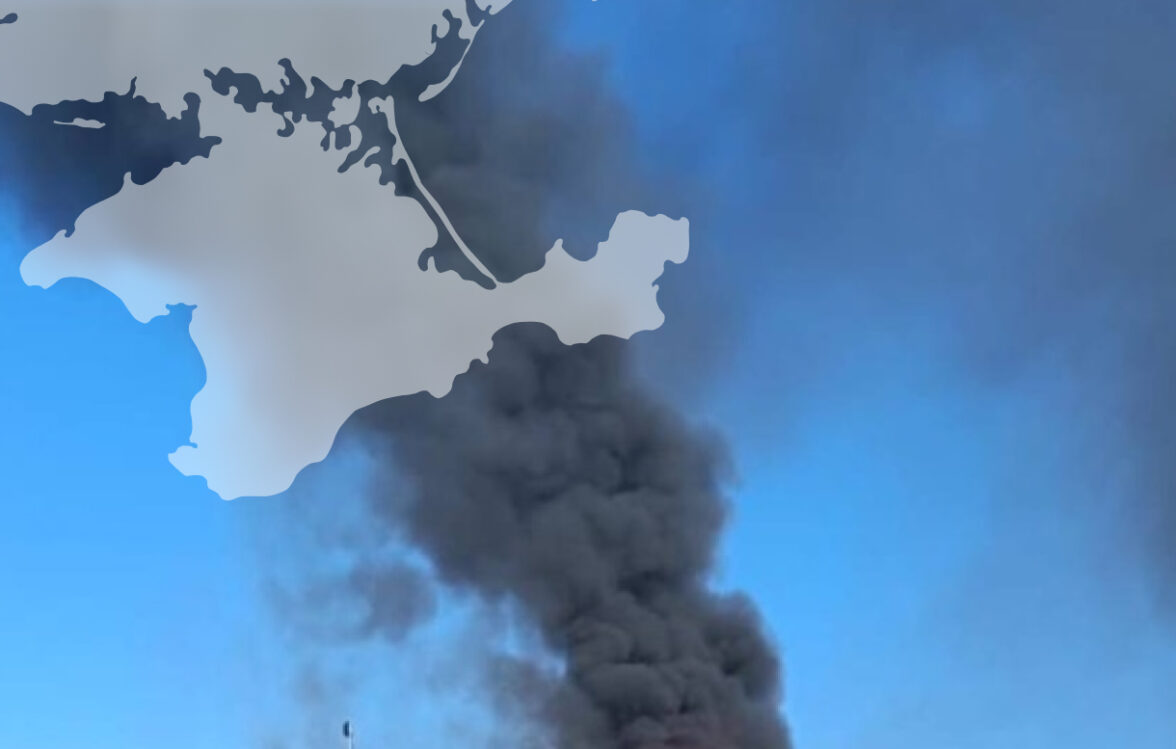
▶ The Defence Intelligence of the Ministry of Defence of Ukraine reported the conduct of a special operation on the temporarily occupied Crimean Peninsula, during which the “Prymary” unit struck a number of Russian military targets, including a Ka-27 ship-based helicopter, the “Lira-A10” airfield radar complex, the 55Zh6U “Nebo-U” radar station, the “Nebo-SV” dome-configured radar system, and the P-18 “Terek” radar.
▶ On the nights of 22 and 23 November, the 1st Separate Centre of Unmanned Systems struck several strategic facilities of the occupying forces in Crimea, including the Krasnoperekopsk “Brom” chemical plant and the “Krasnoperekopsk” electrical substation.
Crimes committed by the Russian Federation
▶ As of November 2025, Russia has unlawfully imprisoned 224 individuals in the occupied Crimea on ethnic, religious, and political grounds, including 133 Crimean Tatars.
▶ Political prisoner Uzeir Abdullayev, convicted in the case of the so-called “first Simferopol group,” has been placed on a special monitoring register in Penal Colony No. 16 in Salavat as “prone to escape, terrorism, extremism, and assaulting staff.” There are no grounds for most of these designations, and the enhanced supervision includes round-the-clock inspections and photo and video monitoring, creating constant pressure. Abdullayev suffers from serious health issues: since 2018, he has had persistent leg swelling and pain, but no diagnosis has been established. Medical examinations and tests are conducted, yet neither he nor his family is informed of the results, with officials citing the “classified” status of his medical records. He receives treatment largely thanks to the medications provided by his family. He has been placed in a punishment cell multiple times, with the administration citing the article of his conviction as the reason. Prisoners in the colony must broadly cover their basic living expenses at their own expense.
▶ Political prisoner Ayder Saledinov has been transferred to a strict-regime sector (SUS) for one year after spending more than a month and a half in a punishment cell. He remained in the SHIZO for one month and twenty days. After completing another 15-day term, he received new penalties, including for performing namaz, and was transferred to the SUS. During his time in isolation, Saledinov’s chronic conditions worsened, including problems with his tonsils, kidneys, and joints. Medical care in the colony is limited, so essential medication is provided by his relatives. The colony also has heating problems, causing prisoners to suffer from the cold frequently.
▶ Crimean Tatar political prisoner Rustem Seitmemetov, sentenced by a Russian court to 13 years of imprisonment, has been transferred from Penal Colony No. 16 in Bashkortostan to a hospital for a scheduled medical examination. Over the past year, he experienced sudden spikes in blood pressure, arrhythmia, and headaches. In 2024, he suffered a myocardial infarction and underwent coronary bypass surgery, after which he was diagnosed with cataracts and assigned a Group III disability status. His dental problems have worsened, and he has developed severe skin itching. His family notes that his health has significantly deteriorated over more than five years of imprisonment.
▶ Crimean Tatar political prisoners Fevziye Osmanova, Elviza Aliyeva, Esma Nimetulaeva, and Nasiba Saidova have been returned from a compulsory psychiatric examination to Pre-Trial Detention Centre No. 1 in Simferopol. The women had been undergoing inpatient evaluation since 23 October.
The use of occupied Crimea as a springboard for attacks on Ukraine and the militarization of the peninsula
▶ Activists of the “ATESH” movement reported conducting reconnaissance in the Hrafska and Sukharna bays of Sevastopol. According to the movement, these bays remain key logistics hubs for Russian forces, hosting facilities for the maintenance of military equipment, storage areas, technical supply zones, and fleet logistics units. The vicinity also contains the 17th Arsenal of the Russian Black Sea Fleet and the 3413th Missile-Technical Base of the Russian Navy, underscoring the strategic importance of the area for Russia’s logistics infrastructure in the Black Sea region.
▶ According to the Air Force of the Armed Forces of Ukraine, Russian occupying forces carried out a series of massive combined attacks across Ukraine during the week. In particular, they launched 1,555 strike UAVs of the “Shahed,” “Shahed-Geran,” and “Gerbera” types, 1 “Iskander-M” ballistic missile, and 15 “Kalibr” cruise missiles, including from the territory of occupied Crimea and the waters of the Black Sea. The Russian invaders continue to target Ukraine’s energy infrastructure ahead of winter, conducting yet another wave of terror against the civilian population.
Since the beginning of Russia’s full-scale invasion and the expansion of its military aggression across the entire territory of Ukraine, occupied Crimea has been used by Russia as an army base for projecting aggression in various forms. From the territory of the peninsula, the occupiers continue to launch strikes on Ukraine, including against civilian infrastructure.
The resistance movement of Ukrainian citizens in occupied Crimea
▶ For showing solidarity with Ukraine, Russia has already persecuted 1,618 people in the occupied territory of Crimea, imposing illegal administrative penalties such as fines and arrests.
▶ Activists of the “Yellow Ribbon” movement expressed their support for the Fourth Parliamentary Summit of the Crimea Platform taking place in Stockholm. They sent a “greeting from Crimea,” emphasising that the peninsula is part of Ukraine and that hundreds of thousands of people in the temporarily occupied territories are awaiting de-occupation. In their statement, the activists called for continued resistance and wished the Ukrainian delegation strength and resilience in defending the state’s interests, underscoring that residents of the occupied regions stand behind their position.
▶ Activists of the “Crimean Combat Seagulls” continue to expose the personal data of collaborators and Russian war criminals in the occupied Crimea.
The full-scale invasion has been marked by a sharp increase in acts of solidarity and resistance by residents of occupied Crimea against the Russian occupiers. Residents of the occupied territories unite in resistance movements such as the aforementioned “Yellow Ribbon,” “Crimean Combat Seagulls,” “Zla Mavka,” “ATESH,” or act individually.To suppress the local resistance movement on the temporarily occupied territory of Crimea after 24 February 2022, the occupiers began actively persecuting and subjecting Ukrainian citizens to administrative liability under the article on so-called “discrediting the Russian Armed Forces.”
The de-occupation of Crimea is an essential part of ending the war and restoring peace. Ukrainians are doing everything possible to stop the aggressor and protect the entire world from Russia’s criminal actions. This is not a local or regional issue — Russia’s aggression poses a threat to the whole world and the international order.