25 February 2025
WEEKLY UPDATE ON THE SITUATION IN OCCUPIED CRIMEA ON FEBRUARY 25, 2025
Main news of the week
▶ The health condition of Crimean political prisoner Tofik Abdulhaziiev, who was unlawfully sentenced by Russia to 12 years in prison and suffers from tuberculosis, has sharply deteriorated. Doctors have confirmed damage to his lymphatic system, with inflammation and necrosis of the intrathoracic lymph nodes.
Crimes committed by the Russian Federation
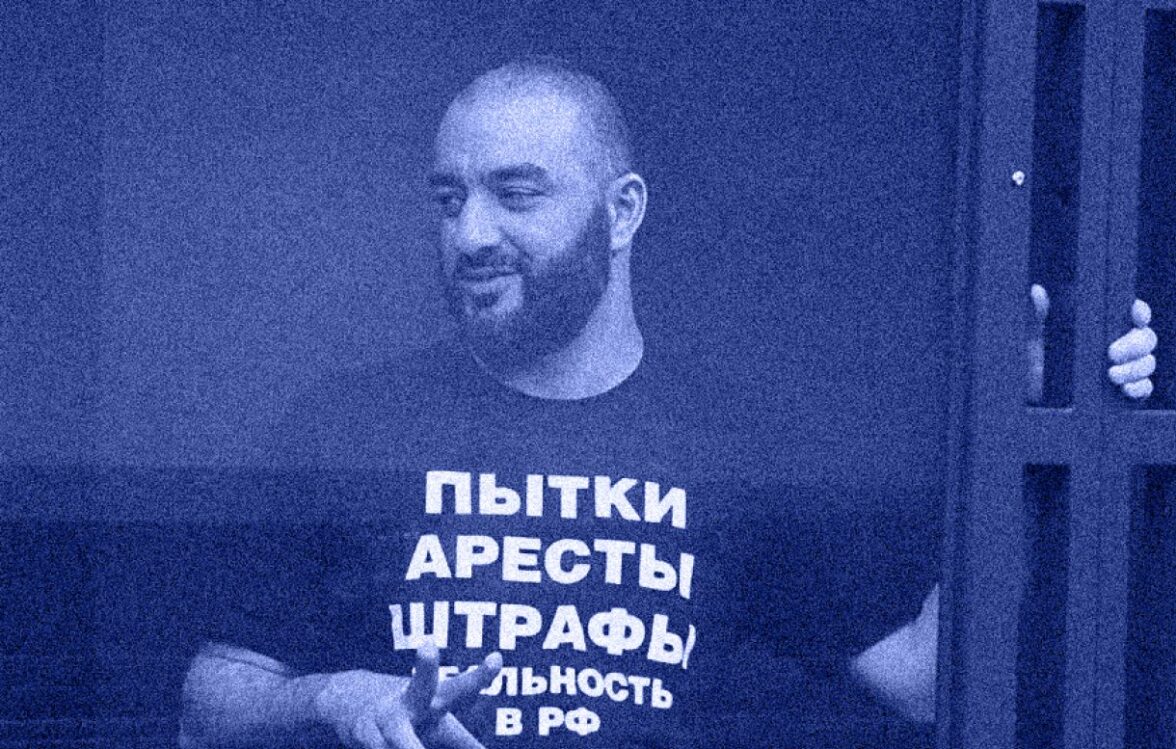
▶ As of February 2025, Russia has illegally imprisoned 221 people in occupied Crimea on ethnic, religious, and political grounds, including 137 Crimean Tatars.
▶ Activist Iryna Horobtsova, whom Russia unlawfully abducted to Crimea and illegally sentenced to 10 years on fabricated charges, is being transferred to Moscow. During her unlawful imprisonment in Russia, Iryna’s health has significantly deteriorated. Initially, she lost 20 kilograms, and she is now suffering from severe headaches and a diagnosed aneurysm.
▶ Illegally imprisoned Crimean political prisoner Remzi Bekirov is being denied the right to perform namaz in a Russian prison. Each time he prays, he is sent to a punitive isolation cell. The administrations of Russian penal colonies systematically prohibit Muslim political prisoners from praying and forbid them from reading the Quran.
The use of occupied Crimea as a springboard for attacks on Ukraine and the militarization of the peninsula
▶ Agents of the ATESH movement monitor the movement of fuel used by Russian occupiers in Crimea to maintain their military equipment daily. This work has repeatedly helped Ukraine’s Armed Forces successfully eliminate entire enemy convoys. Activists relay all gathered information to the relevant Ukrainian authorities.
▶ According to the Air Force of the Armed Forces of Ukraine, Russian occupiers carried out a series of attacks across Ukraine over the past week. These included 452 strikes using Shahed-type and unidentified drones, five ballistic missiles (Iskander-M/KN-23), and two cruise missiles (Iskander-K), launched from occupied Crimea and the Black Sea. As a result of Russian missile and drone strikes, Ukrainian civilians have suffered casualties.
Since Russia launched a full-scale invasion and spread its armed aggression throughout Ukraine, occupied Crimea has been used by Russia as a military base for spreading aggression in various forms. From the peninsula, the occupiers continue to launch attacks on the territory of Ukraine, including on civilian infrastructure.
Militarization of public space and education
▶ Russian occupiers in Crimea are involving children in military activities. Students of the Kerch Marine Engineering Technical School are being forced to produce anti-drone nets for Russian occupation forces. In just one week, students have already manufactured and sent 10 such nets to the front.
▶ At the Kerch State Maritime Technical University, the occupation administration grants scholarships to students only if they register for military service. Essentially, students are being coerced into accepting potential conscription into the occupation army for Russia’s war against Ukraine in exchange for basic financial support.
▶ In temporarily occupied Simferopol, Russian occupiers have introduced an educational practicum called “Unmanned Technologies” at a local school, where students are taught the basics of drone operation. Schoolchildren are trained to work with simulators, operate FPV drones of the “Tiny Whoop” class, and learn the fundamental principles of UAV usage.
Since the beginning of Crimea’s temporary occupation, the Russian occupation regime has actively militarized education and integrated its ideology into the educational and extracurricular space. This effort is aimed at altering children’s identities and raising them in the spirit of “Russian patriotism.”
The resistance movement of Ukrainian citizens in occupied Crimea
▶ Russia has already prosecuted 1242 people in occupied Crimea for expressing solidarity with Ukraine, who are being subjected to administrative penalties in the form of illegal fines and arrests.
▶ A resident of Simferopol expressed criticism of Russian occupiers in Crimea on social media. In response, Russian forces accused him of “inciting extremist actions,” and he now faces up to five years in prison.
▶ Activists from the Yellow Ribbon movement carried out nighttime resistance actions, placing Ukrainian patriotic stickers and ribbons on the streets of several districts in Simferopol and Sevastopol. In the lead-up to February 24—the third anniversary of Russia’s full-scale invasion of Ukraine—activists in Yevpatoriia, Yalta, Simferopol, Sevastopol, Armiansk, Kerch, Sudak, and Alushta left messages for the world, reaffirming that Crimea is Ukraine: “UKRAINE WILL RESIST”. The activists clearly say: “We fight, and we await liberation. These symbols of resistance are a reminder to both the occupiers and our allies: we are here, we have not surrendered—nor will we. We have become more experienced, stronger, and more resilient.”
▶ Activists from the Crimean Combat Seagulls movement continue to expose the personal data of Russian war criminals and collaborators, as well as collect intelligence on the locations of Russian military facilities in occupied Crimea.
▶ The Zla Mavka resistance movement continues to maintain its diaries, documenting the realities of life under occupation. In addition, activists have disseminated lines from Ukrainian poetry in occupied Yevpatoriia and Sevastopol as a form of cultural resistance.
The full-scale invasion was marked by a rapid increase in solidarity and resistance actions by residents of occupied Crimea against the Russian occupiers. Residents of occupied territories unite in resistance movements, such as the above-mentioned Yellow Ribbon, Crimean Combat Seagulls, Zla Mavka, and ATESH, or act individually. To suppress the resistance movement of residents in the temporarily occupied territory of Crimea after February 24, 2022, the occupiers actively began to prosecute and bring to administrative responsibility Ukrainian citizens under the article on the so-called “discrediting the Russian army”.
De-occupation of Crimea is integral to ending the war and restoring peace. Ukrainians are doing everything they can to stop the aggressor and protect the entire world from Russia’s criminal actions. This is not a local or regional issue but a threat to the world and international order.