27 May 2025
WEEKLY UPDATE ON THE SITUATION IN OCCUPIED CRIMEA ON MAY 27, 2025
Main news of the week
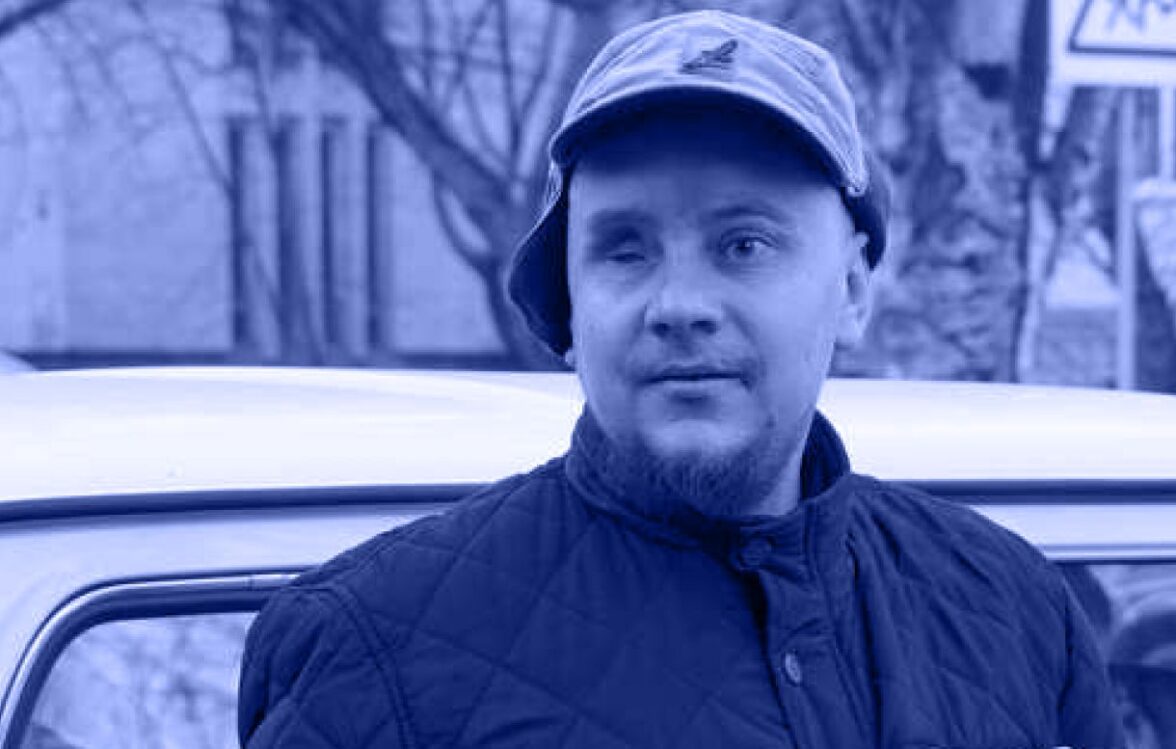
▶ Visually impaired Crimean political prisoner Oleksandr Sizikov was released due to health reasons after eight months of unlawful detention by Russian occupation forces. In May 2023, a Russian occupation “court” illegally sentenced him to 17 years in prison despite his medical condition. In 2024, the occupiers unlawfully transferred Oleksandr to Russia — more than four thousand kilometers from Crimea.
Crimes committed by the Russian Federation
▶ As of May 2025, Russia has illegally imprisoned 222 people in occupied Crimea on ethnic, religious, and political grounds, including 133 Crimean Tatars.
▶ Crimean Tatar political prisoner Ansar Osmanov, unlawfully sentenced by Russian occupiers to 20 years in prison, has been transferred to Penal Colony No. 2 in the city of Vladimir, Russian Federation. For over three weeks, his family had no contact with him.
▶ Political prisoner Serhii Tsyhipa, unlawfully sentenced to 13 years of imprisonment, is being systematically sent to a punishment cell in High-Security Colony No. 3 in the city of Skopin, Ryazan region. He is punished for fabricated minor infractions — such as a candy in his nightstand, an unbuttoned shirt, or his hands not being “behind his back.”
▶ Crimean Tatar political prisoner Osman Arifmemetov has been transferred from a correctional facility in Minusinsk to a detention center in Chelyabinsk, Russian Federation. In a letter to his family, he noted that he is expected to be moved to a penal colony in the Orenburg region — more than 2,000 kilometers from Crimea. According to the prisoner, the conditions of the transfer are extremely harsh.
▶ Crimean Tatar political prisoner Rustem Sheikhaliev has been unlawfully transferred to a correctional facility in the city of Blagoveshchensk, Amur region, Russia — over 8,000 kilometers from his native Crimea. Such transfers of Ukrainian citizens from occupied territories to Russian penal colonies violate international law and the protections of civilians during armed conflicts.
▶ In temporarily occupied Chornomorske, since February 2025, Russian occupation forces have been unlawfully detaining Tamara Chernukha, a paramedic, who was arrested on fabricated charges of “state treason.” Her whereabouts have not been officially confirmed, and her relatives are being denied access and information. In addition, she suffers from serious health conditions, and prolonged detention without medical care or adequate nutrition poses a threat to her life.
The use of occupied Crimea as a springboard for attacks on Ukraine and the militarization of the peninsula
▶ Activists from the ATESH resistance movement have identified an ammunition depot located on the grounds of a former radiological, chemical, and biological protection (RCBP) facility in temporarily occupied Sevastopol. According to their reports, the site is carefully camouflaged to create the illusion that the premises are no longer used. At the same time, observation posts have been established around the facility at key positions. The activists also reported that in the temporarily occupied peninsula, Russian armed forces are preparing for a possible large-scale drone strike. According to ATESH agents, reconnaissance of Russian air defense positions in occupied Sevastopol revealed active preparations: the movement of mobile fire teams, equipment checks, and the delivery of ammunition.
▶ According to the Air Force of the Armed Forces of Ukraine, over the past week, Russian occupation forces carried out a series of large-scale combined attacks across Ukrainian territory. These included 793 strike UAVs of the Shahed, Shahed-Geran, and Herbera types; 55 air- and sea-launched cruise missiles (Kh-101, Kalibr); one Kh-22 cruise missile; and 20 ballistic missiles of the Iskander-M/KN-23 type — some launched from occupied Crimea and the waters of the Black Sea. Most regions of Ukraine came under attack. Residential and industrial facilities were damaged, dozens of civilians were injured, and at least three children were killed.
Since Russia launched a full-scale invasion and spread its armed aggression throughout Ukraine, occupied Crimea has been used by Russia as a military base for spreading aggression in various forms. From the peninsula, the occupiers continue to launch attacks on the territory of Ukraine, including on civilian infrastructure.
Militarization of public space and unlawful conscription
▶ In the temporarily occupied city of Saky, at the Northern Lights sanatorium, a facility has been set up to produce camouflage nets for Russian armed forces units operating in the occupied Kherson region. This effort involves not only staff, but also Russian tourists, schoolchildren, public sector employees, and parishioners of the Russian Orthodox Church. According to members of the resistance movement, students at School No. 21 in temporarily occupied Simferopol have also been forced to weave nets for Russian troops.
▶ In the temporarily occupied Crimea, Russian security forces are conducting raids on construction sites to identify undocumented migrants and individuals avoiding service in the Russian military. These so-called “inspections” take place approximately every two weeks. Those not registered for military service are being compelled to report to enlistment offices, often receiving draft notices on the spot. Employers are threatened with criminal liability if they fail to cooperate.
Since the beginning of the temporary occupation of Crimea, the Russian occupation regime has actively pursued the militarization of education and the imposition of its ideology within educational and public spaces, aimed at reshaping children’s identities and raising them in the spirit of “Russian patriotism.” Moreover, the unlawful conscription of Ukrainian citizens in the temporarily occupied territory of Crimea constitutes a grave violation of international humanitarian law, particularly the Fourth Geneva Convention. The Russian Federation is forcibly conscripting residents of the peninsula into its armed forces — an act that qualifies as a war crime.
The resistance movement of Ukrainian citizens in occupied Crimea
▶ Russia has already prosecuted 1350 people in occupied Crimea for expressing solidarity with Ukraine, who are being subjected to administrative penalties in the form of illegal fines and arrests.
▶ A resident of occupied Yevpatoriia posted slogans on public property in the city calling for the de-occupation of Crimea and supporting Ukraine’s territorial integrity. Russian occupation forces detained the man, labeling him a so-called “saboteur,” and opened a criminal case against him for alleged “vandalism.”
▶ A woman in occupied Crimea was detained by Russian security forces for posting anti-Russian messages in a residential building chat. An occupation “court” unlawfully fined her 50,000 rubles for the alleged “discrediting of the Russian armed forces.”
▶ Activists from the Yellow Ribbon movement continue their resistance by spreading Ukrainian symbols across various cities in Crimea. Stickers and posters have appeared near the firewood market gates in Yevpatoriia, near the Yalta Hotel, in apartment building entrances, and on many streets of Simferopol. Activists also report that occupation security forces are pressuring the Orthodox Church in Crimea, forcing them to raise money for the Russian occupying army.
▶ Activists of the Crimean Combat Seagulls continue to expose the personal data of collaborators and Russian war criminals in occupied Crimea.
▶ The Zla Mavka continues to publish their diaries, reporting on life under occupation. Activists have also placed patriotic stickers throughout occupied Simferopol, emphasizing that the presence of occupiers in Crimea is unwelcome and that resistance continues.
The full-scale invasion was marked by a rapid increase in solidarity and resistance actions by residents of occupied Crimea against the Russian occupiers. Residents of occupied territories unite in resistance movements, such as the above-mentioned Yellow Ribbon, Crimean Combat Seagulls, Zla Mavka, and ATESH, or act individually. To suppress the resistance movement of residents in the temporarily occupied territory of Crimea after February 24, 2022, the occupiers actively began to prosecute and bring to administrative responsibility Ukrainian citizens under the article on the so-called “discrediting the Russian army.”
De-occupation of Crimea is integral to ending the war and restoring peace. Ukrainians are doing everything they can to stop the aggressor and protect the entire world from Russia’s criminal actions. This is not a local or regional issue but a threat to the world and international order.