03 June 2025
WEEKLY UPDATE ON THE SITUATION IN OCCUPIED CRIMEA ON JUNE 3, 2025
Main news of the week
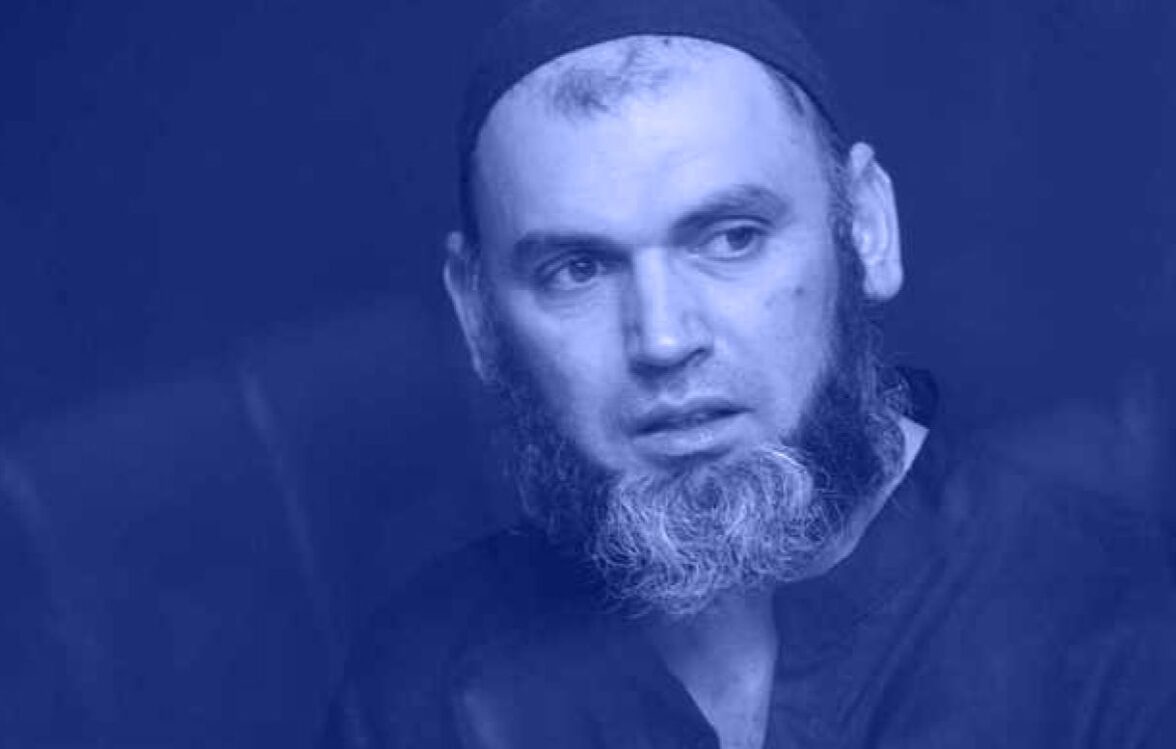
▶ Crimean citizen journalist and political prisoner Rustem Sheikhaliiev, illegally sentenced by Russian occupiers to 14 years in prison, was transferred and effectively deported to a Russian colony in the village of Srednebelaya in the Amur region, almost 9,000 kilometers from Crimea. The man was unlawfully detained in 2019 during mass illegal searches in Simferopol along with a group of Crimean Tatar activists. In 2022, he and two other citizen journalists were arbitrarily accused of alleged “terrorist activities” and sentenced to long prison terms.
Crimes committed by the Russian Federation
▶ As of June 2025, Russia has illegally imprisoned 222 people in occupied Crimea on ethnic, religious, and political grounds, including 133 Crimean Tatars.
▶ On May 27, an illegal hearing was held in a so-called Russian “court” in the case of five Crimean Tatars who were unlawfully detained in Crimea. The next hearing is scheduled for June 19. All defendants deny guilt and claim political persecution.
▶ In temporarily occupied Sevastopol, Russian occupation forces unlawfully detained and kidnapped Serhii Grishchenkov and transported him to an unknown location. Since May 6, the date of the so-called ‘detention,’ his whereabouts have remained unknown.
▶ Political prisoners Timur Yalkabov and Ruslan Suleimanov were illegally transferred to a Russian colony in the Murmansk region, located more than 3,500 kilometers from Crimea. According to their families, the transfer took 45 days, and both are currently in quarantine.
The use of occupied Crimea as a springboard for attacks on Ukraine and the militarization of the peninsula
▶ Monitoring teams report the transfer of an S-300/S-400 anti-aircraft missile system launcher from temporarily occupied Sevastopol to the Yevpatoriia area. This may be related to the strengthening of the air defense system against the backdrop of regular attacks on Russian military facilities in the region since the beginning of May. It is also possible that the launcher replaces one damaged or technically malfunctioning after the Ukrainian strike.
▶ According to the Ukrainian Air Force, Russian occupiers carried out a series of massive combined attacks on Ukrainian territory during the week. In particular, 219 Shahed, HESA Shahed 136, and Gerbera strike UAVs, one Kh-59/69 guided air missile, and five Iskander-M/KN-23 ballistic missiles were used, including from the territory of occupied Crimea and the Black Sea. Most regions of Ukraine were hit, residential and industrial facilities were destroyed, several dozen civilians were wounded, and at least three children were killed.
Since Russia launched a full-scale invasion and spread its armed aggression throughout Ukraine, occupied Crimea has been used by Russia as a military base for spreading aggression in various forms. From the peninsula, the occupiers continue to launch attacks on the territory of Ukraine, including on civilian infrastructure.
The resistance movement of Ukrainian citizens in occupied Crimea
▶ Russia has already prosecuted 1350 people in occupied Crimea for expressing solidarity with Ukraine, who are being subjected to administrative penalties in the form of illegal fines and arrests.
▶ A resident of occupied Crimea allegedly supported the Ukrainian Defense Forces with donations. Russian invaders detained the man, accusing him of alleged “financial terrorism.” The occupiers opened a criminal case against him.
▶ Activists of the Yellow Ribbon movement distributed patriotic stickers on the streets of Simferopol, near the Odun-Bazar Qapusı market in Yevpatoriia, and the monument to Lesia Ukrainka in Yalta. The activists emphasized that despite years of Russian occupation, Crimean residents continue to resist and demonstrate their support for the Armed Forces of Ukraine. The activists also reported that in schools in temporarily occupied Yalta, 11th-grade students were given educational lessons with elements of propaganda encouraging them to serve in the Russian Armed Forces. According to them, schoolchildren are encouraged to refuse further education in favor of military service. In addition, according to the activists, the occupation administration of Crimea is discussing the possible restriction of access to some beaches in Alushta to create a closed recreation area for Russian Security Forces and officials. One of the reasons is the need to restrict access to these areas for the local population and the press, to prevent unauthorized recordings.
▶ Activists of the Crimean Combat Seagulls movement continue to expose the personal data of collaborators and Russian war criminals in occupied Crimea. They also report growing panic among occupying forces on the peninsula following a successful special operation by the Security Service of Ukraine that destroyed strategic Russian aviation assets on the territory of the Russian Federation.
▶ The Zla Mavka resistance movement continues to publish diaries that inform about the realities of life in the occupied territories. Activists also distributed stickers in Simferopol with the inscription “Resistance will continue, even when the world trembles.”
The full-scale invasion was marked by a rapid increase in solidarity and resistance actions by residents of occupied Crimea against the Russian occupiers. Residents of occupied territories unite in resistance movements, such as the above-mentioned Yellow Ribbon, Crimean Combat Seagulls, Zla Mavka, and ATESH, or act individually. To suppress the resistance movement of residents in the temporarily occupied territory of Crimea after February 24, 2022, the occupiers actively began to prosecute and bring to administrative responsibility Ukrainian citizens under the article on the so-called “discrediting the Russian army.”
De-occupation of Crimea is integral to ending the war and restoring peace. Ukrainians are doing everything they can to stop the aggressor and protect the entire world from Russia’s criminal actions. This is not a local or regional issue but a threat to the world and international order.