03 December 2024
WEEKLY UPDATE ON THE SITUATION IN OCCUPIED CRIMEA ON DECEMBER 3, 2024
Main news of the week
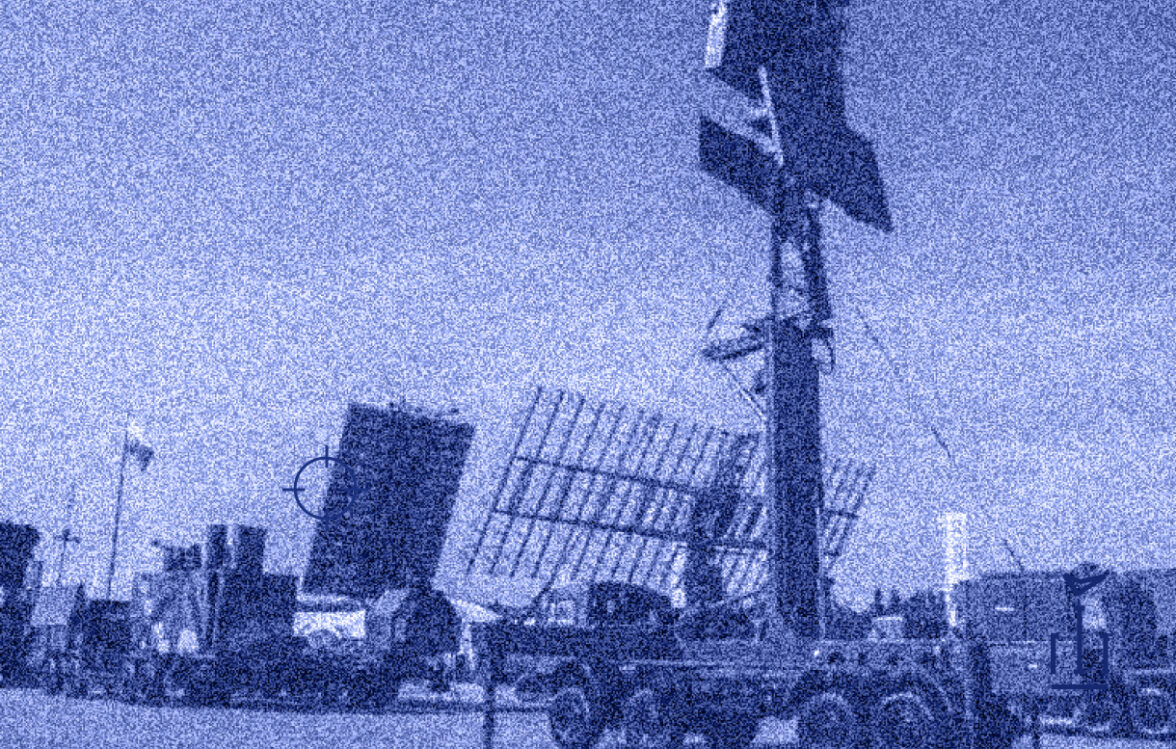
▶ On November 28–29, 2024, during an operation conducted by the Main Directorate of Intelligence of the Ministry of Defense of Ukraine in temporarily occupied Crimea, high-value Russian radar systems, including the “Kasta-2E2” and three “Podlyot” systems, designed for detecting low and extremely low-altitude air targets, were destroyed.
Crimes committed by the Russian Federation
▶ As of December 2024, Russia has illegally imprisoned 218 people in occupied Crimea on ethnic, religious, and political grounds, including 132 Crimean Tatars.
▶ Ivan Yatskin, a Crimean resident unlawfully sentenced by the Russian administration and held in a penal colony in Kemerovo, was wrongfully confined in a punishment cell for 50 days. The purported violations leading to his punishment included trivial matters such as an unbuttoned shirt or refusing to greet guards during evening roll calls. The colony administration denied him access to items sent by his family. Complaints about his health are being ignored by Russian officials, and the inferior quality of food in the colony continues to deteriorate his condition.
▶ Teimur Abdullaiev, unlawfully sentenced in the so-called “case of Crimean Muslims,” has lost hearing in one ear after an illness he suffered while in a Russian prison. It is also reported that Abdullaiev suffers from hypertension, which has led to impaired vision. The inadequate conditions of his unlawful detention in Russia continue to severely affect his health.
▶ Oleh Fedorov, another defendant in the so-called “case of Crimean Muslims,” who was unlawfully sentenced by the occupation “court” to 13 years in a maximum-security penal colony, is being illegally transferred to a remote Russian prison. According to his wife, Fedorov is currently in a transit facility—a Russian pre-trial detention center in Izhevsk—awaiting allocation to a colony. Previously, Fedorov reported significant vision deterioration and a rapid loss of weight.
▶ Nasrulla Seidaliiev, a Crimean Tatar unlawfully sentenced by the occupation administration, is being held in harsh conditions at a prison in Minusinsk, Krasnoyarsk Krai, Russia. According to his family, Seidaliiev has lost half his body weight, largely due to the poor quality of food provided during his illegal imprisonment. The dire conditions have caused significant health issues, including high blood pressure, severe varicose veins, and leg swelling.
▶ The first unlawful “court” hearing took place in Rostov-on-Don, Russia, against Crimean Tatar activists Memet Liumanov, Aziz Azizov, Rustem Osmanov, and Mustafa Abduramanov, who supported the families of Kremlin prisoners. The next “hearing” is scheduled for December 16.
▶ The occupation “court” unjustly sentenced Bakhchysarai resident Eldar Abduraimov to a maximum-security penal colony for allegedly “calling for terrorist activities” in Crimea. He is being persecuted for supposedly watching online videos containing calls to join the anti-Russian underground movement.
▶ The occupation court extended the unlawful detention of Crimean activists Enver Krosh, Vilen Temerianov, Edem Bekirov, Seitiah Abbozov, and Rinat Aliiev until February 28, 2025. These detentions have previously been reported as baseless.
▶ An occupation “court” unlawfully sentenced a Yalta resident to 17 years in prison for allegedly transferring information that “could have been used against Russian military forces.” The trials conducted by the occupation administration against residents of occupied regions violate international law, including the Geneva Conventions.
▶ The health of Servet Haziiev, unlawfully sentenced to 13 years in the so-called “case of Crimean Muslims,” continues to deteriorate. He suffers from severe pain in his right hand, impaired coordination, and an inability to hold a pen due to unresponsive fingers. Additionally, he is experiencing recurring intestinal problems.
▶ Rustem Seitmemetov, a political prisoner unlawfully sentenced to 13 years in prison, was hospitalized with complaints of heart pain. His current location and medical condition remain unknown.
▶ The health of Emil Dzhemadenov, unlawfully sentenced by the occupiers to 11 years and six months in prison, is worsening in Russian detention. Over four years in a Russian penal colony, Dzhemadenov has visibly lost weight. He has also suffered significant vision impairment, dental deterioration, and pain in his arm radiating to his neck after prolonged exposure to cold. The harsh conditions and lack of medical care in Russian prisons are yet another form of pressure exerted by Russian forces on Ukrainian citizens.
▶ Russian occupiers have extended the detention of Crimean resident Volodymyr Ananiev by two months. He is baselessly accused of preparing to allegedly attack a convoy of vehicles carrying members of the occupation administration in Crimea. Additionally, another fabricated charge—complicity in preparing a terrorist act—has been added to his case.
The use of occupied Crimea as a springboard for attacks on Ukraine and the militarization of the peninsula
▶ According to the Air Force of the Armed Forces of Ukraine, Russian occupiers conducted a series of attacks across Ukraine throughout the week. These included five ballistic missiles (“Iskander-M”), three air-launched guided cruise missiles (Kh-59/69), and 28 cruise missiles (“Kalibr”) launched from both occupied Crimea and the Black Sea. The Russian invaders continue to systematically target civilian energy infrastructure and residential buildings, using the occupied territory of Crimea as a launch site.
▶ Activists of the ATESH resistance movement obtained the coordinates of four enemy S-400 air defense systems and associated missiles near Yevpatoriia. These coordinates have been passed on to the relevant Armed Forces of Ukraine. Additionally, the activists are surveying the defensive structures of Russian occupiers along the Crimean coastline, which house personnel and weaponry to repel potential attacks by Ukraine’s Armed Forces.
Since Russia launched a full-scale invasion and spread its armed aggression throughout Ukraine, occupied Crimea has been used by Russia as a military base for spreading aggression in various forms. From the peninsula, the occupiers continue to launch attacks on the territory of Ukraine, including on civilian infrastructure.
The resistance movement of Ukrainian citizens in occupied Crimea
▶ Russia has already prosecuted 1,093 people in occupied Crimea for expressing solidarity with Ukraine, who are being subjected to administrative penalties in the form of illegal fines and arrests.
▶ A photo of Wesley Riot on Kyiv’s Maidan from years ago recently surfaced online, inadvertently capturing a Simferopol resident in the frame. Occupying forces raided the woman’s home under the pretense of an illegal search. Despite a thorough inspection, no evidence of wrongdoing was found. However, to “justify” the operation, the administration accused her of “discrediting the Russian army” based on her appearance in the old photo taken in Kyiv.
▶ A Simferopol resident posted a photo of Russian President Putin with an offensive caption on social media roughly five years ago. The occupation “court” fined him 70,000 rubles for alleged “disrespect toward the state.”
▶ Activists from the Yellow Ribbon movement distributed patriotic leaflets in occupied Yalta. Additionally, they reported that Russian occupiers are restricting access to information about anti-Russian protests in Georgia on the occupied territories. To commemorate the anniversary of Ukraine’s independence referendum, activists held events in Simferopol, Yevpatoriia, and Sevastopol, reminding occupiers that 33 years ago, just as today, Crimean residents expressed their desire to live in an independent and free Ukraine.
▶ Activists from the Crimean Combat Seagulls continue to expose personal information about collaborators and Russian war criminals operating in occupied Crimea. They also reported explosions at the Belbek airfield, a base for Russian occupiers.
▶ The Zla Mavka resistance movement continues to maintain their diaries, documenting the realities of life in occupied territories. Activists organized an action in occupied Simferopol, distributing patriotic currency notes reminding residents that they will not surrender their homeland to Russian invaders.
The full-scale invasion was marked by a rapid increase in solidarity and resistance actions by residents of occupied Crimea against the Russian occupiers. Residents of occupied territories unite in resistance movements, such as the above-mentioned Yellow Ribbon, Crimean Combat Seagulls, Zla Mavka, and ATESH, or act individually. To suppress the resistance movement of residents in the temporarily occupied territory of Crimea after February 24, 2022, the occupiers actively began to prosecute and bring to administrative responsibility Ukrainian citizens under the article on the so-called “discrediting the Russian army”.
De-occupation of Crimea is integral to ending the war and restoring peace. Ukrainians are doing everything they can to stop the aggressor and protect the entire world from Russia’s criminal actions. This is not a local or regional issue but a threat to the world and international order.