30 September 2025
WEEKLY UPDATE ON THE SITUATION IN OCCUPIED CRIMEA ON SEPTEMBER 30, 2025
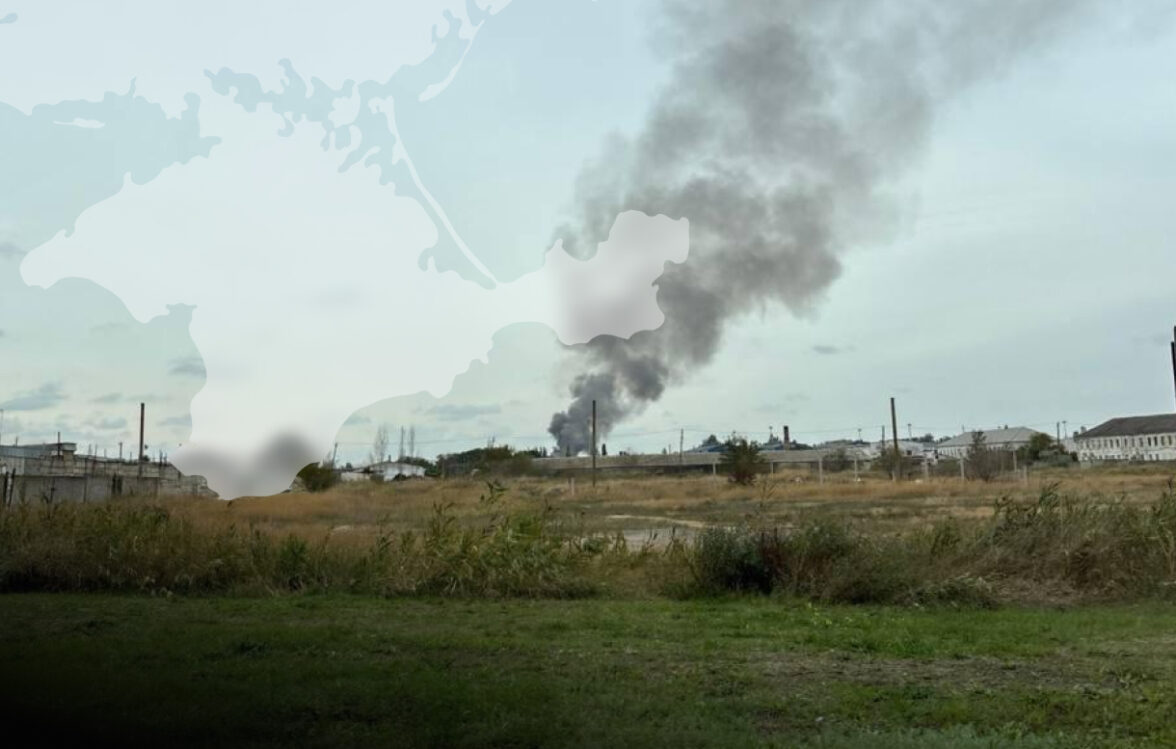
Main news of the week
▶ The General Staff of the Armed Forces of Ukraine reported confirmed strikes on two aircraft at the Kacha military airfield in the temporarily occupied territory of the Autonomous Republic of Crimea on the evening of September 22. According to the statement, the attack was carried out by units of the Main Directorate of Intelligence of the Ministry of Defense of Ukraine.
▶ On September 24, on the sidelines of the United Nations General Assembly in New York, the Fifth Crimea Platform Summit was held. The event was attended by more than 60 participants, including 19 heads of state and government, as well as ministers and senior representatives from 34 countries across all continents and seven international organizations.
▶ The Main Directorate of Intelligence of the Ministry of Defense of Ukraine announced that the special unit “Prymary” (“Ghosts”) continues to neutralize high-value enemy targets in the temporarily occupied territory of Crimea. During the latest raid on the peninsula, Ukrainian intelligence forces destroyed two Russian An-26 transport aircraft and struck both a surface-situation radar station and a coastal MR-10M1 Mys M1 radar.
Crimes committed by the Russian Federation
▶ As of September 2025, Russia has illegally imprisoned 222 people in occupied Crimea on ethnic, religious, and political grounds, including 133 Crimean Tatars.
▶ Crimean Tatar political prisoner Emir-Usein Kuku is suffering from serious health problems. He has difficulty walking because of a growth in the popliteal fossa (behind the knee) that was discovered while he was held in Pre-Trial Detention Center No.4 in Rostov-on-Don, before his transfer to a penal colony. Although doctors initially diagnosed a Baker’s cyst, the growth has increased in size and continues to cause pain. No further examinations or treatment have been provided apart from occasional tablets. Because of the pain, he sometimes cannot stand even for prayer. Kuku also suffers from other health issues, including deteriorating vision and pain in his heart, kidneys, and back. Recently he contracted tonsillitis, but treatment was provided only four days after the onset of symptoms because the prison medical unit was closed for the weekend.
▶ In temporarily occupied Crimea, the collections of the Kherson Regional Archive, which Russian occupiers unlawfully removed from Kherson in the autumn of 2022, are now under threat of destruction. Most of the documents are kept in unsuitable conditions—without heating or humidity control—which has already led to mold damage on some materials. The majority of the archive remains in damp premises, while only a small portion is stored in an archival facility on Kechkemet Street in occupied Simferopol.
▶ The human rights project “Support for Political Prisoners. Memorial” has recognized Roman Hrigoryan as a political prisoner. The entrepreneur from Sevastopol was accused by the occupiers of “state treason” for allegedly transferring money to the Armed Forces of Ukraine. In 2023 Hrigoryan moved with his family to Spain, where he posted photos of anti-war demonstrations on social media—actions that prompted a denunciation by a pro-Russian group. In 2024, when he returned to Sevastopol to sell his property, he was arrested. According to investigators, between August 2023 and February 2024 he allegedly financed the purchase of drones, naval drones, and armored vehicles for Ukrainian forces. On February 7, 2025, the so-called “court” in Sevastopol sentenced Hrigoryan to 12 years’ imprisonment and a 500,000-ruble fine. Human rights defenders emphasized that his prosecution is politically motivated and constitutes a gross violation of the right to a fair trial.
▶ The wife of Crimean Tatar political prisoner Ruslan Suleimanov reported that during a visit to Correctional Colony No.17 in Murmansk, he complained of vision problems and received threats from the administration about possible placement in a punishment cell. According to her, Suleimanov’s overall health can be described as satisfactory, but the whites of his eyes have become reddened, likely due to overwork in the prison sewing shop, where he is forced to produce large quantities without sufficient rest. He has already been warned that the practice of transferring prisoners to a punitive isolation cell may be applied to him.
The use of occupied Crimea as a springboard for attacks on Ukraine and the militarization of the peninsula
▶ Agents of the “ATESH” resistance movement continue surveillance of the Black Sea Fleet in the bays of the temporarily occupied city of Sevastopol. According to their information, following recent Ukrainian Defense Forces strikes, Russian forces are in a state of panic: they are camouflaging ships with nets, moving equipment at night, and keeping their air-defense systems on constant alert. Particular attention is being given to the submarine Rostov-on-Don, which has been hit twice and remains unrepaired. Under ATESH surveillance are also the rescue vessel Epron and the Ukrainian landing ship Konstantin Olshansky, which was seized during Russia’s attempted annexation.
In addition, the movement is observing the Crimean Titan plant near Armiansk. The enterprise remains operational, and to protect it, Russian troops have deployed concealed air-defense systems. The plant is one of the largest titanium dioxide producers in Eastern Europe; however, there are suspicions that, under the guise of “fertilizer production,” explosive materials are being manufactured there. Despite reinforced security measures, monitoring of the site continues.
▶ According to the Ukrainian Air Force, during the past week Russian occupation forces carried out a series of large-scale combined attacks on the territory of Ukraine. These included 1,216 strike unmanned aerial vehicles (UAVs) of the Shahed, Shahed-Geran and Gerbera types, as well as eight Kalibr cruise missiles, some launched from the territory of occupied Crimea and the waters of the Black Sea.
Since Russia launched a full-scale invasion and spread its armed aggression throughout Ukraine, occupied Crimea has been used by Russia as a military base for spreading aggression in various forms. From the peninsula, the occupiers continue to launch attacks on the territory of Ukraine, including on civilian infrastructure.
The resistance movement of Ukrainian citizens in occupied Crimea
▶ For demonstrating solidarity with Ukraine, Russia has persecuted 1,575 people in the territory of occupied Crimea, subjecting them to unlawful administrative penalties in the form of fines and arrests.
▶ Cyber specialists of the Main Directorate of Intelligence of the Ministry of Defense of Ukraine successfully conducted another operation, regaining full access to the computers and servers of the occupation administration of Crimea.
More than 100 terabytes of data were obtained, including official correspondence of Sergey Aksyonov, documents, and communications between the so-called “ministries” and “agencies.” Among the files are numerous materials concerning the illegal deportation of Ukrainian children from the temporarily occupied territories of Donetsk, Luhansk, Kherson, and Zaporizhzhia regions.
The data include lists of minors and their guardians, along with their places of residence and schooling, which have been handed over to Ukrainian law enforcement agencies to support investigations of war crimes. Information on Russian military personnel—complete with personal details and relatives—was also retrieved, along with records of prisoners and casualties, documents on “funeral” payments, and applications from participants of the so-called “special military operation” requesting land plots in Crimea.
Certain files confirm fuel shortages following strikes on oil refineries in Russia. This marks the second successful penetration of the occupation administration’s servers in recent months. After the previous breach, the FSB attempted to identify an insider (“mole”) but failed.
▶ Activists of the Yellow Ribbon movement distributed leaflets in Sevastopol, Simferopol, Bakhchysarai, and Yevpatoria ahead of the Fifth Crimea Platform Summit, reaffirming that “Crimea is Ukraine.” The activists emphasized that new members join the resistance every month, with over one hundred new participants in the past month alone.
▶ Members of the Crimean Combat Seagulls movement continue to expose the personal data of collaborators and Russian war criminals in occupied Crimea.
▶ Female activists of the Zla Mavka resistance movement delivered leaflets in Simferopol and Sevastopol, reminding residents that “you cannot escape the truth” and that Ukraine remains present on the peninsula. They stressed that every path of the occupiers begins with the reminder that their stay is temporary.
The full-scale invasion was marked by a rapid increase in solidarity and resistance actions by residents of occupied Crimea against the Russian occupiers. Residents of occupied territories unite in resistance movements, such as the above-mentioned Yellow Ribbon, Crimean Combat Seagulls, Zla Mavka, and ATESH, or act individually. To suppress the resistance movement of residents in the temporarily occupied territory of Crimea after February 24, 2022, the occupiers actively began to prosecute and bring to administrative responsibility Ukrainian citizens under the article on the so-called “discrediting the Russian army.”
De-occupation of Crimea is integral to ending the war and restoring peace. Ukrainians are doing everything they can to stop the aggressor and protect the entire world from Russia’s criminal actions. This is not a local or regional issue but a threat to the world and international order.