06 January 2026
WEEKLY UPDATE ON THE SITUATION IN OCCUPIED CRIMEA ON JANUARY 6, 2026
Main news of the week
▶ On 31 December 2025, drones attacked the Saky airfield in Novofedorivka: explosions were heard, and Russian air defence systems opened fire. During the night and morning of 1 January 2026, explosions were reported in various areas of Crimea, including Simferopol, the southern coast, and Sevastopol; later that day, explosions were also reported in Kerch. The Russian Ministry of Defence claimed that 16 UAVs had allegedly been intercepted over the peninsula, without specifying how many drones may have reached their targets.
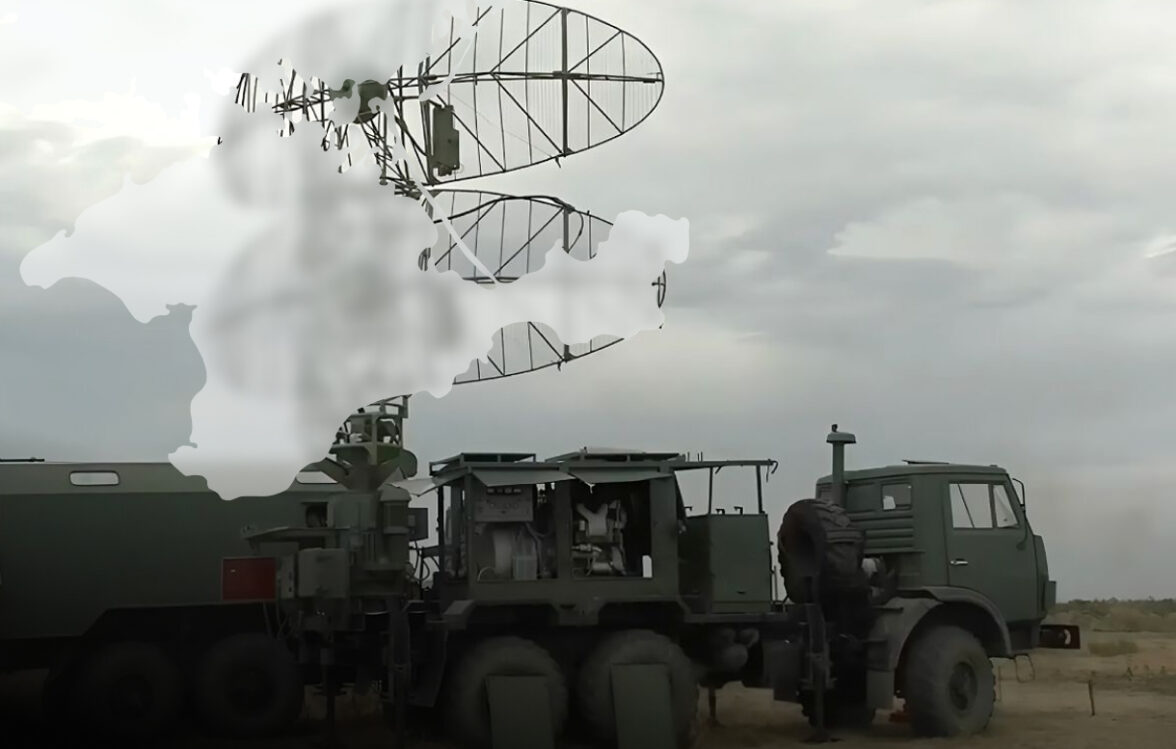
▶ The Commander of the Unmanned Systems Forces of the Armed Forces of Ukraine, Robert Brovdi, reported that on New Year’s night, USF units carried out strikes on military targets in Crimea. A KASTA-2E2 radar in the area of Hvardiiske was hit, as well as the radar post of the Hvardiiske combat aviation airfield, which is involved in aviation operations, the deployment of missile systems, and UAV launches.
▶ On 3 January, powerful explosions were reported in the Nyzhnohirskyi District and Yevpatoriia; in the Nyzhnohirskyi District, smoke was observed following a probable strike near positions hosting an S-300/S-400 launcher and a radar station.
Crimes committed by the Russian Federation
▶ Sources controlled by the occupying administration reported the forced removal of members of the religious community from the Khan-Jami Mosque in Yevpatoriia, a community labelled by the occupiers as “sectarian”, as well as preparations to carry out the announced “restoration works” at the site. During the so-called repairs, the mosque is closed to visitors, allegedly due to “security risks”.
▶ The ATESH resistance movement reported a catastrophic situation regarding the rights of believers in temporarily occupied Crimea. According to the movement, Crimean Tatar Muslims and Jehovah’s Witness communities are subjected to systematic persecution, including searches, threats, forced psychiatric “treatment”, and the fabrication of criminal cases.
The use of occupied Crimea as a springboard for attacks on Ukraine and the militarization of the peninsula
▶ On 31 December 2025 and between 1 and 4 January 2026, explosions and the operation of Russian air defence systems were recorded across the peninsula, including in the areas of Saky Airfield, Simferopol, Sevastopol, Yevpatoriia, Kerch, and the Nyzhnohirskyi District. Reports also indicated smoke following a probable strike near air defence positions (S-300/S-400) and radar facilities.
▶ Yevhen Yerin, a representative of the Main Intelligence Directorate of the Ministry of Defence of Ukraine, stated that occupied Crimea has the most extensive system of forced conscription among all occupied territories of Ukraine. Following the attempted annexation, the Russian Federation has conducted at least 22 conscription campaigns, forcibly recruiting approximately 5,000 people annually into the Russian Armed Forces. Conscripts are primarily assigned to newly established units of Russia’s Southern Military District.
The resistance movement of Ukrainian citizens in occupied Crimea
▶ For expressing solidarity with Ukraine, Russia is already persecuting 1,649 people in occupied Crimea, imposing administrative penalties in the form of illegal fines and arrests.
▶ Activists of the Yellow Ribbon movement distributed ribbons and leaflets featuring the Ukrainian flag and the inscription “Crimea Is Ukraine” in Simferopol, Sevastopol, Yalta and Alushta. Despite intensified security measures and patrols by the occupying administration, signs of resistance continue to appear regularly across the peninsula.
▶ Activists also reported that in temporarily occupied Dzhankoi, Russian military personnel are siphoning petrol from residents’ vehicles. At the same time, the occupying “police” fail to respond to these incidents, justifying the military’s actions by citing the so-called needs of the special military operation.
▶ Activists of the Yellow Ribbon movement distributed ribbons and leaflets featuring the Ukrainian flag and the slogan “Crimea Is Ukraine” in Simferopol, Sevastopol, and Yevpatoriia, thereby demonstrating that the peninsula is an inseparable part of Ukraine.
▶ Activists of the Crimean Combat Seagulls continue to expose the personal data of collaborators and Russian war criminals in occupied Crimea.
The full-scale invasion has been marked by a sharp increase in acts of solidarity and resistance by residents of occupied Crimea against the Russian occupiers. Residents of the occupied territories unite in resistance movements such as the aforementioned “Yellow Ribbon,” “Crimean Combat Seagulls,” “Zla Mavka,” “ATESH,” or act individually.To suppress the local resistance movement on the temporarily occupied territory of Crimea after 24 February 2022, the occupiers began actively persecuting and subjecting Ukrainian citizens to administrative liability under the article on so-called discrediting the Russian Armed Forces.
The de-occupation of Crimea is essential to ending the war and restoring peace. Ukrainians are doing everything possible to stop the aggressor and protect the entire world from Russia’s criminal actions. This is not a local or regional issue — Russia’s aggression poses a threat to the whole world and the international order.