06 May 2025
WEEKLY UPDATE ON THE SITUATION IN OCCUPIED CRIMEA ON MAY 6, 2025
Main news of the week
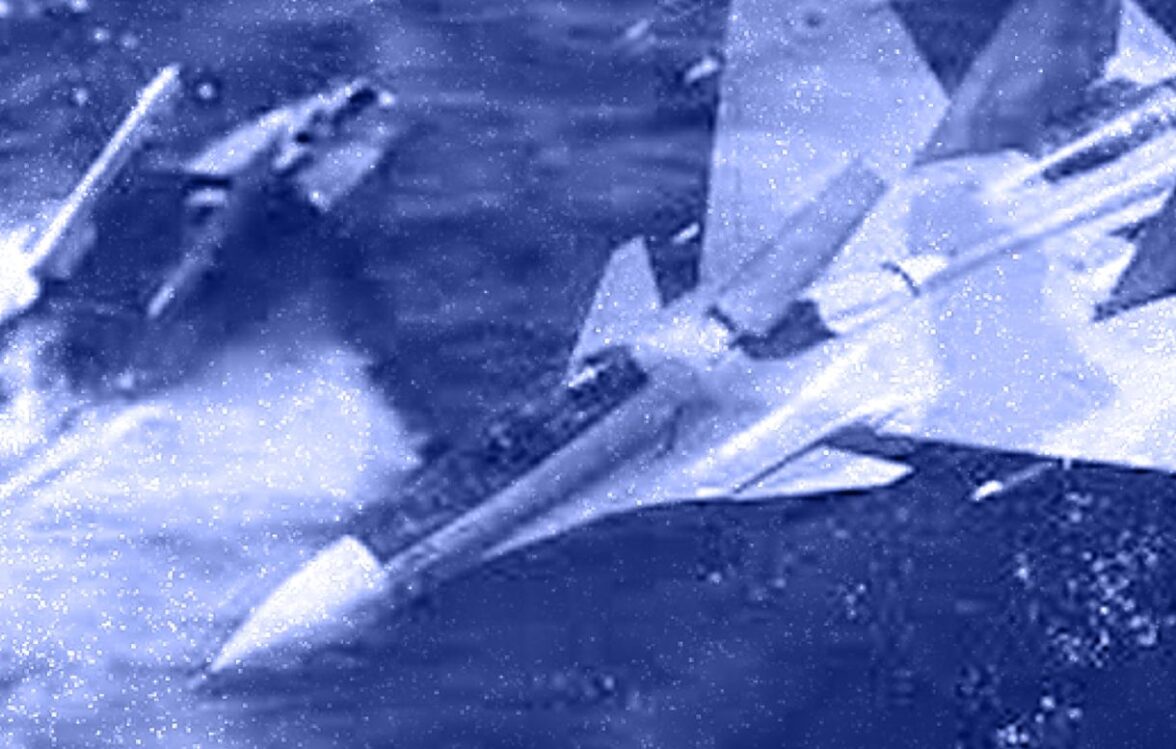
▶ Fighters of Ukraine’s Defence Intelligence special unit Group 13 successfully destroyed two Russian Su-30 fighter jets using AIM-9 missiles launched from Magura-7 maritime drones. The first aircraft was shot down over the Black Sea, with its crew rescued by a civilian vessel. According to preliminary information, the second Su-30 was destroyed on the territory of temporarily occupied Crimea — this time, the crew did not survive.
Crimes committed by the Russian Federation
▶ As of May 2025, Russia has illegally imprisoned 223 people in occupied Crimea on ethnic, religious, and political grounds, including 133 Crimean Tatars.
▶ On 29 April 2025, the Southern District Military Court in Rostov-on-Don issued another round of unlawful sentences to six Ukrainian citizens — representatives of the Crimean Tatar people: Khalil Mambetov, Refat Seidametov, Osman Abdurazakov, Leman Zekeriaiev, Aider Asanov, and Ekrem Krosh. All were sentenced to between 11 and 14 years in prison in a fabricated case. Among numerous procedural violations, defence lawyers highlighted the illegality of the searches, lack of credible evidence, use of unverified operational materials, and denial of the right to legal defence at all stages of the proceedings. The defendants stressed that they were prosecuted solely for their religious beliefs and civic activism.
▶ Tymur Yalkabov, a 44-year-old Crimean Tatar unjustly sentenced to 17 years in prison by the Russian occupation administration, was transferred more than 3,500 km from Crimea — from a colony in Dimitrovhrad (Ulyanovsk region) to one in Murmansk. This relocation violates basic humanitarian norms, including the right to maintain family ties.
▶ Political prisoner Lenur Seidametov was unexpectedly transferred from the detention center in Yelets, Russia, to a pre-trial detention facility in Voronezh, despite previously being scheduled for transfer to a penal colony. He reported a threat of extradition to Uzbekistan, despite having legally resided in Crimea for ten years, holding a residence permit, having family, and being civically active. This is yet another example of violations of the right to liberty and personal security.
▶ Raif Fevziiev, a Crimean Tatar unlawfully imprisoned by Russian occupation forces, has been deprived of personal contact with his family for over four years. Due to harsh detention conditions, he has developed aggravated varicose veins. The denial of medical care in such circumstances constitutes a form of torture under international law.
▶ Conditions for imprisoned Crimean Tatar journalist and political prisoner Remzi Bekirov, who was unlawfully sentenced by Russian occupiers to 19 years in prison, continue to deteriorate. In the Russian penal colony, he is forbidden from performing namaz, a blatant violation of the right to freedom of religion and belief. Bekirov has repeatedly been placed in a punishment cell for praying, and he is now banned from praying even while seated. Since November 2024, he has been held in a facility that prevents Muslims from observing prayers, even in private. These actions illustrate systemic religious persecution by the Russian occupation administration.
The use of occupied Crimea as a springboard for attacks on Ukraine and the militarization of the peninsula
▶ Following a precise strike by Ukraine’s Armed Forces on the 96L6E radar station near temporarily occupied Saky on April 25, reports from the ATESH resistance movement indicate heightened tension among Russian troops. Occupation units have reportedly been placed on high combat alert.
▶ According to the Air Force of the Armed Forces of Ukraine, Russian occupiers carried out a series of attacks over the past week, including 428 strike UAVs of the Shahed, Shahed-Heran, and Herbera types, as well as 6 ballistic missiles of the Iskander-M type — some launched from occupied Crimea and the Black Sea area.
Since Russia launched a full-scale invasion and spread its armed aggression throughout Ukraine, occupied Crimea has been used by Russia as a military base for spreading aggression in various forms. From the peninsula, the occupiers continue to launch attacks on the territory of Ukraine, including on civilian infrastructure.
The resistance movement of Ukrainian citizens in occupied Crimea
▶ Russia has already prosecuted 1325 people in occupied Crimea for expressing solidarity with Ukraine, who are being subjected to administrative penalties in the form of illegal fines and arrests.
▶ A resident of Sevastopol was unlawfully detained by Russian occupation forces for criticizing Russia’s war against Ukraine and supporting the Ukrainian Armed Forces in a messenger app. He was accused of “discrediting the Russian army” and “disobeying lawful orders of officials.” The occupation “court” sentenced him to five days of administrative arrest and a fine of 45,000 rubles.
▶ A resident of the village of Urozhayne in Simferopol district painted his gate in blue and yellow with a tamga and placed a street sign in Ukrainian and Crimean Tatar. Russian security forces detained the man, forced him to apologize on video, and repaint the gate in the colors of the Russian flag.
▶ Activists of the Yellow Ribbon resistance movement continue to oppose the occupiers — new Ukrainian symbols have appeared in Simferopol, Sevastopol, Yevpatoriia, Yalta, and Bakhchysarai, marking the presence of resistance and belief in liberation. Despite the tense situation on the peninsula, they spread Ukrainian symbols daily, expressing rejection of the Russian occupation, support for Ukraine, and hope for the return of the Armed Forces of Ukraine.
▶ Activists of the Crimean Combat Seagulls continue to expose the personal data of collaborators and Russian war criminals in occupied Crimea.
▶ The Zla Mavka resistance movement continues publishing diaries that document everyday realities under occupation. The activists also distributed leaflets in occupied Simferopol with the message that resistance in Crimea will continue — even if the world falls asleep.
The full-scale invasion was marked by a rapid increase in solidarity and resistance actions by residents of occupied Crimea against the Russian occupiers. Residents of occupied territories unite in resistance movements, such as the above-mentioned Yellow Ribbon, Crimean Combat Seagulls, Zla Mavka, and ATESH, or act individually. To suppress the resistance movement of residents in the temporarily occupied territory of Crimea after February 24, 2022, the occupiers actively began to prosecute and bring to administrative responsibility Ukrainian citizens under the article on the so-called “discrediting the Russian army.”
De-occupation of Crimea is integral to ending the war and restoring peace. Ukrainians are doing everything they can to stop the aggressor and protect the entire world from Russia’s criminal actions. This is not a local or regional issue but a threat to the world and international order.