08 April 2025
WEEKLY UPDATE ON THE SITUATION IN OCCUPIED CRIMEA ON APRIL 8, 2025
Main news of the week
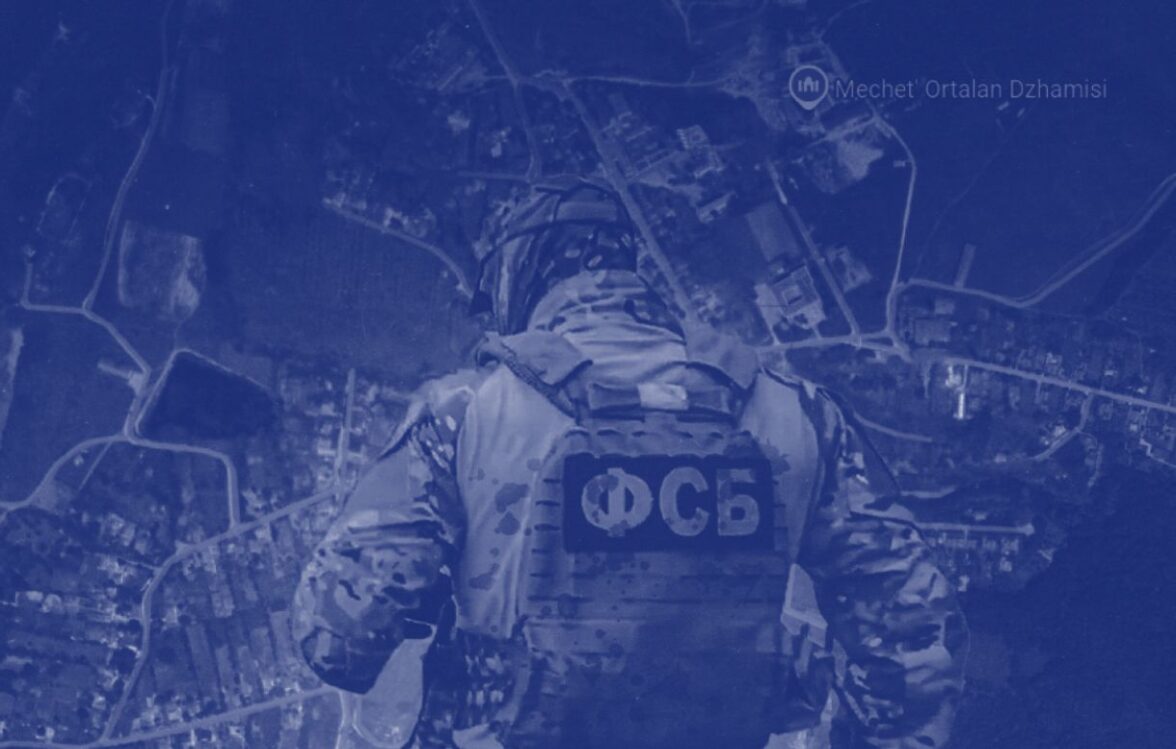
▶ On 1 April, Russian occupiers conducted another wave of mass searches targeting Crimean Tatars in the village of Zemlianychnе in the Bilohirsk district of occupied Crimea. Armed officers raided at least four homes, allegedly in search of weapons and prohibited materials. One of the families affected was that of Crimean Tatar journalist for ATR TV channel, Hulsum Khalilova. Despite the critical health condition of her 75-year-old father, Khalil Khalilov, the occupying officers carried out a thorough search and confiscated electronic devices. The stress of the incident caused a sharp deterioration in his condition, and he had to be hospitalized.
Crimes committed by the Russian Federation
▶ As of April 2025, Russia has illegally imprisoned 224 people in occupied Crimea on ethnic, religious, and political grounds, including 137 Crimean Tatars.
▶ Russian occupiers abducted Crimean Tatar woman Lera Dzhemilova in May of last year. For ten months, the occupiers denied any involvement in her disappearance while holding her in complete isolation. She is now unlawfully charged by the Russians with so-called “high treason.” These actions constitute a blatant violation of international humanitarian law and human rights: detention without notification of legal status, isolation without access to legal counsel, coercion, and lack of contact with family members all point to the systemic nature of the Russian Federation’s repressive practices in temporarily occupied Crimea.
▶ Crimean political prisoner Ruslan Mesutov was prematurely transferred from a hospital near Yakutsk, Russia, back to a high-security isolation facility despite his serious health issues. Despite his critical condition, he received only minimal treatment in the form of pills. The occupiers even prevented his family from sending him necessary medication.
▶ The occupation “court” extended the unlawful detention of the so-called “fourth Dzhankoi group” of the Crimean Muslims case until 4 July 2025. Abibulla Smedliaiev, Bakhtiiar Ablaiev, Rustem Mustafaiev, Mirzali Tazhybaiev, and Emir Kurtnezirov were arbitrarily detained by Russian occupation forces following unlawful searches in occupied Crimea on 5–6 February. Three of the defendants were forced to undergo forensic psychiatric examinations.
▶ On 3 April, in temporarily occupied Crimea, so-called officers of the occupation “police” raided the home of Anna Bohachova, the wife of Crimean political prisoner Vadym Siruk. After entering the premises, the security agents began questioning her about Siruk’s sentence, criminal case, and family relations. They then proceeded to question Anna personally — about who visits her home and whether she had any connection to the recent arson attack on the grave of Alexander Fedorchak, a military correspondent for the Russian outlet Izvestia. The occupiers threatened her with searches, revocation of her driver’s license, and even said she might be forced to “leave the area.”
The use of occupied Crimea as a springboard for attacks on Ukraine and the militarization of the peninsula
▶ The Russian occupation administration in Crimea continues to send students into active combat zones under the guise of so-called “humanitarian missions,” endangering their lives and health. Over the past two and a half years, there have been at least ten such trips to the occupied territories of Zaporizhzhia, Kherson, Donetsk, and Luhansk regions, as well as to Russia’s Kursk and Belhorod regions.
▶ According to the Air Force of the Armed Forces of Ukraine, Russian occupiers launched a series of attacks across Ukraine over the past week. These included 275 strike UAVs of the Shahed, Shahed-Geran, and Herbera types, one Iskander-M ballistic missile, and eight Kalibr cruise missiles — some launched from occupied Crimea and the Black Sea. A ballistic missile strike on Kryvyi Rih resulted in the death of nine children — the highest number of children killed in a single attack since the start of the full-scale invasion in 2022.
Since Russia launched a full-scale invasion and spread its armed aggression throughout Ukraine, occupied Crimea has been used by Russia as a military base for spreading aggression in various forms. From the peninsula, the occupiers continue to launch attacks on the territory of Ukraine, including on civilian infrastructure.
The resistance movement of Ukrainian citizens in occupied Crimea
▶ Russia has already prosecuted 1279 people in occupied Crimea for expressing solidarity with Ukraine, who are being subjected to administrative penalties in the form of illegal fines and arrests.
▶ A resident of the Kurman district was arrested for ten days and fined 40,000 rubles after publicly criticizing the actions of Russian occupation forces and speaking out against a neighbor whose husband had joined the occupying Russian army in the war against Ukraine.
▶ A 21-year-old Crimean resident was detained by occupation forces for expressing criticism on social media regarding the actions of the occupying troops and the Russian occupation of Crimea. An administrative protocol was unlawfully drawn up against him, and his case has been transferred to the so-called “court.”
▶ Activists from the Yellow Ribbon resistance movement distributed patriotic stickers in the streets of occupied Simferopol, Sevastopol, Bakhchysarai, Yalta, Yevpatoriia, and Armiansk. According to their reports, in the temporarily occupied Yalta, café and bar owners were instructed by the so-called occupation “department of culture” to include Russian “patriotic songs” in their music playlists—specifically tracks that glorify the Russian army and its war against Ukraine. The occupation administration warned that inspections will be carried out as the tourist season approaches, demanding that such music be played at least once every 30 minutes.
▶ Activists of the Crimean Combat Seagulls continue monitoring the activities of Russian occupation forces in Crimea. They also reported that local residents set fire to the grave of war correspondent and collaborator Oleksandr Fedorchak, who worked for Russian propaganda media, traveled to the front lines, and openly supported Russia’s war against Ukraine, calling for the killing of Ukrainian civilians. Fedorchak reportedly died near the front line at the end of March, allegedly due to artillery fire.
▶ The Zla Mavka resistance movement continues to publish its diaries, documenting daily life under occupation. In one entry, activists shared an incident in which they were speaking Ukrainian in a private conversation and were reprimanded for doing so—an example of the discrimination they face in occupied Crimea.
The full-scale invasion was marked by a rapid increase in solidarity and resistance actions by residents of occupied Crimea against the Russian occupiers. Residents of occupied territories unite in resistance movements, such as the above-mentioned Yellow Ribbon, Crimean Combat Seagulls, Zla Mavka, and ATESH, or act individually. To suppress the resistance movement of residents in the temporarily occupied territory of Crimea after February 24, 2022, the occupiers actively began to prosecute and bring to administrative responsibility Ukrainian citizens under the article on the so-called “discrediting the Russian army.”
De-occupation of Crimea is integral to ending the war and restoring peace. Ukrainians are doing everything they can to stop the aggressor and protect the entire world from Russia’s criminal actions. This is not a local or regional issue but a threat to the world and international order.