20 March 2026
The Face of Resistance: The Story of Crimean Tatar Activist Ayder Saledinov
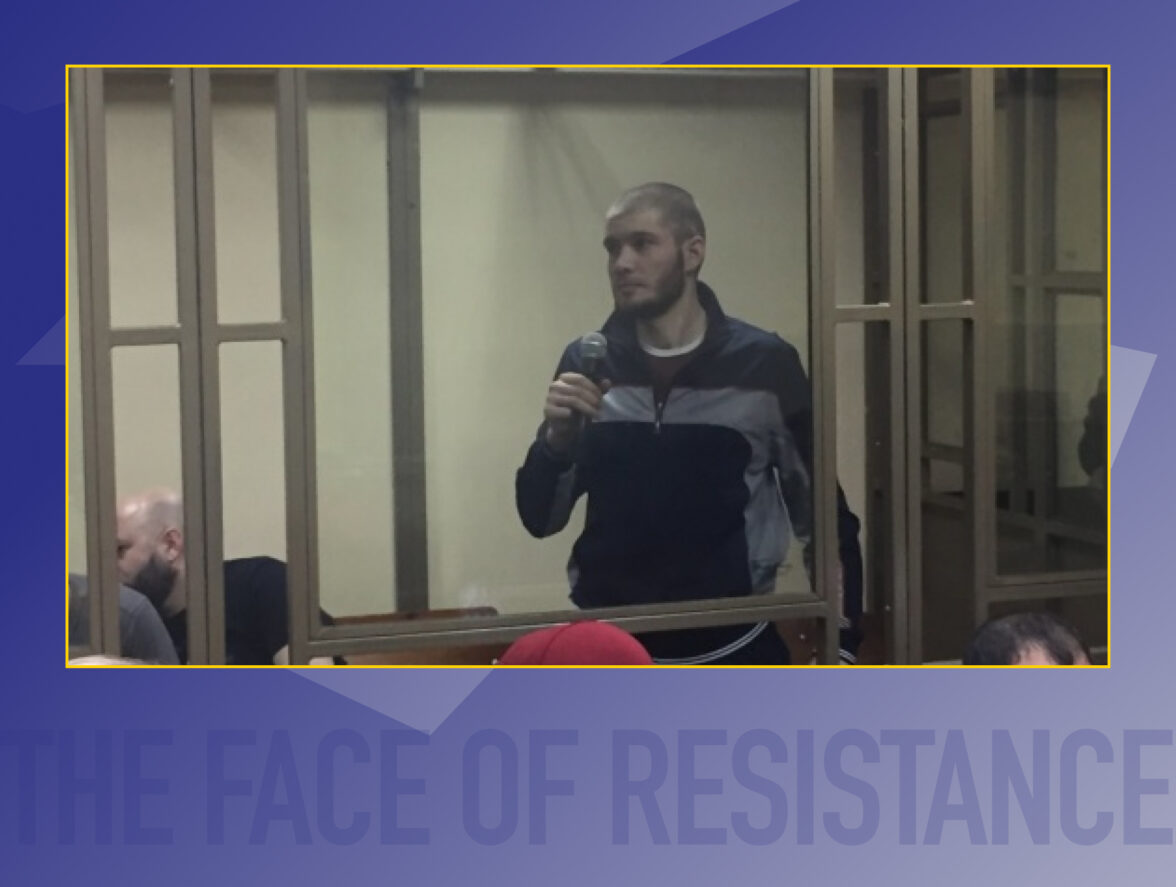
Life before the detention
Ayder Saledinov was born on July 21, 1987, in the village of Novooleksiivka, Kherson region. In 2003, his family returned to Crimea and settled in the village of Strohonivka, Simferopol district. After graduating from secondary school in 2004, he enrolled in the Economics Faculty of Tavriya National University.
After his studies, Ayder worked in construction, providing for his family while actively raising his children and supporting his parents. Faith was central to his life; in 2016, he performed the Hajj (pilgrimage) to Mecca.
Persecution
In 2016, Russian security forces conducted mass raids on the homes of Muslims in the villages of Kamianka and Strohonivka. On October 12, at around 6 a.m., they stormed Ayder Saledinov’s home, where he lived with ten other family members. During the search, officers acted aggressively, breaking down interior doors and seizing mobile phones, hard drives, and religious literature.
Ayder and four other Muslims were detained following the raid. They were charged in the so-called Case of Crimean Muslims for alleged involvement in Hizb ut-Tahrir, an organization Russia labels as “terrorist.” Subsequently, an occupying “court” in Simferopol ordered his pre-trial detention.
Behind the Bars
In February 2017, Ayder and fellow political prisoner Rustem Ismayilov were subjected to a forced psychiatric evaluation. On June 18, 2019, a North Caucasian “court” sentenced Ayder Saledinov to 12 years in a high-security penal colony; the term was later reduced to 11.5 years.
In 2020, he was transferred to a penal colony in Salavat, Republic of Bashkortostan, Russia. Since his arrival, he has faced systematic pressure, including formal reprimands and multiple terms in a punishment cell (ShIZO). In 2025, he was moved to a high-security housing unit within the colony.