27 February 2026
The Face of Resistance: The Story of Crimean Tatar Activist Rustem Izmailov
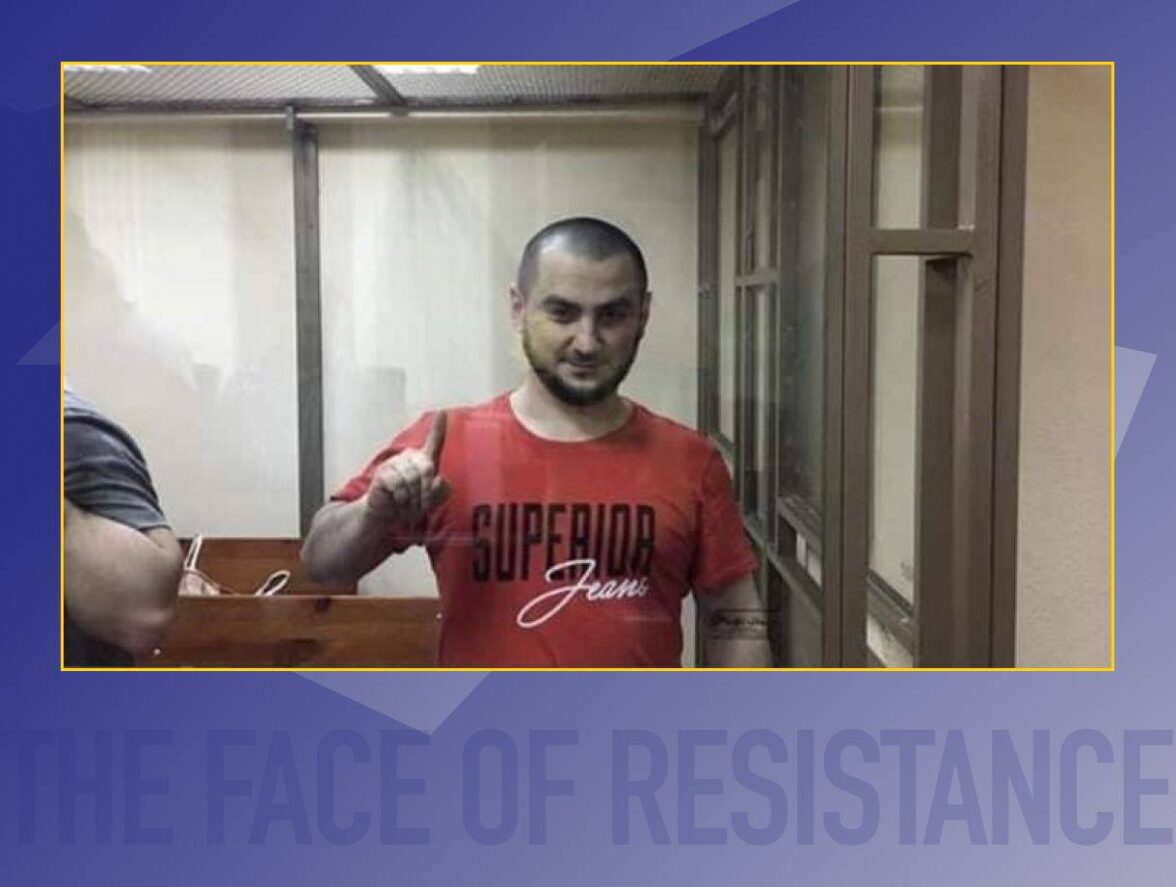
Life before the detention
Rustem Izmailov was born on September 3, 1984, in the city of Navoiy, Uzbekistan, and in 1992, he returned to Crimea with his family. After finishing school, Rustem enrolled in the Crimean Institute of Business, where he earned a higher education degree in “International Economics.”
Later, Rustem worked as a sales consultant in a shopping center, and then as a construction worker and furniture assembler for a private company. He also worked as a translator.
In April 2008, Rustem got married. Together, they raised three children—a daughter and two sons. Before his arrest, the family lived in the village of Kamyanka in the Simferopol district.
Family and friends describe Rustem as a respectable, honest, and just person, and a caring husband and father. For him, family and raising children were a priority. At the same time, he found the time and energy to help those in need. As a devout Muslim, he observed religious traditions and lived according to his beliefs.
Persecution
On October 12, 2016, Russian security forces conducted mass searches in the homes of Crimean Tatars in the villages of Kamyanka and Strohonivka in the Simferopol district. At around six in the morning, as Rustem and his wife Fatma were just waking up and preparing for their morning prayer, Russian security forces broke into their house, kicking down the front door.
The security forces acted aggressively during the search, applying demonstrative pressure on the family. According to his wife, the entire house was turned upside down during the search. Among other things, they seized $13,000 that belonged to Rustem’s brother and had been left for safekeeping.
After the searches, Rustem Ismailov was charged in the “Crimean Muslims case,” specifically for alleged participation in the organization “Hizb ut-Tahrir,” which Russia considers a terrorist group.
Behind the Bars
After his detention in December 2016, Rustem Ismailov reported that he was beaten and threatened at the FSB building in Simferopol in an attempt to break him psychologically.
In February 2017, he and Aider Saledinov were transferred to a psychiatric hospital for a forced psychiatric evaluation. This practice is widely viewed by human rights defenders as an additional tool of pressure on political prisoners.
On December 29, 2017, a piece of the ceiling, about one square meter in size, collapsed in the cell of the Simferopol pre-trial detention center where Rustem was being held, causing him physical injuries. The incident highlighted the poor condition of the facilities and the risks faced by the prisoners.
On June 18, 2019, the North Caucasian District Military “court” in Rostov-on-Don sentenced Rustem Ismailov to 14 years in a strict-regime colony. The sentence was later reduced by six months to 13 years and 6 months of imprisonment.
In early 2020, Rustem was transferred to Ufa and later hospitalized in a medical facility at the pre-trial detention center. For several weeks, his family had no official information about his whereabouts. Only in April did it become known that he was in Correctional Colony No. 2 in the city of Salavat, Republic of Bashkortostan.During his imprisonment, Rustem has been repeatedly placed in a punishment cell (SHIZO). One of the formal grounds for this has been the observance of religious rites, particularly the night prayer. The conditions in the punishment cell are much harsher and involve additional restrictions. Despite the systematic pressure, transfers, and isolation, Rustem Ismailov continues to hold strong and maintain his dignity.