20 May 2026
The Mission held a lecture for the academic community of the University of Gothenburg in Sweden as part of the Global Coalition of Ukrainian Studies
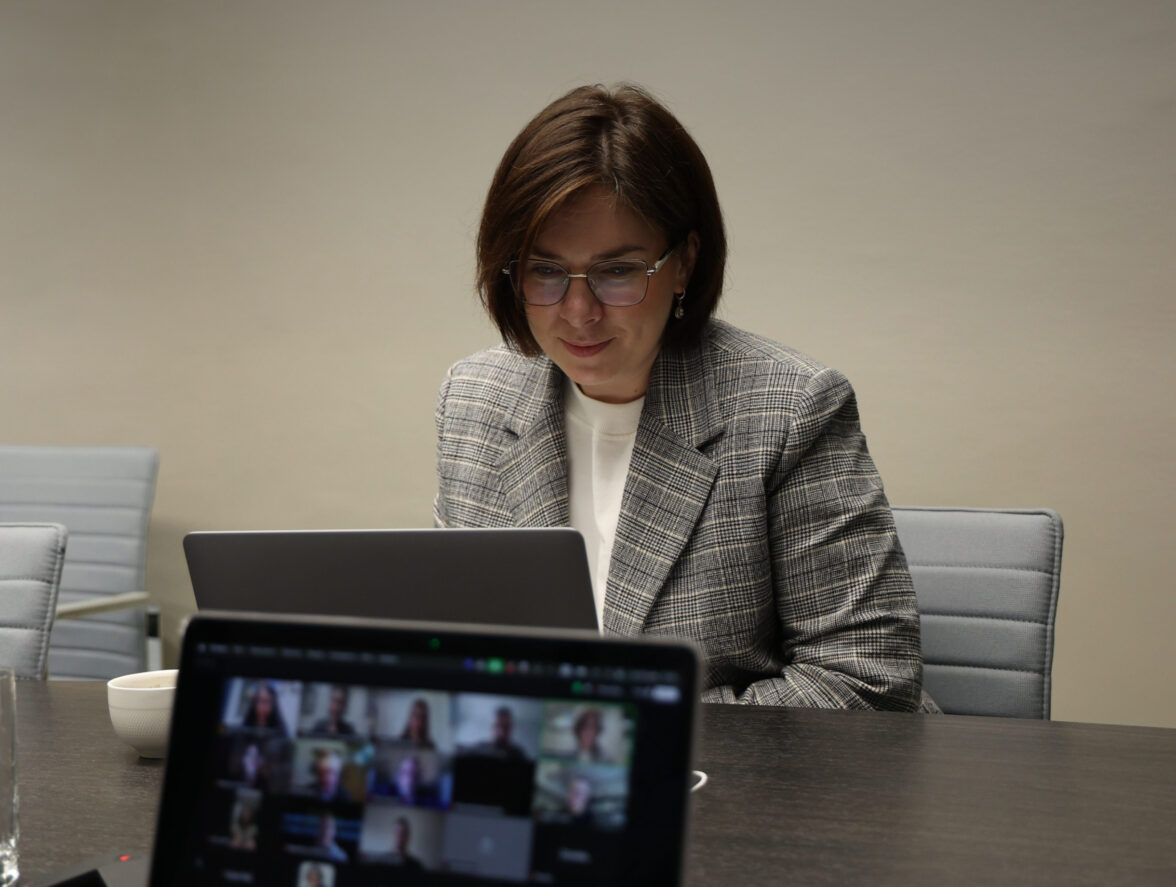
As part of the Global Coalition of Ukrainian Studies and events commemorating the victims of the genocide of the Crimean Tatar people, the Mission held a lecture for the academic community of the University of Gothenburg in Sweden.
The Permanent Representative of the President of Ukraine in Crimea, Olha Kuryshko, delivered the opening remarks. She spoke to the students about the Russian policy of displacing the Crimean Tatar people — from the annexation of the Crimean Khanate in 1783 to the deportation of 1944, which became one of its most brutal manifestations. Olha Kuryshko also drew parallels with the modern repression in Crimea to which the inhabitants of the peninsula are being subjected by the occupation authorities.
“Contemporary events following 2014 are aimed at suppressing any form of resistance. This is precisely why it is important for the Mission to convey these facts. Recognising the events of 1944 as an act of genocide provides the key to understanding the aggressor’s modern crimes,” Olha Kuryshko noted.
Thomas Rosén, Director of Studies and Senior Lecturer at the Department of Languages and Literatures at the University of Gothenburg, also delivered opening remarks. He noted that the Swedish Parliament, the Riksdag, has repeatedly highlighted the return of Crimean Tatars to their homeland and the rights violations of the Indigenous peoples of Ukraine following the temporary occupation of the peninsula. However, according to him, diplomatic ties between Sweden and the Crimean Tatars have deeper historical roots, as evidenced by correspondence between the Kingdom of Sweden and the Crimean Khanate, which is currently preserved in the state archives.
Nelia Hrynyshyn, Head of the Crimea Platform Support Service, spoke about the current situation in occupied Crimea, focusing on language policy, the pressure on Indigenous peoples, and the focus areas of the Crimea Platform Office.
Anton Drobovych, Head of the Human Rights and War Memorialisation Centre at the Kyiv School of Economics, provided a detailed overview of the history of the Crimean Tatar people. He noted that the history of Crimean Tatar statehood dates back to the 15th century, when the Crimean Khanate was established. According to historical data, in the 18th century, the Crimean Khanate was one of the regional leaders alongside the Ukrainian Cossack State, and Muscovy even paid tribute to it. This refutes the narrative that the RF imposes on the modern world — that the Crimean Peninsula is allegedly historically Russian territory.
Suleyman Mamutov, a serviceman and member of the UN Permanent Forum on Indigenous Issues, spoke about the imperial policy of the RF, which began back in 1783. “Murders are only one side of the deportation; the other is the destruction of the history, identity, and political agency of the Crimean Tatar people, which was a priority target for the Soviet regime.”
It is worth noting that in 2025, the Mission exchanged memoranda of cooperation with the University of Gothenburg (Department of Languages and Literatures). This took place within the framework of the Global Coalition of Ukrainian Studies initiative, which aims to strengthen the presence of Ukrainian studies in the global academic environment and consolidate international partners around the study of Ukraine, particularly Crimea.