19 November 2025
In 1917, the first National Crimean Tatar Museum was solemnly opened in the Khan Palace in Bakhchysarai
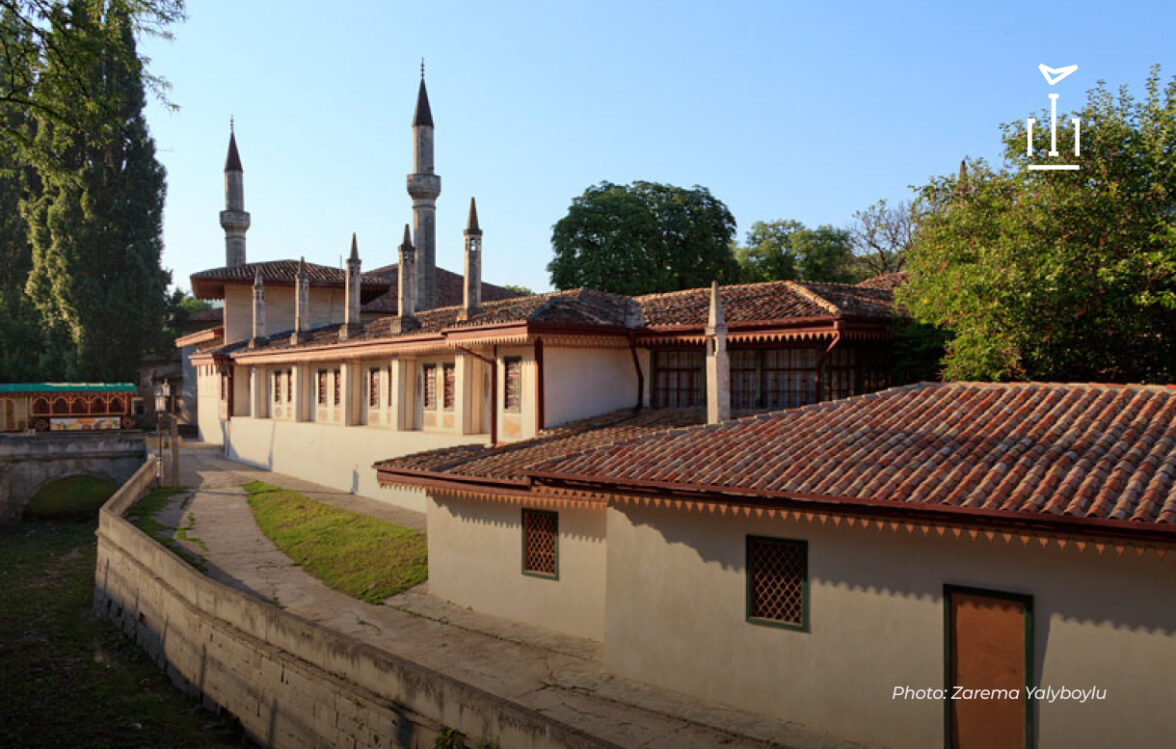
In 1917, the first National Crimean Tatar Museum in history was established in Bakhchysarai. It was housed within the unique architectural complex of the Khan’s Palace — the former residence of the Crimean Khans of the Giray dynasty, which from the 15th to the 18th century served as the political and cultural center of the independent Crimean Khanate. This step marked not only the return of a key symbol of statehood to the Crimean Tatars but also the beginning of a systematic effort to preserve their national cultural heritage.
The initiative to create the museum belonged to the Crimean Tatar intellectuals — Noman Çelebicihan, Cafer Seydamet, Osman Akçokraklı, Asan Sabri Ayvazov, and other members of Millî Fırka and the Muslim Executive Committee of Crimea. However, it was Usein Bodaninsky who transformed this idea into a functioning institution and defined its development for many years to come.
Usein Abdurefiyevich Bodaninsky was an artist, ethnographer, archaeologist, and museologist. As early as 1916–1917, he had established a branch of the Society for the Protection of Antiquities in Bakhchysarai and personally documented the condition of the Khan’s Palace, mosques, mausoleums, and cave towns. On 4 (17) October 1917, it was Bodaninsky who secured a decree from the Provisional Government establishing the Museum of Turkic-Tatar Culture in the palace, and he was appointed its first commissioner (effectively, the director). From October 1917 until the end of his life (with a short interruption between 1934 and 1937), he continuously headed the institution — first as commissioner of the national museum, later as head of the Bakhchysarai branch of the Crimean Committee for the Protection of Monuments (1921–1934).
During his tenure, Bodaninsky personally prevented military units from dismantling marble and wooden elements of the palace for utilitarian purposes, and created a unique network of “village museum representatives” — trusted individuals in dozens of Crimean Tatar villages who collected household items, carpets, ceramics, embroidery, and manuscripts. Thanks to this network, the museum received thousands of unique artifacts that would otherwise have been lost. He carried out the first scientific restorations of the Khan’s Palace halls, the Fountain of Tears, the Golden Fountain, the Khan’s Mosque, and mausoleums; organized archaeological expeditions, including excavations of the palace’s Persian Garden (1925–1928), where he uncovered remains of 16th-century khan’s baths; researched Chufut-Kale, Mangup, and Eski-Kermen; and secured state protection for dozens of sites — in the 1920s, under his leadership, all key monuments of Crimean Tatar history in the Bakhchysarai district were granted protected status.
He established the Ismail Gasprinsky Memorial House-Museum in 1923 — the first museum in the USSR dedicated to a national educator; he collected and systematized an enormous ethnographic archive, including over 3,000 of his own drawings and watercolors documenting disappearing crafts, clothing, ornamentation, and architectural details. He prepared detailed annual scientific reports (those from 1922–1929 and early 1934 have survived), which today represent one of the most valuable sources on the state of Crimean Tatar culture in the 1920s.
In 1934, at the height of the campaign against “bourgeois nationalism,” Bodaninsky was dismissed from his position as director. In 1937, he was arrested, and on 17 April 1938, together with Osman Akçokraklı, Asan Sabri Ayvazov, and other Crimean Tatar intellectuals, he was executed by Soviet security services in Simferopol.