28 March 2025
In March 1917, the first meeting of the Black Sea Ukrainian Community in Sevastopol was held
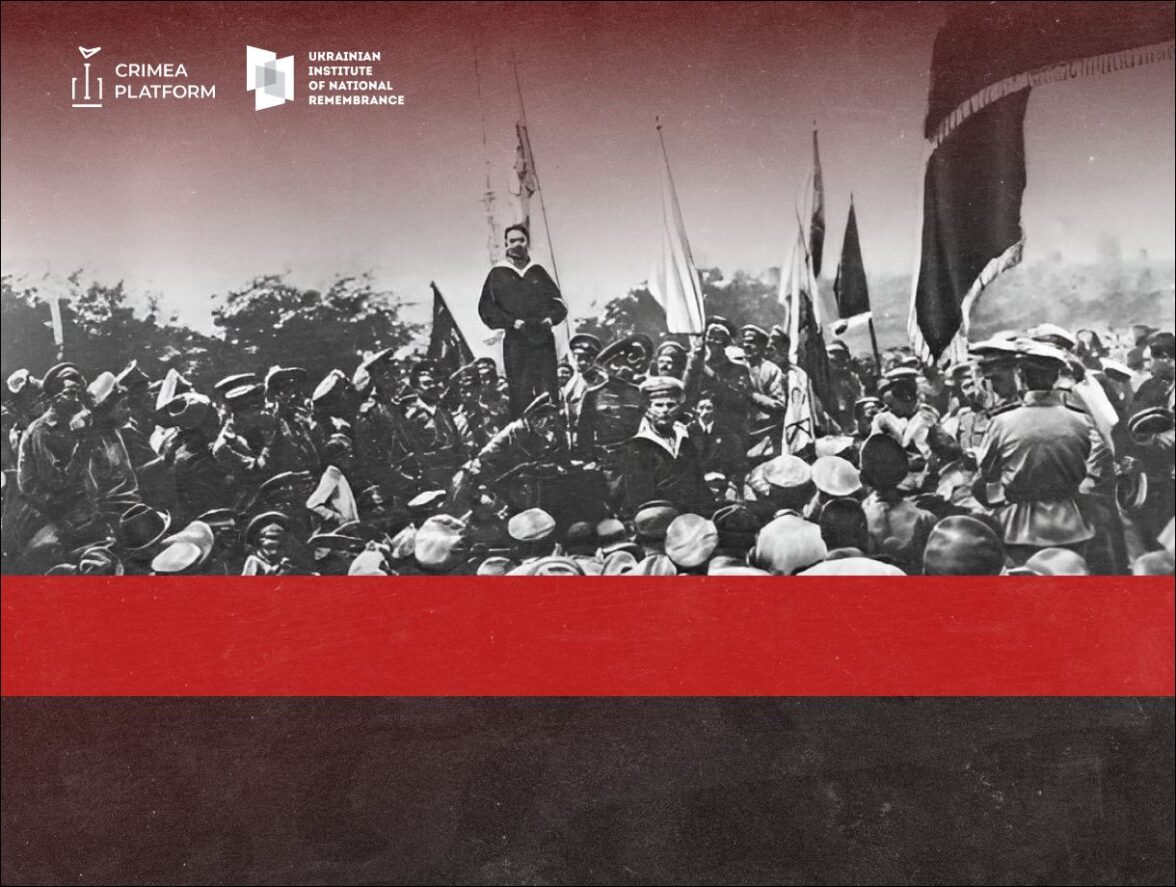
In 1917, the February Revolution took place in the Russian Empire, opening for Ukrainians not only historical but also political horizons: the opportunity to return to their cultural roots, restore historical justice, and assert themselves as a nation.
Sevastopol was one of the centers of this activity — the main base of the Black Sea Fleet of the Russian Empire, in which, at that time, tens of thousands of Ukrainians served. According to various estimates, Ukrainians constituted between 60% and 70% of the fleet’s personnel. Despite this, the imperial authorities pursued a consistent policy of Russification, banning Ukrainian books, textbooks, gatherings, songs, and, in many cases, even spoken Ukrainian on board. Ukrainian national consciousness among sailors was systematically suppressed
Long before the revolutionary events, a clandestine Ukrainian circle emerged in the city, later known as Kobzar. It was formed around the Society of Dramatic Art Enthusiasts based at the People’s House. Among its founders were engineer and aviator Lev Matsiievych, publicist Oleksandr Kovalenko, and Professor Viacheslav Lashchenko, who later led the movement. The circle brought together officers, sailors, teachers, and cultural figures. Kobzar became a living flame of Ukrainian revival in Sevastopol.
A particularly important role in the community’s activity was played by the café of Vasyl Vytynskyi — a meeting place for activists, where plans were discussed and national ideas disseminated. After the fall of the tsarist regime, the members of Kobzar came out of hiding and began to build a new reality — the Black Sea Ukrainian Community.
In March 1917, the circle initiated the first open meeting of Ukrainian sailors. This event marked a turning point — hundreds of participants gathered to assert their right to self-determination. Among them were sailors, officers, teachers, doctors, and representatives of civic organizations. Due to the large number of attendees, the venue had to be changed — according to some sources, the meeting began at the Pushkin School, while others claim it was immediately moved to a larger hall. In any case, this gathering became the first mass manifestation of Ukrainian life in the fleet.
The following day, the participants focused on drafting the charter of a new organization. The discussions revealed a tension between those advocating for educational and cultural work and those pushing for more decisive steps — namely, the Ukrainization of the army and fleet. As a result, the Ukrainian Black Sea Community was established, with a clear structure and ambitious objectives.
The community established several sections — military, educational, and propaganda. It organized a library, a reading room, a school, and a theater. In April 1917, Ukrainian rallies and demonstrations were held with the participation of sailors from the vessels Pamiat Merkuria, Volia, and others.
The Sevastopol Ukrainian Black Sea Community became a vivid expression of national awakening within the Black Sea Fleet after the fall of the tsarist regime. By November 1917, following the proclamation of the Third Universal of the Central Rada of Ukraine, ships of the fleet hoisted blue-and-yellow flags, the first among them being the Pamiat Merkuria. In Sevastopol, a remarkable Ukrainian parade of naval personnel and the fortress garrison was held, demonstrating their discipline and national awareness.
The community not only engaged in national agitation but also developed a strategic vision for a Ukrainian navy. In November 1917, it presented a naval doctrine that envisioned the creation of a powerful Ukrainian fleet in the Black Sea and the return of all Ukrainian sailors to Sevastopol. The community’s active work was effectively halted at the end of 1917 due to Bolshevik terror in Sevastopol and was ultimately dismantled with the establishment of Soviet occupation in Crimea in 1920.
The history of Ukrainian Sevastopol — contrary to the Kremlin’s myth of a “city of Russian glory” — is a history of resistance, dignity, and strength. It is a memory that obliges us to remain true to ourselves and continue the struggle for what is ours.