16 May 2025
The Mission Hosted an Event for Diplomats Marking the 81st Anniversary of the Deportation of the Crimean Tatar People

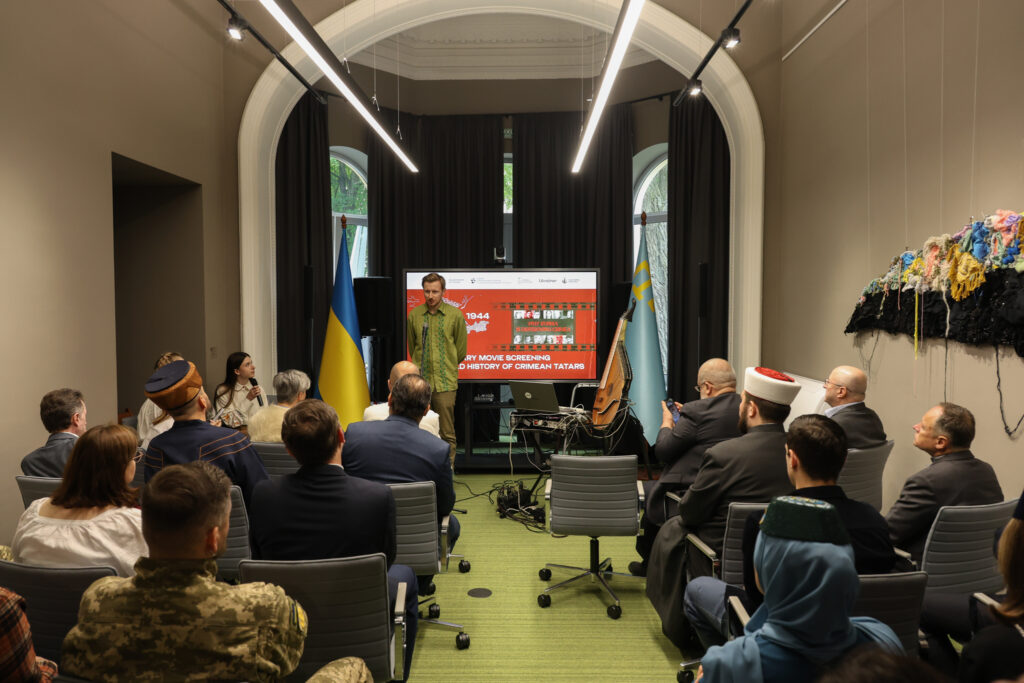
On 15 May, the Mission hosted an advocacy event dedicated to the 81st anniversary of the deportation of the Crimean Tatar people, organized jointly by the Embassy of Canada to Ukraine and the team of the Mission. The event featured speeches from distinguished guests, a screening of Ukraїner’s explainer documentary The Untold History of Crimean Tatars, and a musical intervention by the Cultural Forces. The event was attended by members of the diplomatic corps, media representatives, and civil society actors.
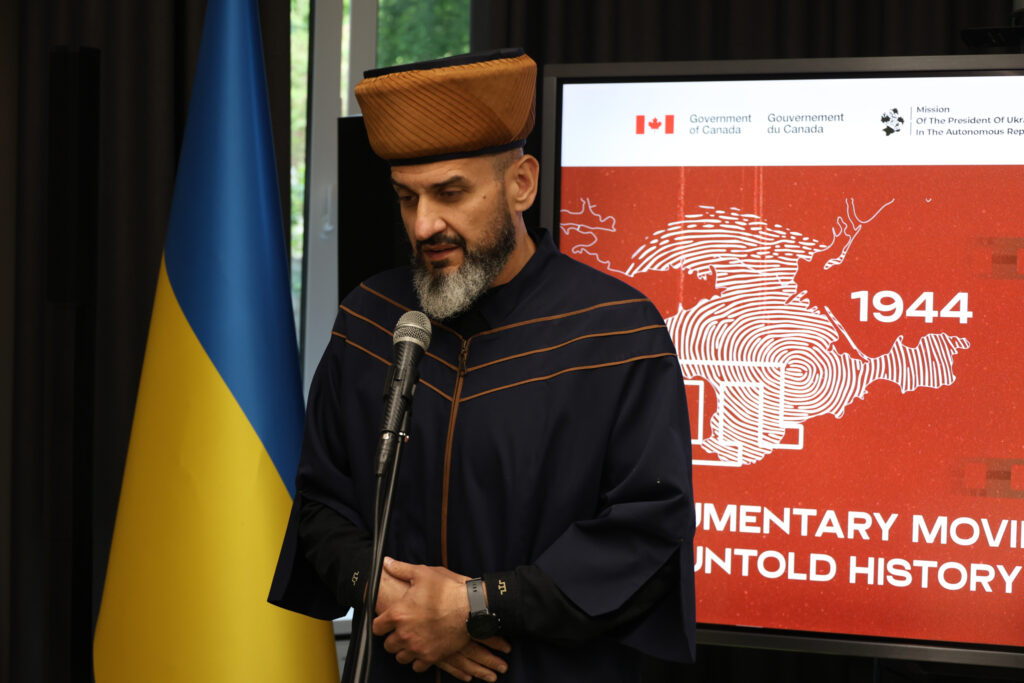
Opening remarks were delivered by Ambassador of Canada to Ukraine Natalka Cmoc, Deputy Head of the Crimea Platform Department Anna Sytnikova, founder of Ukraїner Bohdan Lohvynenko, Chairman of the Mejlis of the Crimean Tatar People Refat Chubarov, Mufti of the Spiritual Administration of Muslims of Ukraine Umma Sheikh Murat Suleimanov, and Mufti of the Spiritual Administration of Muslims of the Autonomous Republic of Crimea Sheikh Aider Rustemov.
In her remarks, Ambassador Natalka Cmoc emphasized Canada’s unwavering solidarity with Ukraine and the Crimean Tatar people. She underscored that the two waves of forced deportation of Crimean Tatars stand as evidence of a deliberate policy to erase the identity and heritage of Ukraine’s Indigenous people.
“The Soviet regime carried out a mass deportation known as Sürgünlik. Over 200,000 Tatars were deprived of their homeland and their homes. I believe the international community must pay attention to this story. The second tragedy was the Russian occupation of Crimea in 2014,” stated Natalka Cmoc.
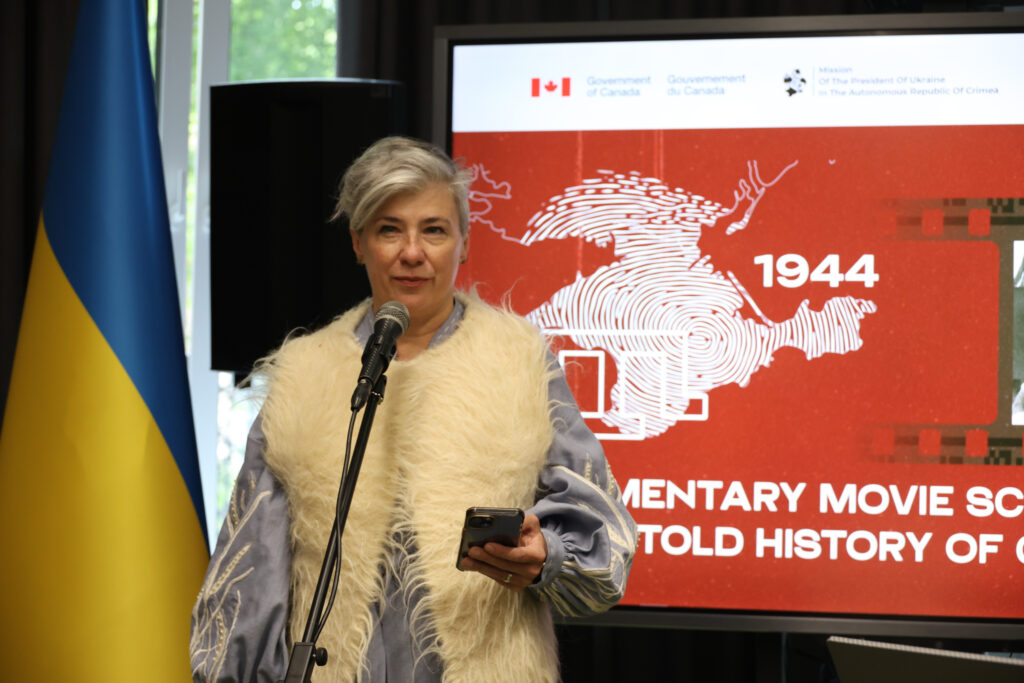
The Ambassador of Canada to Ukraine emphasized the role of the international community in recognizing the deportation as an act of genocide and honoring the memory of its victims. She noted that in 2022, the House of Commons of Canada officially recognized the deportation of the Crimean Tatars as an act of genocide.
Anna Sytnikova, Deputy Head of the Crimea Platform Department, expressed gratitude to the Embassy of Canada to Ukraine and Natalka Cmoc for initiating the event. She noted that the parliaments of Canada, Ukraine, Latvia, Lithuania, Poland, Estonia, and the Czech Republic have already recognized the deportation of the Crimean Tatar people as genocide, and she called on other parliaments to join in acknowledging the deportation as a crime of genocide.
“As of today, the Mission is aware of at least 223 Crimean political prisoners, 133 of whom are Crimean Tatars. At the same time, we understand that the actual number is likely much higher, as many of these cases remain partially or entirely concealed due to the occupation policy,” emphasized Anna Sytnikova.
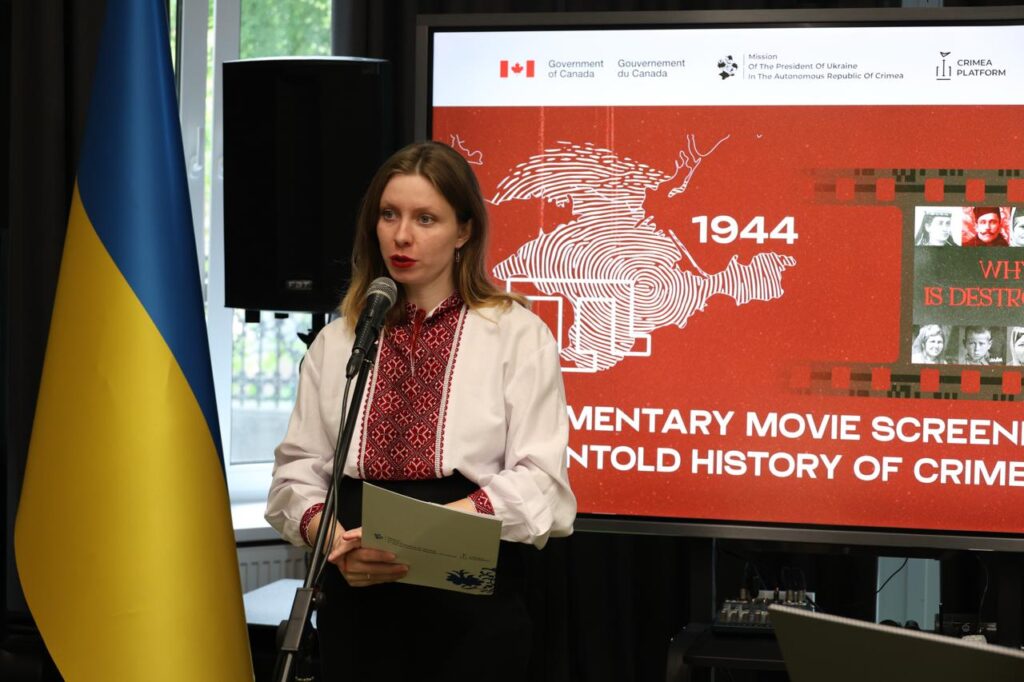
Bohdan Lohvynenko, founder of the Ukraїner project, noted that for the Ukraїner team, it was a matter of principle and values to create this explainer about the history of the Crimean Peninsula.
“Since Ukraїner was founded in 2016, we’ve been searching for formats to ensure that the topic of Crimea remains present in public discourse. We are working on materials that document the continuity of Russian crimes to present them to the international community,” said Bohdan Lohvynenko.
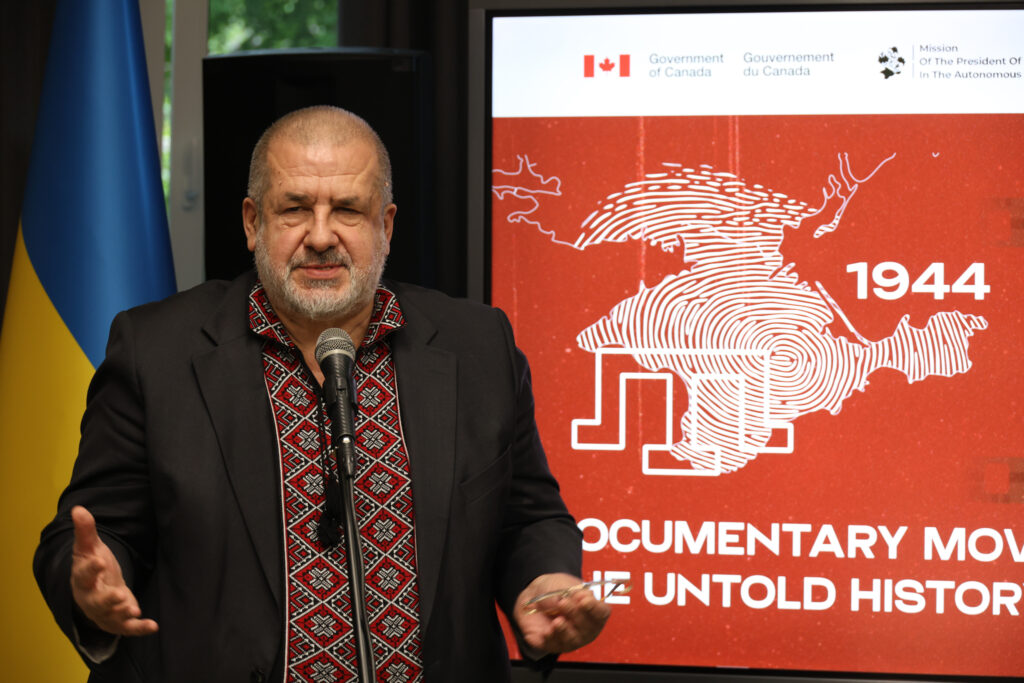
Chairman of the Mejlis of the Crimean Tatar People Refat Chubarov emphasized that Russia’s policy toward Crimea and the Crimean Tatar people has never been concealed: its goal has always been to destroy the Crimean Tatar statehood, displace the Indigenous population, and seize the peninsula. This criminal practice, he noted, continues to this day.
“Crimea is like the nerve of human civilization — a nerve that signals danger not only for the Crimean Tatar people, but for the whole world. Our strength to endure comes not only from the fact that our parents never gave up, but also from the support of many countries and peoples. Crimea is Crimean Tatar land and an integral part of the Ukrainian state,” stressed Refat Chubarov.
Mufti of the Spiritual Administration of Muslims of Ukraine Umma Sheikh Murat Suleimanov emphasized the importance of cultural, educational, and religious development for preserving the identity of the Crimean Tatar people, noting that raising awareness of their history is key to safeguarding the nation.
“For every member of the Crimean Tatar community, it is vital to tell our story and involve the international community in doing so. Despite the occupation, the Crimean Tatar people continue to fight for freedom and speak out about Russia’s crimes. Public awareness will help bring the occupiers to justice,” stressed Sheikh Murat Suleimanov.
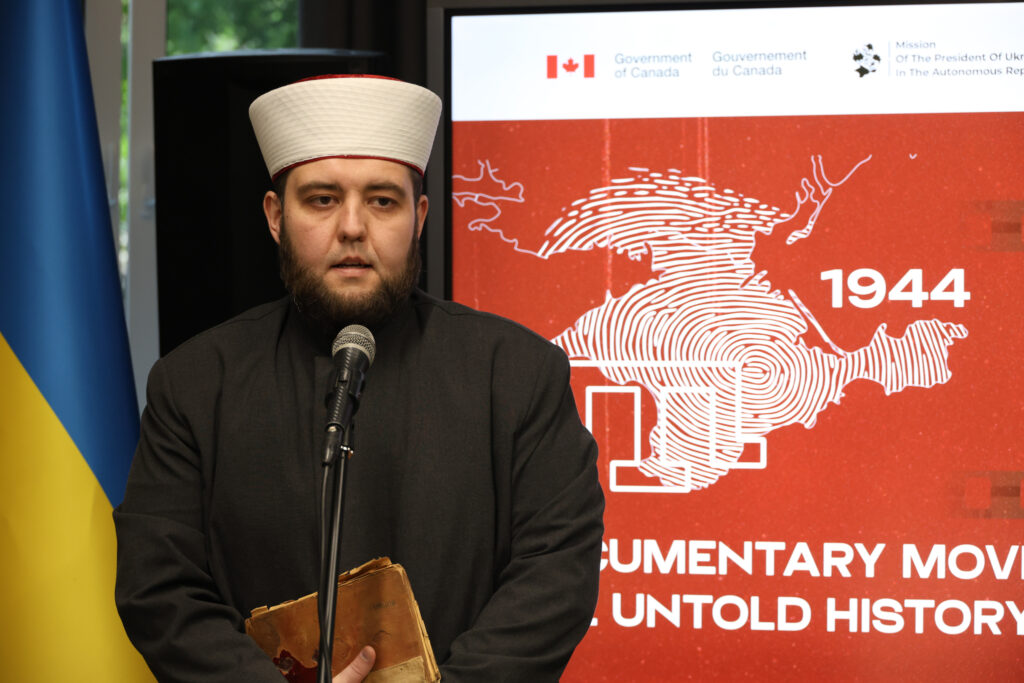
Mufti of the Spiritual Administration of Muslims of the Autonomous Republic of Crimea, Sheikh Aider Rustemov, drew attention to the deeply personal dimension of the deportation tragedy, experienced not only by those who were forcibly removed, but also by the generations that followed. He emphasized the importance of preserving the memory of the victims of the genocide-deportation.
“I wasn’t a witness to the deportation, but I have felt this tragedy deeply. It wasn’t just a relocation — it was the destruction of an entire way of living. It meant children without parents, people cut off from their language, a tragedy that spans centuries. That is why it’s so important to preserve this memory. It is not just a day of mourning — it is a memory that gives us the strength to fight and to prevail,” stated Sheikh Aider Rustemov.
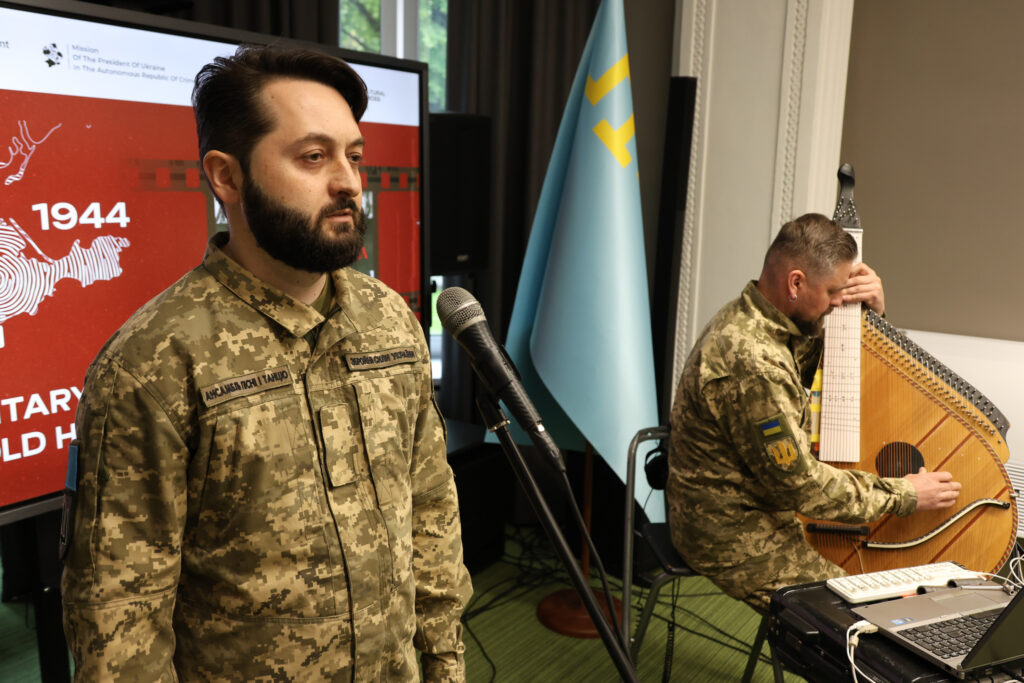
As part of the event, musical compositions were performed thanks to the Cultural Forces. Guests had the opportunity to hear authentic music played on the electro-bandura — a revolutionary innovation popularized by Ivan Tkalenko. In addition, Ismail Kurt-Umer performed a Crimean Tatar battle march.
The explainer video by Ukraїner, The Untold History of Crimean Tatars, explores how Russia has systematically erased, rewritten, and weaponized the history of the Crimean Tatar people. Based on eyewitness accounts and archival documents, the authors uncover the truth about Russia’s crimes against the Crimean Tatars — a truth the aggressor seeks to conceal from the world. The project was created by Ukraїner in collaboration with the PR Army NGO, as part of the Where Are Our People? campaign.
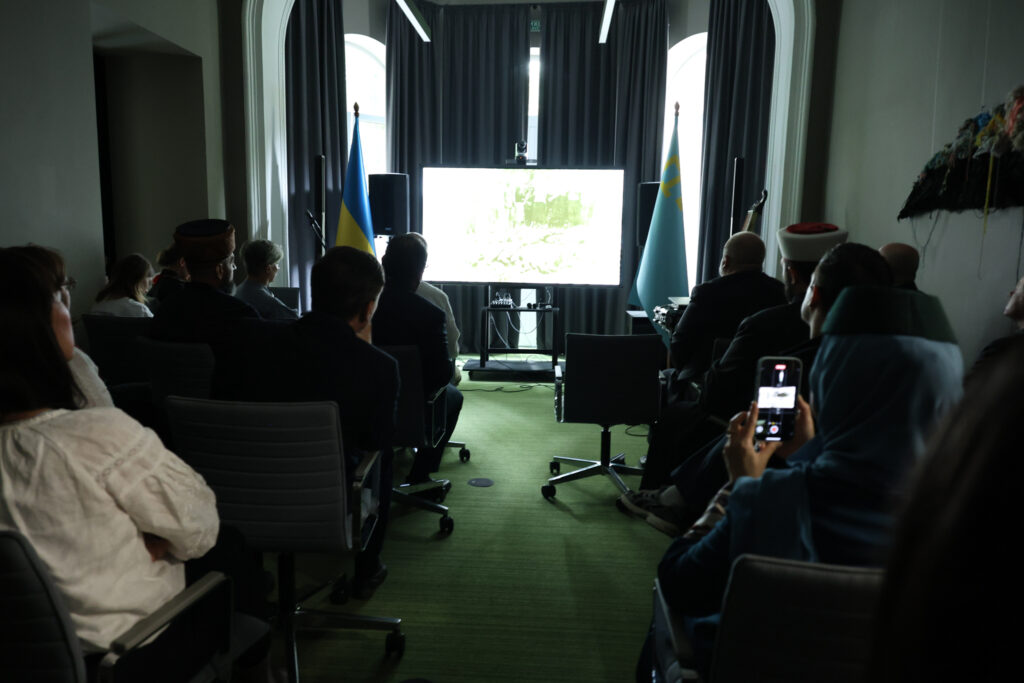
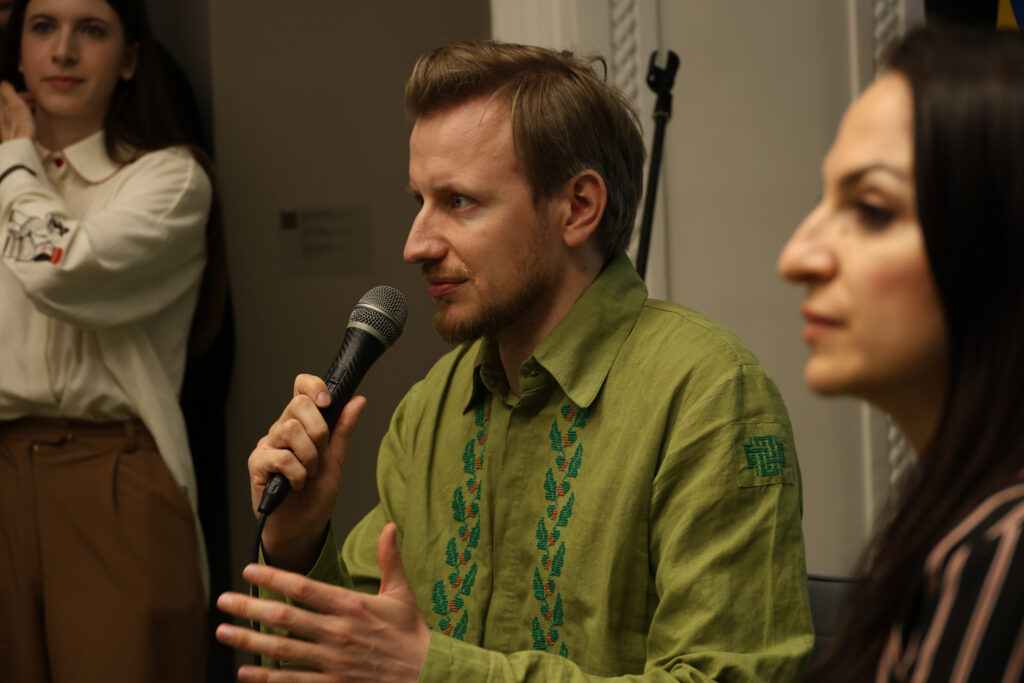
Following the screening, participants joined an open discussion with Ukraїner founder Bohdan Lohvynenko, project author Anastasiia Marushevska, and PR Army advocacy manager Khrystyna Shkudor.
The Mission extends its sincere gratitude to all participants and calls on partner states to recognize the deportation of the Crimean Tatar people as an act of genocide — a crucial step toward restoring justice and historical truth in the world.