21 November 2024
As Part of the Crimea Global Conference, a Side Event, Resilient Girls from Asia and Africa: Why They Chose to Stay and Study in Ukraine, Was Held
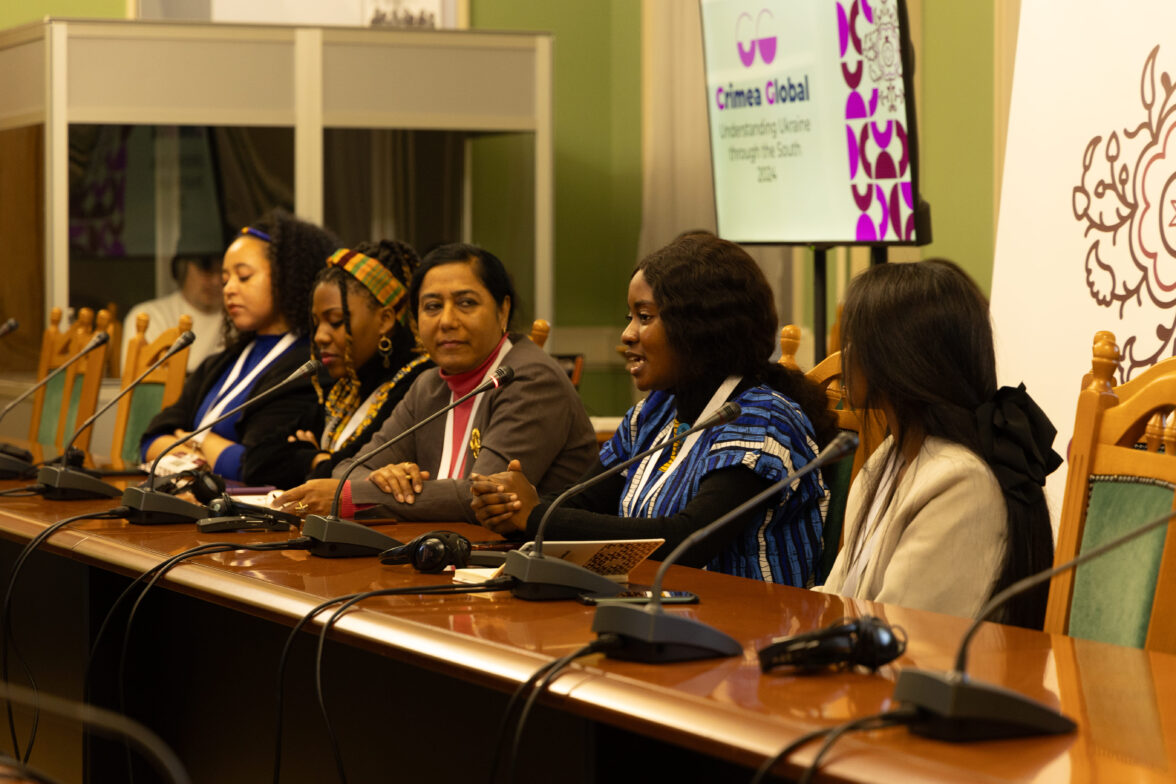
On November 21, during the Second International Conference Crimea Global: Understanding Ukraine through the South, a panel discussion titled “Resilient Girls from Asia and Africa: Why They Chose to Stay and Study in Ukraine” was held. The event was organized in cooperation with the Eastern European Development Institute as part of the Ukraine and South Asia: Open Dialogues initiative.
The panel discussion featured distinguished Vinnytsia National Medical University participants: Anastasia Dube, a final-year student of Dentistry; Somia Hazel Topno, a sixth-year Medicine student; Climencia Nomkhayelihle Moyo, a Medicine student, and Serena Ejovwokoghene Omoko, a fourth-year student of Medicine and Surgery. Dr. Mridula Ghosh, Associate Professor at the National University of Kyiv-Mohyla Academy and Board Chair of the East European Development Institute, moderated the discussion. The event also included the participation of Maria Tomak, Head of the Crimea Platform Department, Rostyslav Tronenko, Ambassador-at-Large of the Ministry of Foreign Affairs of Ukraine, and Dzvinka Kachur, Vice President of the World Congress of Ukrainians in Africa.
During the panel discussion, Anastasia Dube, a student from Zimbabwe, emphasized the importance of understanding the causes and consequences of war, highlighting the need for contextual awareness in evaluating the situation. She called for combatting Russian propaganda influencing media narratives in various countries. For Anastasia, the war is associated with liberation and a poignant reminder that independence should never be taken for granted. Her words resonated as a call to recognize the importance of truth and support for Ukraine.
Climencia Moyo, a student from Zimbabwe, reminded the audience that the war impacted not only Ukraine but other countries. She explained how prices for bread and fuel had increased in her homeland due to the conflict.
“We cannot call this solely a Ukrainian war,” she noted.
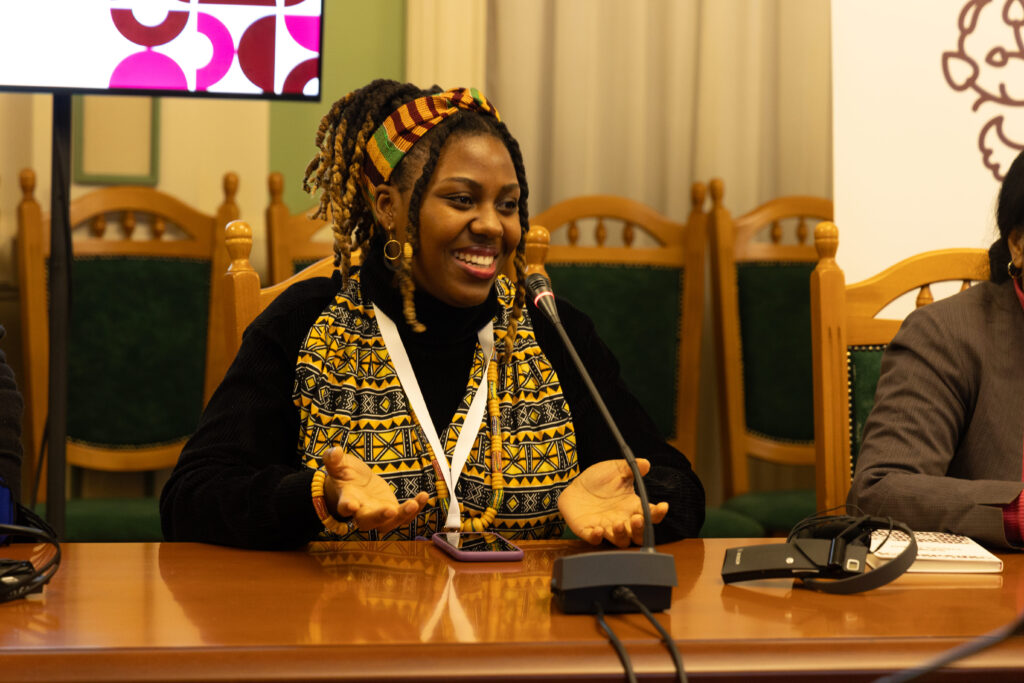
Climencia aspires to start a blog to discuss the global implications of the war and leverage social media as a tool for civic diplomacy. She also shared how the perception of the war in her community has evolved, with people gradually believing in Ukraine’s ability to prevail.
Serena Omoko, a Nigerian student, described how Ukraine has become her second home. Despite the challenges, she decided to remain in the country, feeling strong in solidarity with Ukrainians.
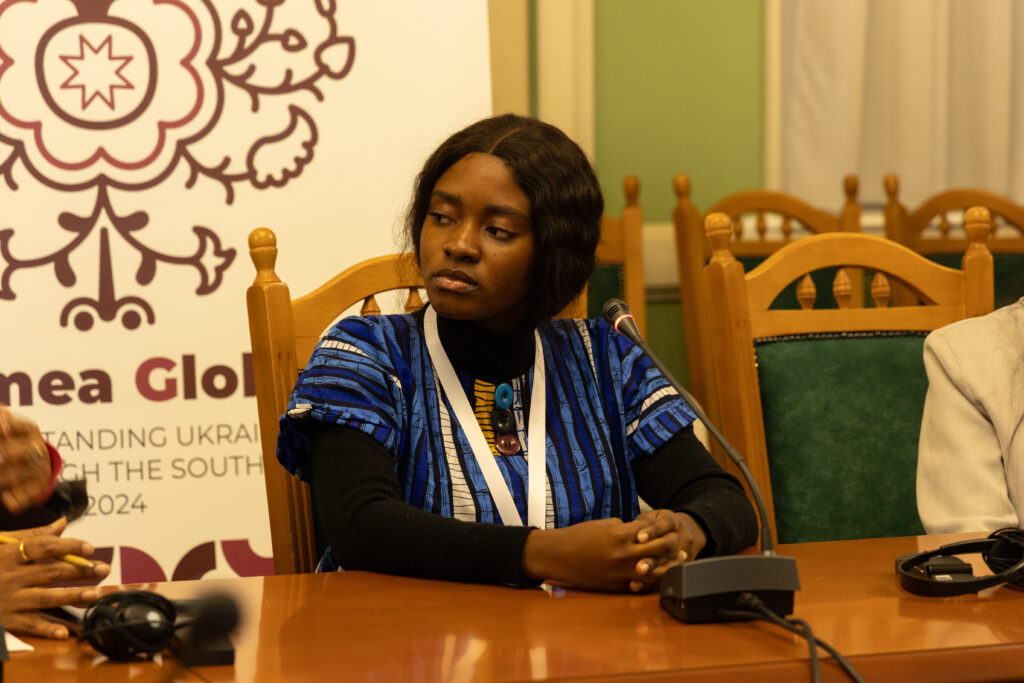
“The war taught me humanity and courage,” Serena said, recounting stories of families who, despite losing their homes, continued to support others.
Somia Geysel Topno, a sixth-year student from India, shared her experiences studying in Ukraine, which was a decision her parents had made for her. She admired Ukrainian culture, noting similarities between Ukrainian and Indian traditions, such as embroidery and harvest celebrations. Somia also highlighted the importance of empowering women to pursue their goals and expressed her desire to continue supporting Ukraine:
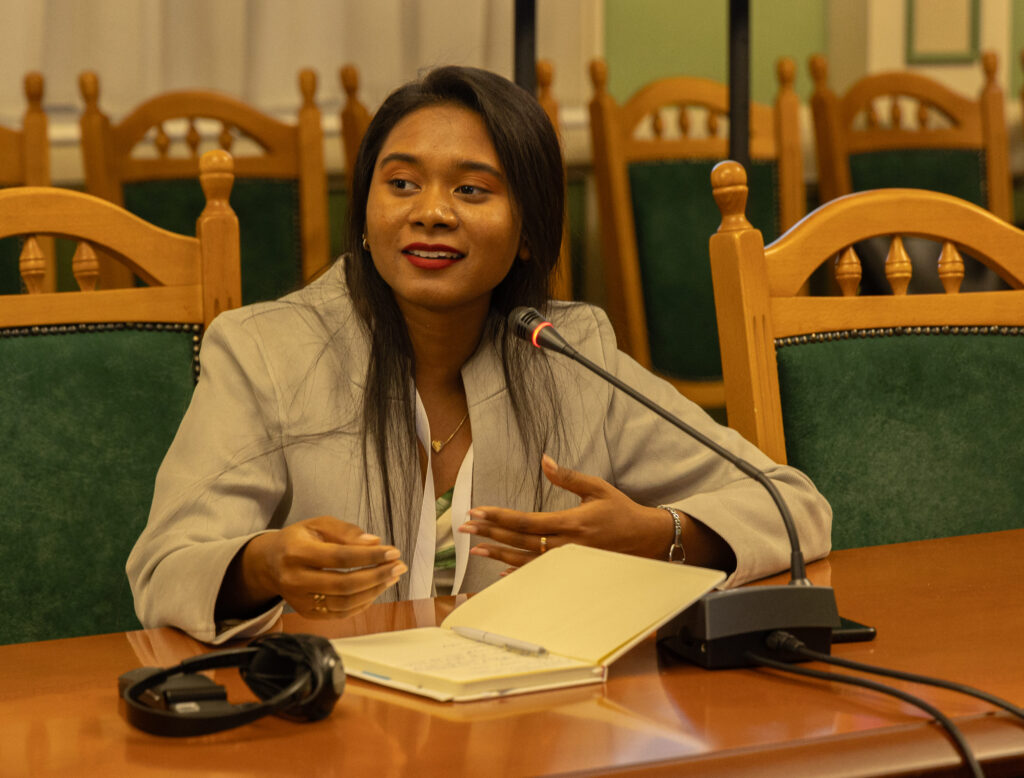
“Ukraine is a model of bravery: its people can support themselves, their families, and communities. That is why I stand with you and sincerely support your country.”
Throughout the event, the panelists shared their experiences and motivations for remaining in Ukraine during the war. They underscored that their decisions were driven not only by professional opportunities but also by the connections they had formed with Ukrainians, who became their source of support and extended family.