24 October 2024
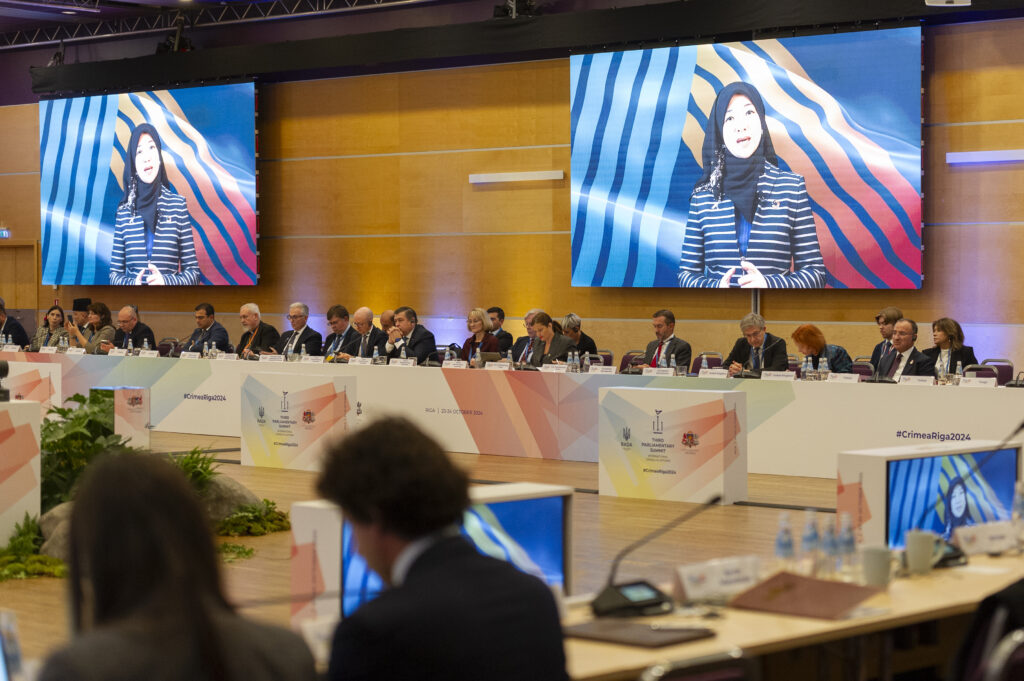
As part of the Third Parliamentary Summit of the Crimea Platform, held in Riga, Latvia, the second session of the Plenary Meeting took place
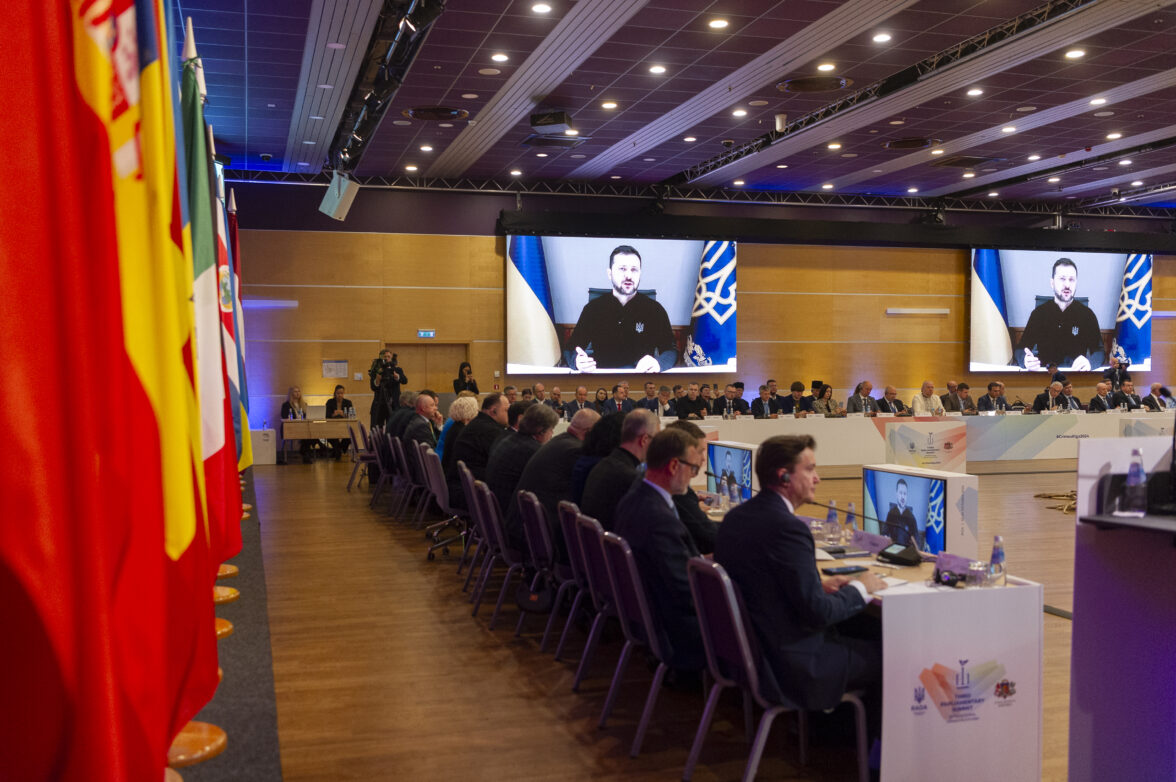
The Plenary Session began with a speech by Tamila Tasheva, Permanent Representative of the President of Ukraine in the Autonomous Republic of Crimea.
Tamila Tasheva emphasized that despite the campaign of mass repression that began after Russia’s occupation of Crimea, the people of Crimea continue to resist and oppose the occupation:
“More than a thousand acts of resistance and solidarity with mainland Ukraine have taken place across Crimea since 2022 — this is a reality many choose to ignore, clinging to Russian myths about a pro-Russian Crimea. But Crimea, like other territories temporarily occupied by Russia, yearns for liberation.”
In conclusion, the Permanent Representative called on the international community to continue supporting Ukraine and the Crimea Platform, noting that only through collective efforts can a just peace be achieved, and Ukraine’s territorial integrity restored.
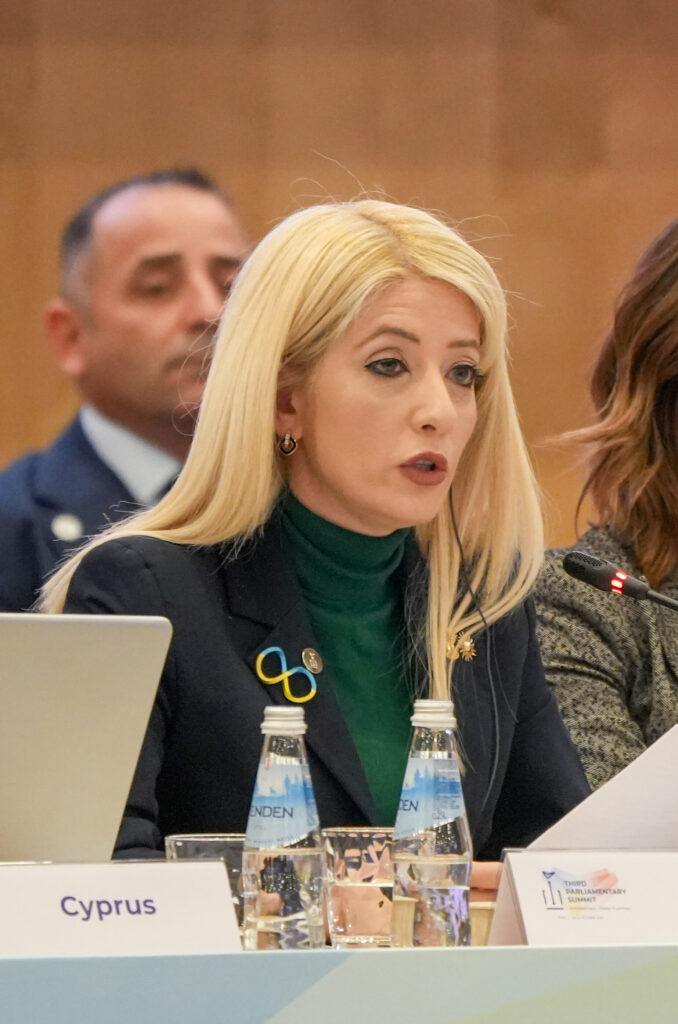
Anita Demetriou, Speaker of the House of Representatives of Cyprus, emphasized that the Russian invasion is not only an attack on Ukraine but also a violation of international law: “Ukraine must win, and Russia must be held accountable for all its crimes. The seizure of Crimea and attempts at occupation are illegal and will never be recognized by Cyprus.”
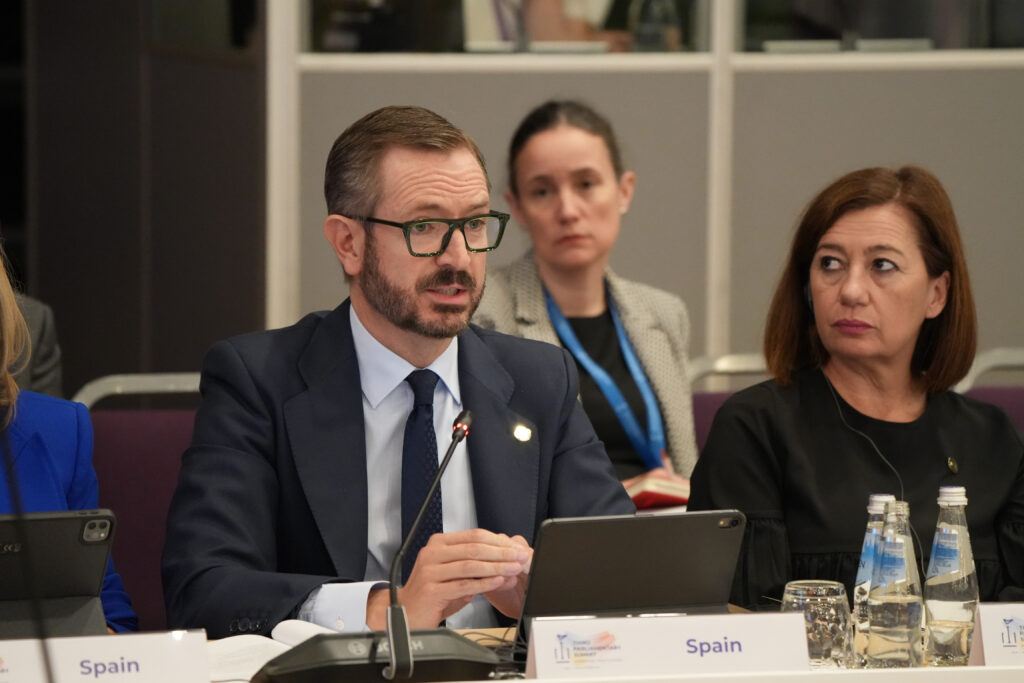
Javier Maroto, Deputy Chairman of the Senate of Spain, and Afrim Gashi, Speaker of the Parliament of North Macedonia, assured that the Russian-Ukrainian war is not only Ukraine’s war but the war of the entire democratic world.
Milton Dick, Speaker of the House of Representatives of Australia, stated that Australia has allocated 1.3 billion Australian dollars to support Ukraine since the full-scale invasion in 2022, demonstrating that it is a leader in supporting Ukraine among non-NATO countries.Elisa Spiropali, Speaker of the Parliament of Albania, noted the importance of supporting Ukraine’s plan for a just peace to reject the constant threat to shared security in Europe and the world:
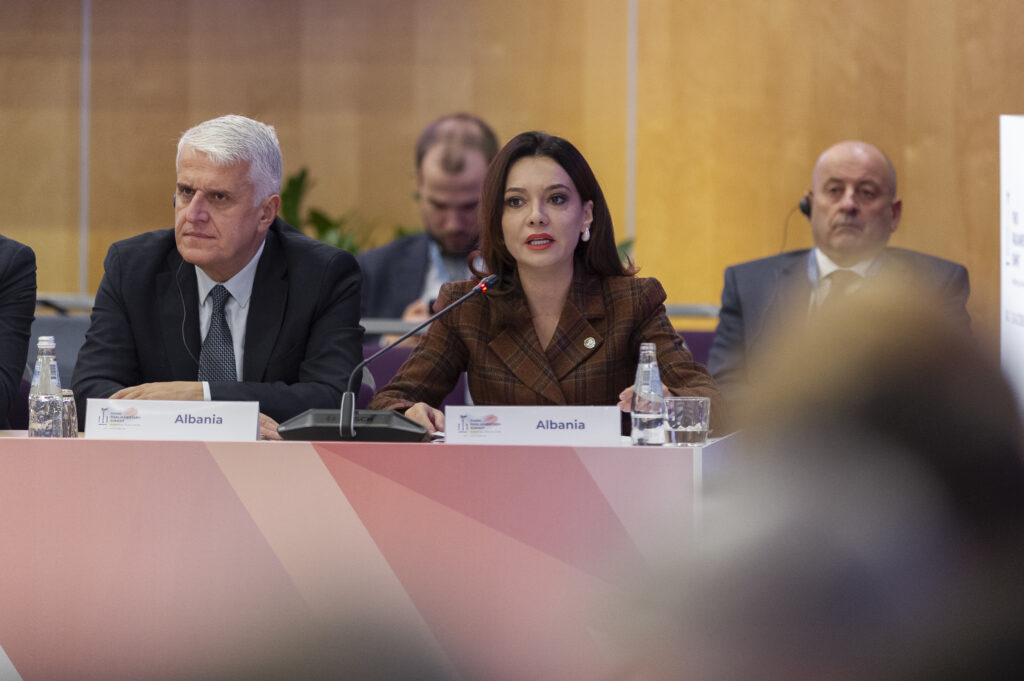
“Our unity and solidarity with the authorities and people of Ukraine are a fight to protect our civilization, which is built on the foundations of freedom, the right to self-determination, and the sacred rights of all nations.”
Angelo Farrugia, Speaker of the Parliament of Malta, Charles Flanagan, Chairman of the Joint Committee on Foreign Affairs and Defence of the Dáil Éireann, and Albert Frick, Speaker of the Landtag of the Principality of Liechtenstein, expressed their unwavering support for Ukraine’s independence, acknowledged the resilience of Ukrainians in their fight for freedom, and stressed that lasting peace can only be achieved through diplomacy.
Eric Nussbaumer, President of the National Council of Switzerland, emphasized that parliamentarians play a key role in the path to achieving sustainable peace and can contribute to this process in many ways, including through the adoption of legislation that strengthens aid to Ukraine:
“We reaffirm that the illegal occupation of Crimea and Russia’s full-scale aggression are violations of international law that should not be accepted by the international community.”
Eva Herzog, Speaker of the Swiss Council of States, emphasized that Switzerland has been a committed participant in the Crimea Platform since its inception in 2021, and that platforms like these are crucial for facilitating dialogue and mutual understanding.
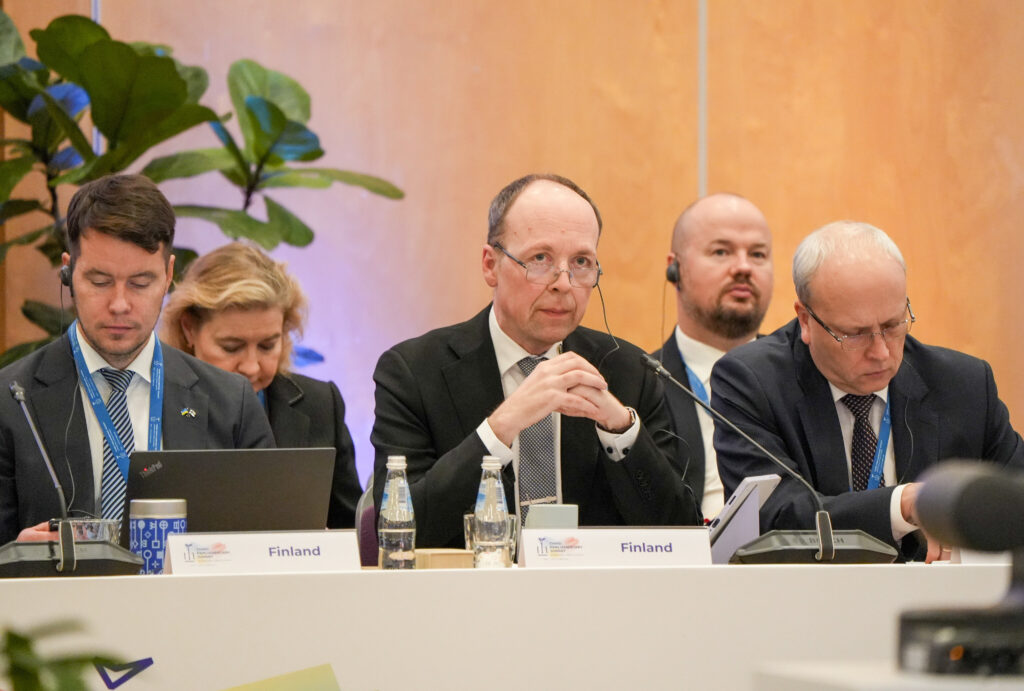
Francina Armengol, Speaker of the Congress of Deputies of Spain, noted that in May 2022, a Russian missile struck the Hryhorii Skovoroda National Literary-Memorial Museum, leaving only a monument to the Ukrainian poet and philosopher. She quoted Hryhorii Skovoroda, emphasizing that “one man does not make an army,” and that Spain firmly stands with Ukraine.
Raya Nazaryan, Speaker of the National Assembly of Bulgaria, Ioannis Plakiotakis, Vice President of the Greek Parliament, and Ana Brnabić, Speaker of the National Assembly of Serbia, reaffirmed their countries’ unwavering positions on the attempted annexation and occupation of Ukrainian territories and pledged their support for Ukraine’s independence, sovereignty, and territorial integrity within its internationally recognized borders.
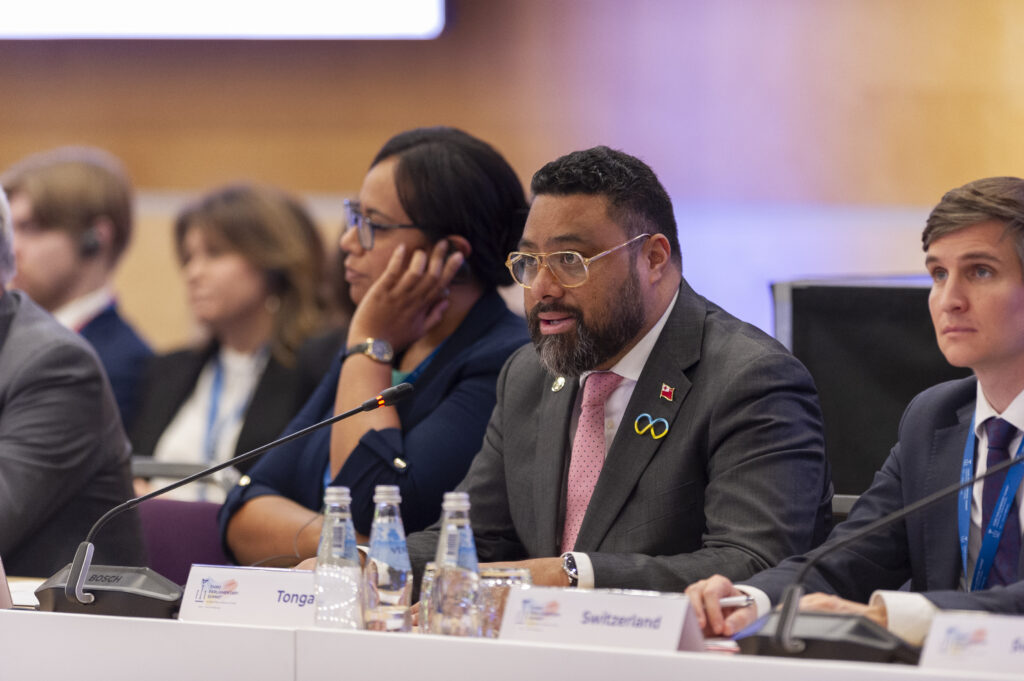
Fatafehi Fakafanua, Speaker of the Legislative Assembly of Tonga, reminded that Tonga consistently votes in favor of UN resolutions condemning Russian aggression against Ukraine, including those on humanitarian issues. He stressed the importance of a collective response to Russia’s atrocities against humanity and justice:
“Peace is not just the absence of conflict, but the presence of justice, equality, and respect for international law and order.”
Yuli Edelstein, Speaker of the Knesset of Israel, praised Ukraine for hosting such a significant international conference with the support of the international community:
“Only by uniting can we defeat the enemy. We must stand together, evil must be punished, and in the end, good will always prevail. Both of our countries continue to lose the best sons and daughters of our nations, but ultimately, a bright future awaits, and we are moving towards it.”
Svein Harberg, Deputy Speaker of the Parliament of Norway, emphasized that no European country is safe as long as Russia believes its aggressive actions are succeeding. He noted that Ukraine’s defensive war directly concerns the protection of democracy, and partners should not stop supporting Ukraine:
“Norway will not stop until we see a sovereign, independent, democratic, and secure Ukraine. The path is clear and straightforward: Russia must immediately end the war and illegal occupation of all Ukrainian territories, including Crimea.”
Judith Cummins, Deputy Speaker of the House of Commons of the United Kingdom, emphasized that the UK government continues to discuss the Victory Plan presented by President Volodymyr Zelenskyy and remains committed to the principle of Ukraine’s sovereignty:
“We must remember that Russia’s violation of Ukraine’s sovereignty did not begin in 2022; it began with the occupation of Crimea in 2014… The UK will never recognize the illegal occupation of Crimea because Crimea is Ukraine.”
Theodoros Rousopoulos, President of the Parliamentary Assembly of the Council of Europe, is convinced that Russia must face just punishment for its crimes at an International Tribunal. The entire democratic community must witness this event, which will ensure peace based on justice and the rule of international law.
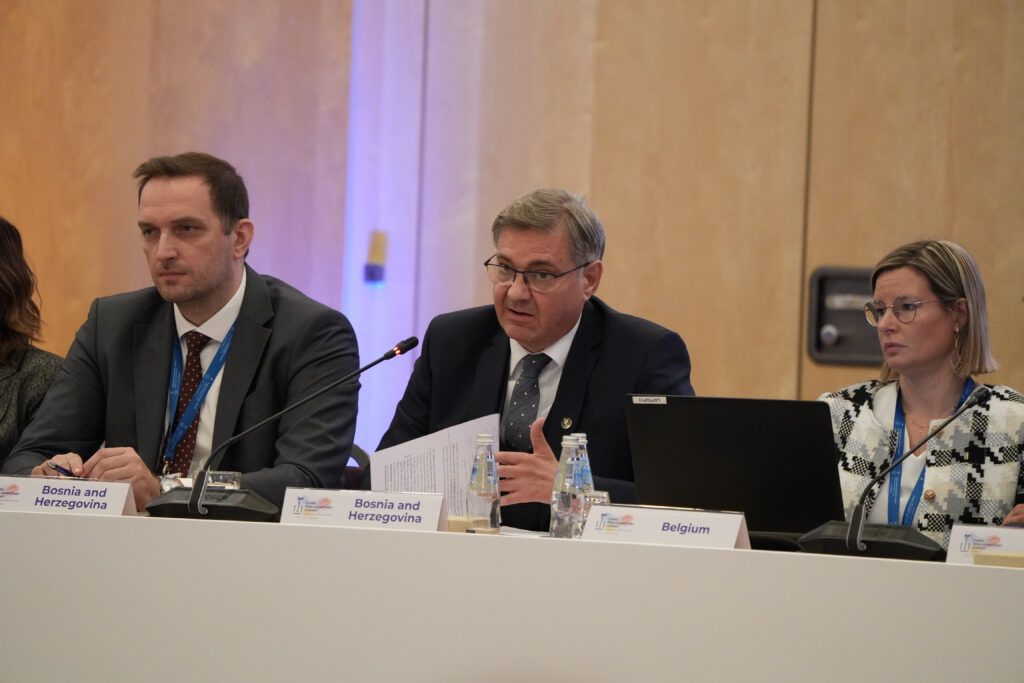
Denis Zvizdić, Deputy Chairman of the House of Representatives of the Parliamentary Assembly of Bosnia and Herzegovina, emphasized the importance of establishing an international tribunal to punish all those who committed war crimes on Ukrainian territory, as well as the need to restore an international order based on rules and sanctions:
“The international community must increase military and economic assistance to Ukraine, otherwise the war will continue, and the world will turn a blind eye to horrific crimes, as happened in Bosnia and Herzegovina in 1995.”
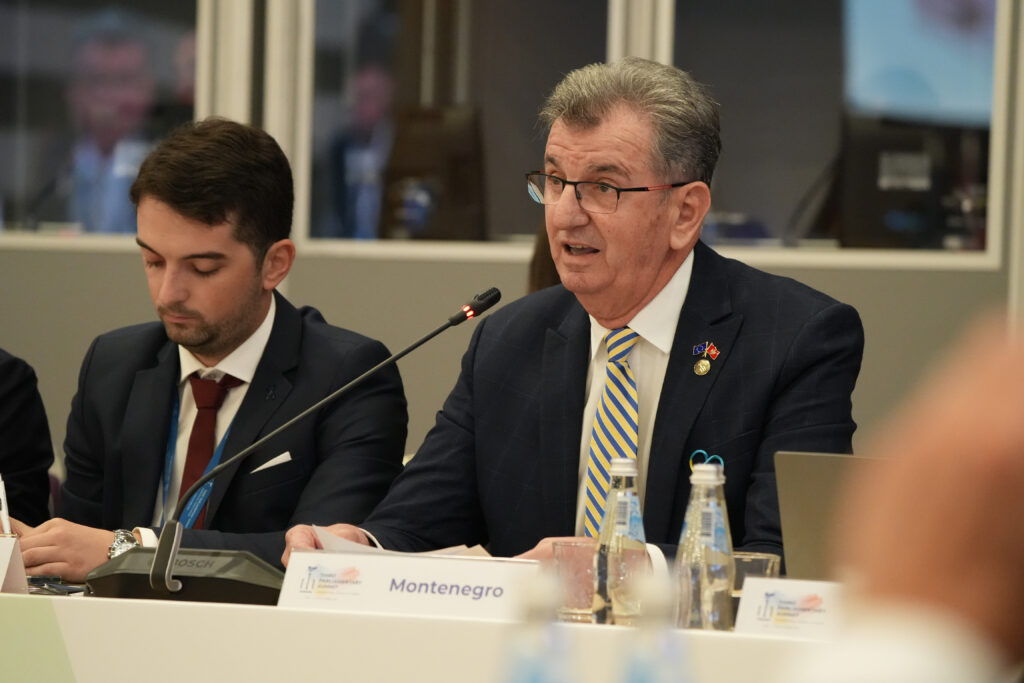
Nikola Kamaj, Deputy Speaker of the Parliament of Montenegro, reminded that Montenegro was the first non-EU country to condemn the Russian Federation’s military aggression against Ukraine.
Andries Gryffroy, Deputy Speaker of the Senate of Belgium, emphasized Belgium’s support for the Peace Formula proposed by President Volodymyr Zelenskyy and called on other countries to apply sanctions and increase military and humanitarian assistance to Ukraine to protect it from the aggressor. Russia’s aggressive war is disrupting Europe’s security architecture, impacting energy markets, and affecting Ukraine’s critical infrastructure.
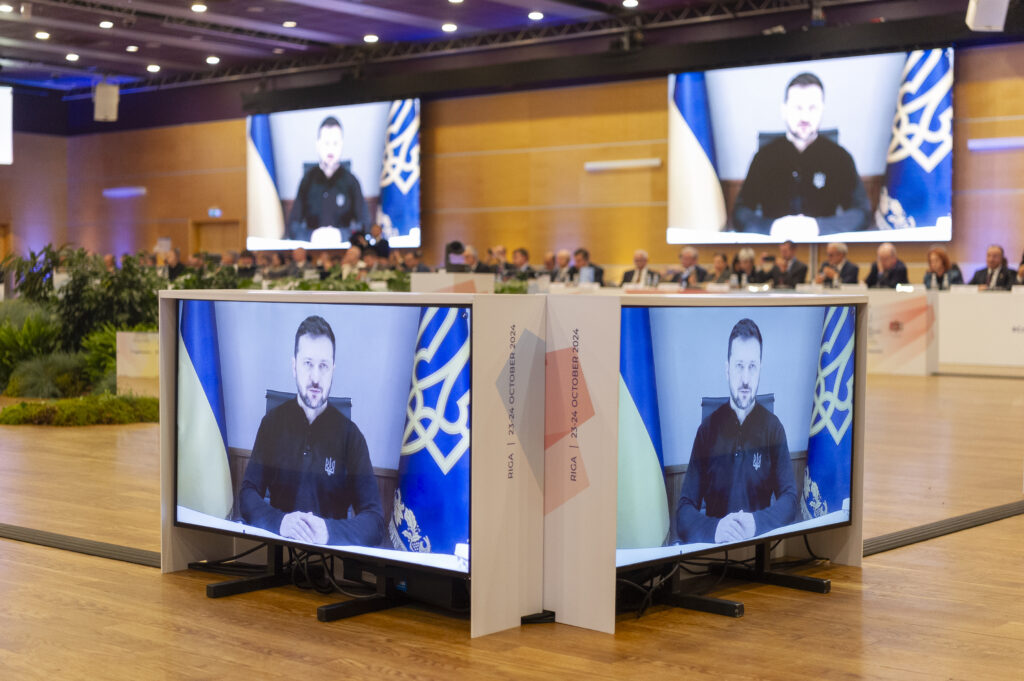
Kenneth Gustav Forslund, Deputy Speaker of the Swedish Parliament, emphasized that the world understands Russia’s ambitions, marking the 10th anniversary of Crimea’s occupation in 2024, the war in Luhansk and Donetsk, and three years of full-scale invasion:
“Ukraine is fighting for its right to exist, to choose its own path within the European and global security order, and to ensure a peaceful future for all of us.”
Bekir Bozdağ, Deputy Speaker of the Grand National Assembly of Turkey, emphasized the importance of supporting Ukraine’s sovereignty and territorial integrity, highlighting Turkey’s active participation in the Crimea Platform: “The conflict in Ukraine started with the unjust and illegal occupation of Crimea 10 years ago. Turkey has always been one of Ukraine’s strongest supporters.”
Peter Žiga, Deputy Speaker of the National Council of Slovakia, noted that the war in Ukraine directly affects the social, economic, and security situations of Slovak citizens:
“A peaceful, independent, democratic, and prosperous Ukraine, integrated into European structures (after meeting certain conditions) and within internationally recognized borders, remains Slovakia’s strategic interest.”
Roberts Zīle, Deputy Speaker of the European Parliament, declared that European leaders have stated in the conclusions of the European Council last week that Russia must not win. He added that members of the European Parliament have called for increased sanctions and urged EU and NATO member states to provide military and financial support to Ukraine:
“If we seek a future where we can cooperate within a stable, rules-based world order to collectively tackle global challenges, we must recognize that there is no alternative to Ukraine’s victory, a Ukrainian Crimea, and the implementation of President Zelenskyy’s plan.”
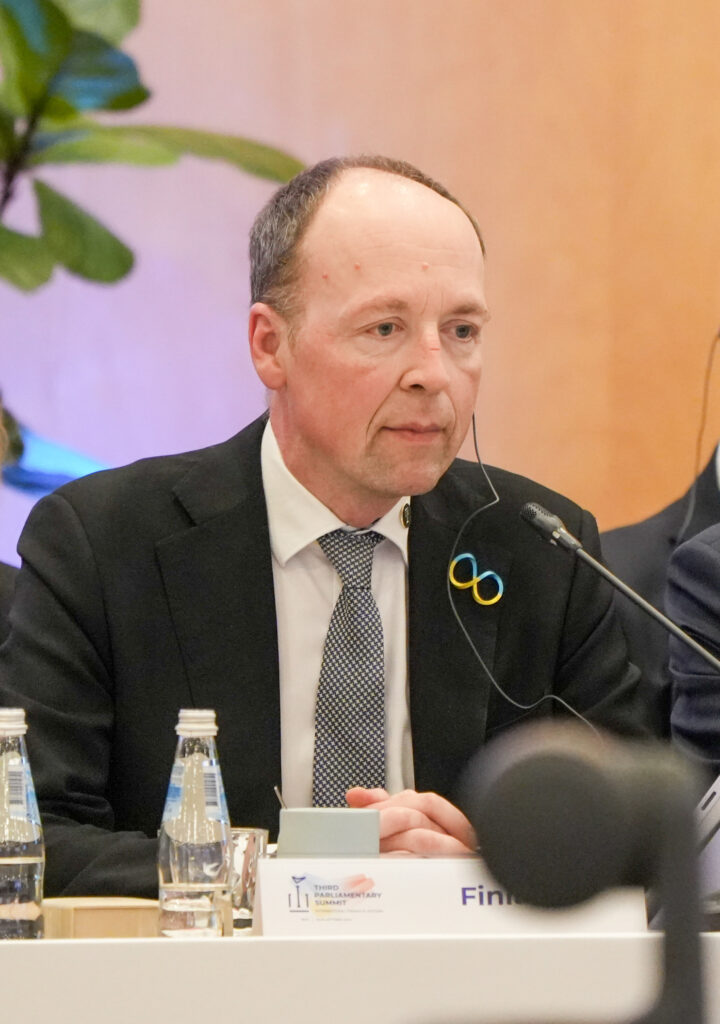
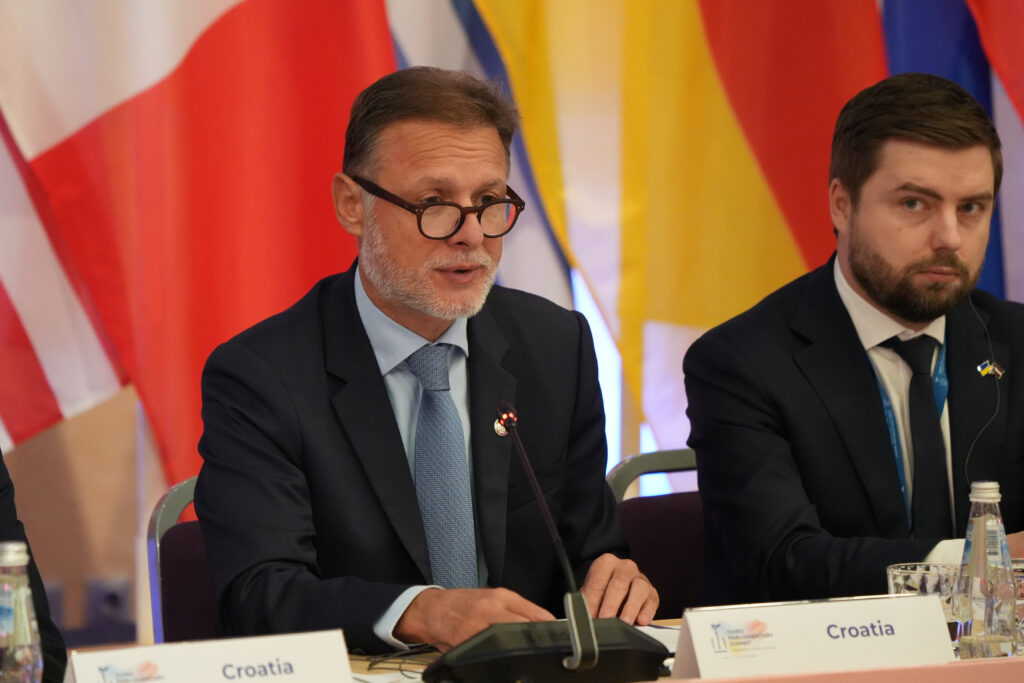
Sorin Mihai Cîmpeanu, Deputy Speaker of the Senate of Romania, emphasized that Romania supports Ukraine’s courageous fight against the aggressor:
“Russian aggression against Ukraine did not begin in February 2022 but with the illegal occupation of Crimea in 2014. I could list countless crimes committed by Russia: child abduction, murder, torture, rape… Romania calls for all perpetrators of these crimes to be held accountable, and this is our shared duty, and Ukraine’s legitimate demand.”
Sergio Costa, Deputy Speaker of the Chamber of Deputies of Italy, expressed solidarity with Ukraine. He reaffirmed Italy’s commitment to continue supporting Ukraine in line with the principles of international law:
“Italy does not recognize the illegal occupation of Crimea, and the conclusions of the European Council confirmed this position. Italy and the European Union support the territorial integrity, sovereignty, and independence of Ukraine within its internationally recognized borders, including Crimea.”
Danijel Krivec, Deputy Speaker of the State Assembly of Slovenia, expressed admiration for the resilience of the Ukrainian people and concern about reports of Russia’s military cooperation with some countries, which poses a significant threat to global security.
Andrew Asiamah Amoako, Deputy Speaker of the Parliament of Ghana, assured that the government of Ghana stands in solidarity with the authorities and people of Ukraine and agrees with the fair punishment of Russia for all the crimes committed on Ukrainian territory:
“Russia’s actions are an attack on the world order and an attack on democratic values, the rule of law, freedoms, and human rights, as well as an attack on the economies of Africa and other vulnerable countries. We demand that this war be ended as soon as possible.”
Siti Rozaimeriyanty Dato Haji Abdul Rahman, Secretary General of the ASEAN Inter-Parliamentary Assembly, noted that ASEAN focuses its efforts on supporting human rights, territorial integrity, and the sovereignty of all countries, emphasizing the importance of achieving peace and security through dialogue, cooperation, and mutual respect among the states of the region:
“The ongoing conflict has a profound impact on people’s lives, especially on vulnerable groups such as women, children, and people with disabilities. Human rights must be respected to ensure the dignity and well-being of those most affected by this conflict. We are committed to protecting human rights as a key step toward building sustainable peace.”
Dionysia-Theodora Avgerinopoulou, Vice President of the Inter-Parliamentary Union (IPU), stated that Russia’s war against Ukraine has shaken the foundations of international peace and stability and has become the greatest threat to Europe’s security since the Cold War:
“The length and amplitude of the war in Ukraine are a cause of profound concern to all of us. The threat of this war, serving potentially as a prelude to a broader world war, must be immediately averted.”
Through two resolutions and a series of statements, the Inter-Parliamentary Union has consistently condemned Russia’s armed aggression against Ukraine and the unlawful occupation of its territory, calling on all states to abide by international law.
Damián Eduardo Arabia, Head of the Argentina Friendship Group, emphasized that for Argentina, peace among free nations is not only a moral obligation but also a necessary condition for prosperity. He also noted that Argentines deeply value peace and democratic support as the foundational pillars of society.
Jesse Klaver, Head of the Committee on Foreign Affairs of the Netherlands, noted that the House of Representatives of the Netherlands recognized the Holodomor — the Soviet regime’s deliberate famine campaign — as genocide. This week, members of his committee called on government officials to consider recognizing the deportation of the Crimean Tatar people as an act of genocide.
Giulio Terzi di Sant’Agata, Chairman of the Committee on European Union Policies, Italy, has repeatedly emphasized that Italy, like other European states, must provide necessary support to Ukraine and assist in implementing the Ukrainian Peace Formula. He insists that Putin and the Russian leadership be held accountable for the crimes committed, either through the International Court or another specially created tribunal:
“Russia has violated the world order and security in Europe and beyond. We should have noticed the first signs 10 years ago when Russia, ignoring the principles of the UN Charter and international law, seized the territory of an independent state. This is a crime against humanity. Russia must end its occupation of Ukrainian territory.”
Laurent Zeimet, Deputy Chair of the Committee on Foreign Affairs of Luxembourg, noted that as the Russian aggressor tries to exploit war fatigue in Europe, it is essential to convey that the European community will not waver and that all possible means must be used to support Ukraine:
“We cannot and will not accept that aggression and cruelty determine our future. As members of parliament, we have a shared duty to support a deep and ongoing awareness that the war in Ukraine concerns our people and our way of life. We must remain in constant dialogue with our Ukrainian friends.”
Mati Raidma, Member of the OSCE Parliamentary Assembly, emphasized that it has been 10 years since the Russian Federation attempted to annex Crimea. The armed conflict and Russian aggression have far-reaching consequences not only for the region but for the entire world.
Gérard Larcher, President of the Senate of France, emphasized that Crimea was the first territory of Ukraine occupied by Russia, and it will be the territory that Ukraine will surely liberate.
Igor Grosu, President of the Parliament of Moldova, emphasized:
“What is happening in Ukraine is genocide, all these actions must be condemned, and all those responsible must be punished.”
Birgir Armannsson, Speaker of the Althing of Iceland, emphasized the importance of maintaining a firm and consistent stance in support of Ukraine. He noted that the international community must make maximum efforts to maintain unity in opposing Russian aggression and supporting Ukraine’s territorial integrity:
“Iceland demonstrates its unwavering support for an independent and sovereign Ukraine and its Euro-Atlantic aspirations. This is an unprecedented step for my country, which has never before supported the defense of another state beyond NATO.”
Michael Thomas, Chair of the Judiciary Committee of the House of Representatives of Liberia, reminded that the UN Charter states that all member states must be free in their international relations from the threat of the use of aggressive force against their territorial integrity and sovereignty:
“In response to Russia’s occupation of Crimea, the UN resolution was signed by over a hundred member states, including the Republic of Liberia. This resolution demonstrates a global commitment to maintaining peace, especially in these challenging times.”
Refat Chubarov, Chairman of the Mejlis of the Crimean Tatar People, on behalf of all Ukrainians and Crimean Tatars, thanked the summit participants for their firm stance on not recognizing Russia’s claims to Ukrainian territory. He called on everyone not to stop there and to continue using the Ukrainian Peace Formula to increase political and diplomatic pressure on dictator Putin and his supporters. He is convinced that only global unity, determination, and military force will bring the Russian aggressor to peace, withdraw its troops from the occupied territories of Ukraine, and strictly adhere to the principles of international law:
“We will definitely win because the truth is with us. This war began with the seizure of Crimea and will end with the liberation of Crimea and the restoration of Ukraine’s state sovereignty on the Crimean Peninsula.”
#Crimea #CrimeaPlatform #CrimeaIsUkraine #CrimeaRiga2024