04 December 2024
The Health Conditions of Remzi Bekirov, Rustem Seitmemetov, and Servet Haziiev Have Significantly Deteriorated
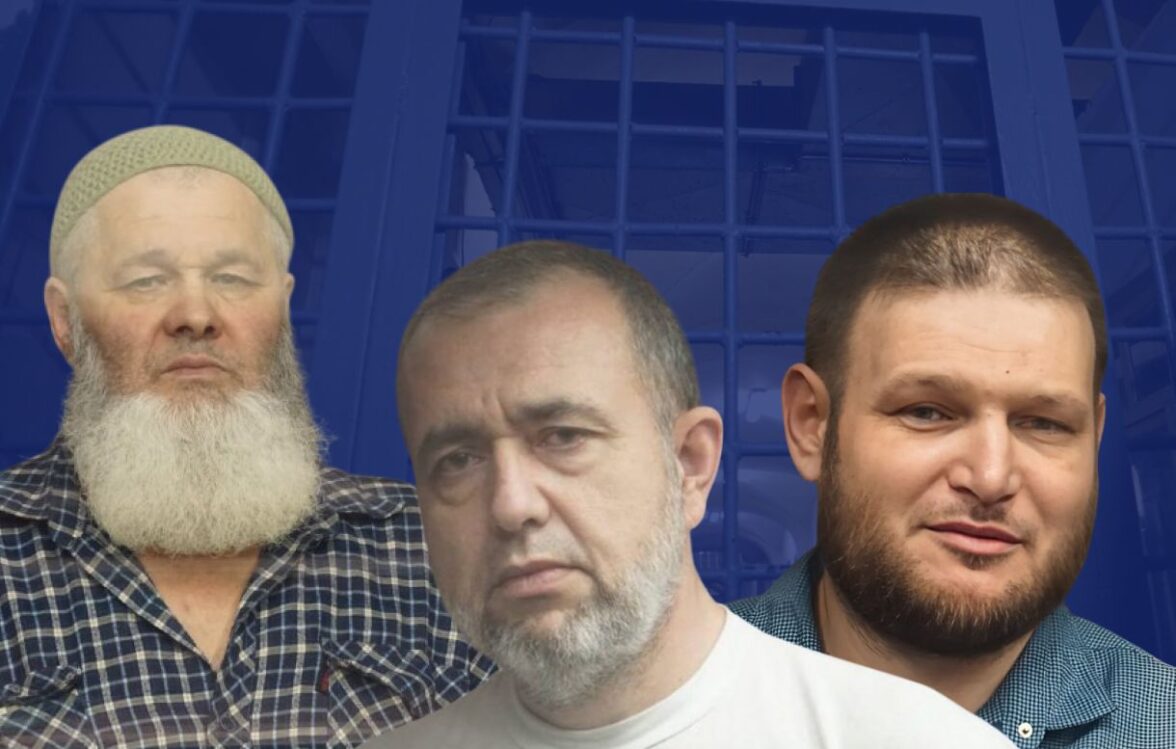
The occupation administration continued systematic persecution of Crimean Tatars, using fabricated charges to imprison individuals based on political, ethnic, or religious grounds. Intolerable detention conditions and the lack of adequate medical care have led to critical health deterioration among political prisoners. These human rights violations reflect a systemic repression aimed at intimidating the population of the peninsula.
Today, we highlight the cases of three Crimean Tatars—RemziRemzi Bekirov, Rustem Seitmemetov, and Servet Haziiev—who urgently require medical attention.
Remzi Bekirov
Journalist and civic activist Remzi Bekirov, unlawfully sentenced by the occupation “court” to 19 years of imprisonment, has faced severe health deterioration during his incarceration in Correctional Facility No. 33 in the Republic of Khakassia. His wife, Halide Bekirova, reported that Remzi had lost 15 kilograms over six years due to physical exhaustion and constant psychological pressure.
The reasons for his condition include inhumane detention conditions. He is provided food that violates his religious beliefs, including pork dishes, while his portions have been reduced to half the standard size. The prison administration also prohibits access to his bed during the day, further aggravating his health. His wife revealed that prison staff systematically subjected him to psychological pressure, deliberately creating unbearable conditions.
Additionally, Remzi has faced multiple disciplinary punishments. Over six years, he was placed in solitary confinement seven times for arbitrary reasons, such as performing nighttime prayers or allegedly failing to adhere to formal dress code requirements. For the past two months, Bekirov has been held under strict detention conditions.
Rustem Seitmemetov
Crimean Tatar Rustem Seitmemetov, unlawfully sentenced by the occupation “court” to 13 years of imprisonment, is also in critical health condition. In October 2024, he was hospitalized due to heart pain, but his family still does not know where he is being held or his current condition. Previously, he underwent heart bypass surgery but received no proper treatment afterward, while detention conditions have further exacerbated his health issues.
According to his wife, Zera Seitmemetova, Rustem last contacted his family on October 7, reporting that he was being transferred to a hospital. Since then, his whereabouts remain unknown, and the administration of the Salavat correctional facility refuses to provide any information. Despite constant complaints about high blood pressure and pain, his requests for proper medical care are ignored.
Servet Haziiev
The health of 64-year-old Crimean Tatar Servet Haziiev, sentenced by the occupation “court” to 13 years of imprisonment, is also critically deteriorating. In 2021, while in Rostov pre-trial detention, he suffered a minor stroke, which left the right side of his face paralyzed. Despite this, Haziiev has not received adequate medical care.
According to his sister, Svitlana Abliamitova, Servet experiences constant pain in his right arm and has lost coordination, making even simple tasks impossible. Lawyer Emil Kurbedinov reported that after his stroke, Haziiev was sent to a prison hospital only after several days, where he sustained additional injuries, including spinal damage. Currently, Servet receives only pain relief injections; no proper diagnosis has been made.
The unlawful imprisonment of Crimean Tatars, including Remzi Bekirov, Rustem Seitmemetov, and Servet Haziiev, is part of a systemic repressive policy conducted by the occupation administration in Crimea. The fabricated charges and gross violations of fundamental human rights represent not only a blatant breach of international humanitarian law but also a deliberate tool to suppress any resistance and intimidate the population of the temporarily occupied territory. We call on the international community to take active measures to hold Russia accountable for these crimes, secure the release of all unlawfully detained individuals, and end the repression in temporarily occupied Crimea.