16 May 2025
Opening of the Information Installation Near the Memorial to the Victims of the Genocide of the Crimean Tatar People
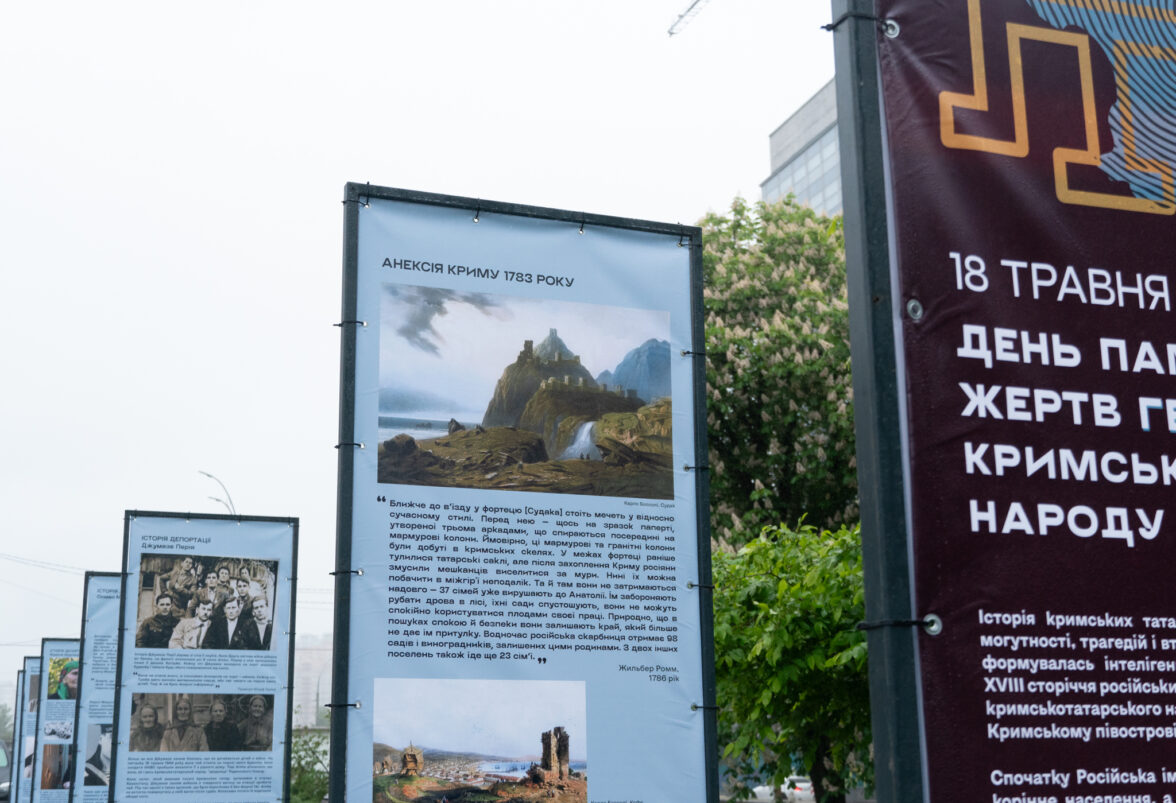
On May 16, an information installation dedicated to the Day of Remembrance of the Victims of the Genocide of the Crimean Tatar People will be presented near the Memorial to the Victims of the Genocide of the Crimean Tatar People. This project aims to convey to the public the depth of the tragedy experienced by the Crimean Tatar people, shedding light on both the deportation itself and the difficult journey of return to their homeland.
One section of the exhibition focuses on key historical events that shaped the fate of the Crimean Tatar people as a result of the colonial policies of the Russian Empire and its political successors — the Soviet Union and the Russian Federation. Visitors will be able to explore the tragic milestones of this history, including the annexation of the Crimean Khanate in 1783, the forced deportation of 1944, and the ongoing occupation of the peninsula since 2014.
Another section of the installation highlights the family stories of the deported and their descendants. Through personal testimonies, the exhibition tells the story of generational memory — of those who endured the harsh reality of genocide, of the struggle for the right to return home in the 1970s and 1980s, and of the preservation of Crimean Tatar identity in the face of decades of repression, forced assimilation, displacement, and physical destruction.
Reflections on the continuity of Russia’s colonial policy toward Crimea and its multi-layered mechanisms of erasing Ukraine’s Indigenous people are of critical importance in countering Russian historical myths about the Crimean Tatar people. This section of the installation serves as a public act of remembrance, a gesture of solidarity and support, and at the same time addresses Ukrainian society with a call to deepen its understanding of Crimean Tatar history as an integral part of Ukraine’s historical and political landscape.
The location of the installation reinforces its message: the Memorial to the Victims of the Genocide of the Crimean Tatar People consists of three steles, representing the three tragic milestones in the history of the Crimean Tatars — the annexation of Crimea by the Russian Empire in 1783, the 1944 deportation carried out by the Soviet regime, and the ongoing occupation of the peninsula by the Russian Federation since 2014. The memorial was unveiled on the day of the Fourth Summit of the Crimea Platform and is dedicated to the 80th anniversary of the deportation of the Crimean Tatar people.
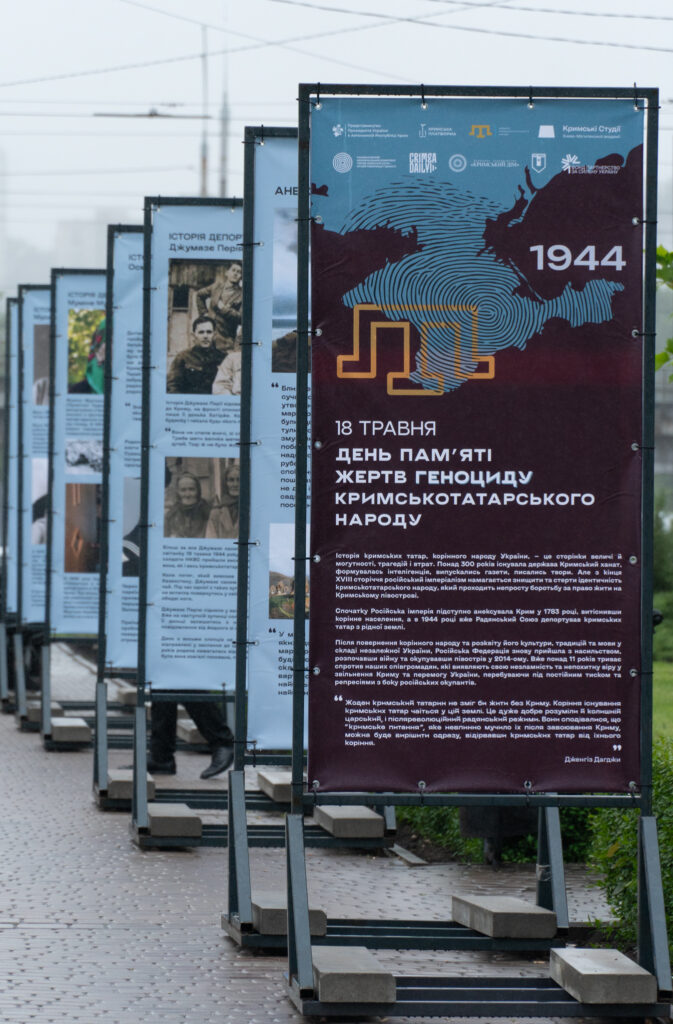
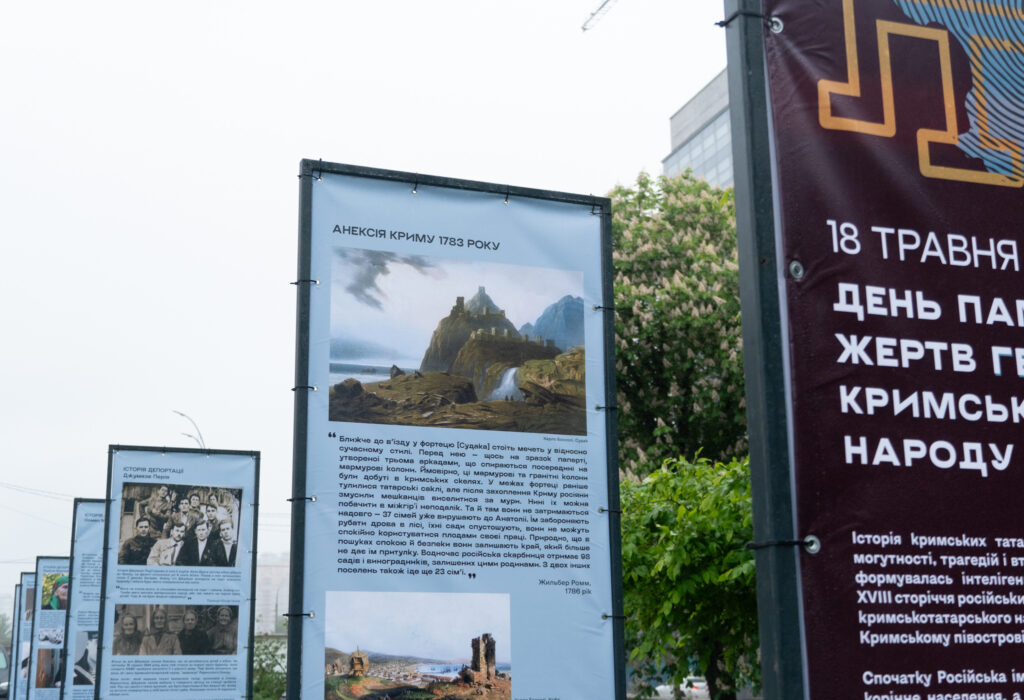
The opening of the information installation was organized by the Mission of the President of Ukraine in the Autonomous Republic of Crimea, the Crimea Platform, the Mejlis of the Crimean Tatar People, the Crimean Studies Center at NaUKMA, the National Memorial Complex of the Heroes of the Heavenly Hundred — Museum of the Revolution of Dignity, the media initiative Crimea Daily, the state enterprise Crimean House, TRO Media, and a fund supported by the governments of Canada, Estonia, Finland, the Netherlands, Norway, Sweden, Switzerland, the United Kingdom, and the United States of America.