Recovery Through Resilience: The International Spring School Resilience League Launched Today
On 21 May 2025, the International Spring School Resilience League launched its program — an exceptional educational initiative that brings together the expertise of international professionals and Ukraine’s strategic needs in the field of reintegration of temporarily occupied territories. The School’s cross-sectoral training format aims to address the most pressing challenges of our time — not only in the physical and legal dimensions but also in the informational, social, and emotional spheres.
The framework of the School is the international platform Resilience League, which has been conducting educational programs and information campaigns in the Baltic states and Ukraine since 2016, developing expertise in countering hybrid threats. The School’s goal is to promote a deep rethinking and adaptation of international experience in the Ukrainian context by shaping a resilient vision for the reintegration of liberated territories, including Crimea, based on strategies of civic resilience, crisis foresight, and interdisciplinary collaboration.
The School’s training is grounded in the principle of civic resilience and is designed to help participants:
prepare for the complex processes of stabilization and recovery following occupation;
develop future-planning skills in times of crisis;
strengthen interagency coordination, communication, and advocacy in the areas of security, social cohesion, and identity;
understand the long-term challenges that lie ahead for the state and communities in the postwar period.
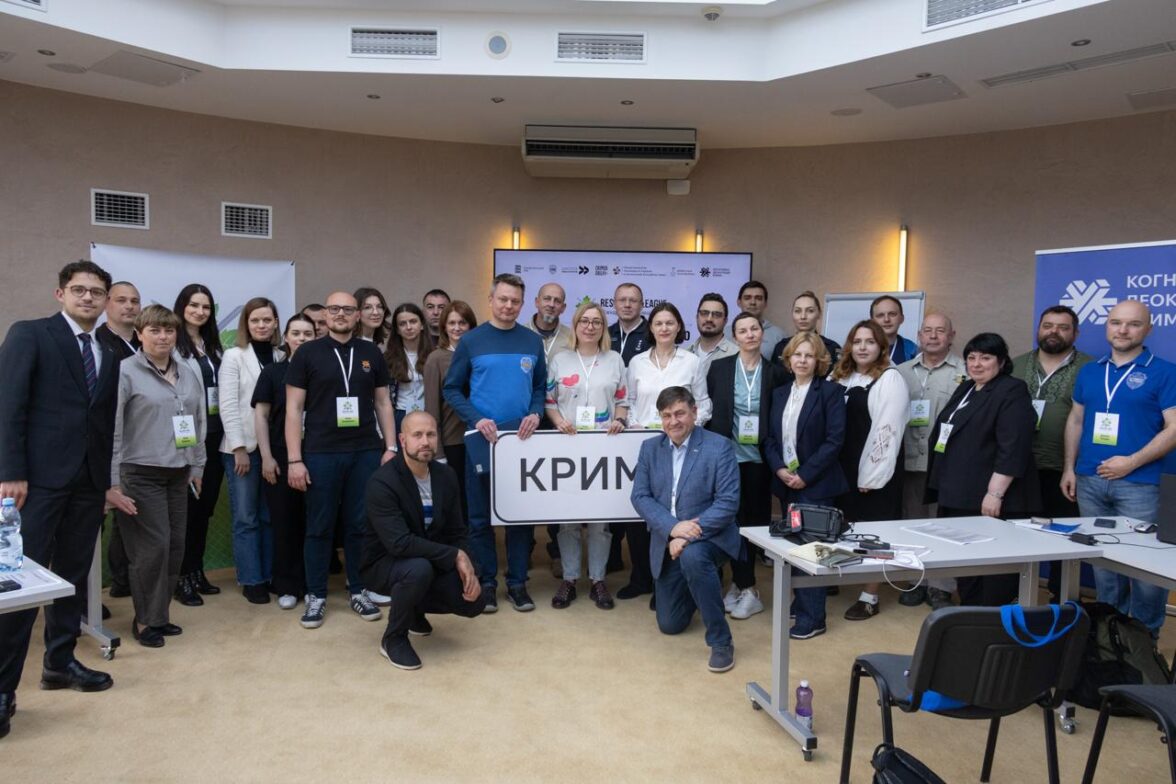
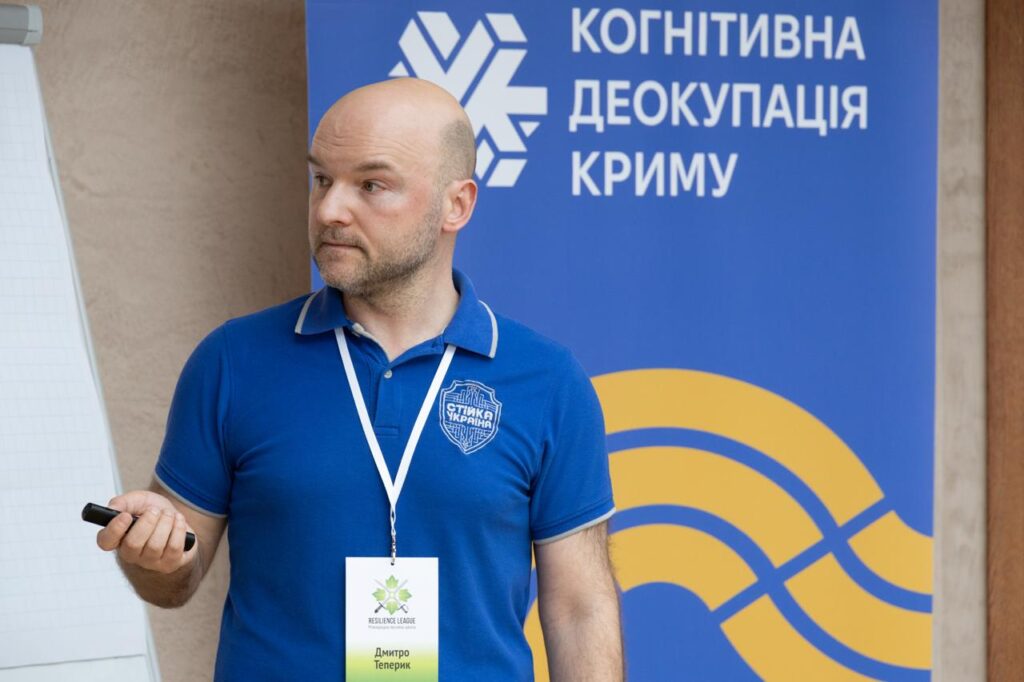
Twenty-five participants joined the School, representing the public sector, security agencies, emergency services, expert communities, social services, media, and psychological support. Welcoming remarks were delivered by Mati Raidma, Member of the Estonian Parliament, Special Rapporteur of the OSCE PA Parliamentary Support Group for Ukraine, and Member of the UN Disaster Assessment and Coordination Committee; Ivan Kostenko, Project Coordinator at the Embassy of Estonia in Kyiv; Yevhen Bondarenko, Head of the Information Department of the Mission; Dmytro Teperik, Director General of the NGO Resilient Ukraine and international expert on civic resilience; Varvara Verbytska, Coordinator of the International Spring School; and Yevheniia Yanchyk, Head of the NGO School of Media Patriots.
Ivan Kostenko, Project Coordinator at the Embassy of Estonia in Kyiv, welcomed the participants:
“I am glad to welcome you to this important event. Joint learning and cooperation are exactly what Ukraine needs today on its path to recovery and European integration.”
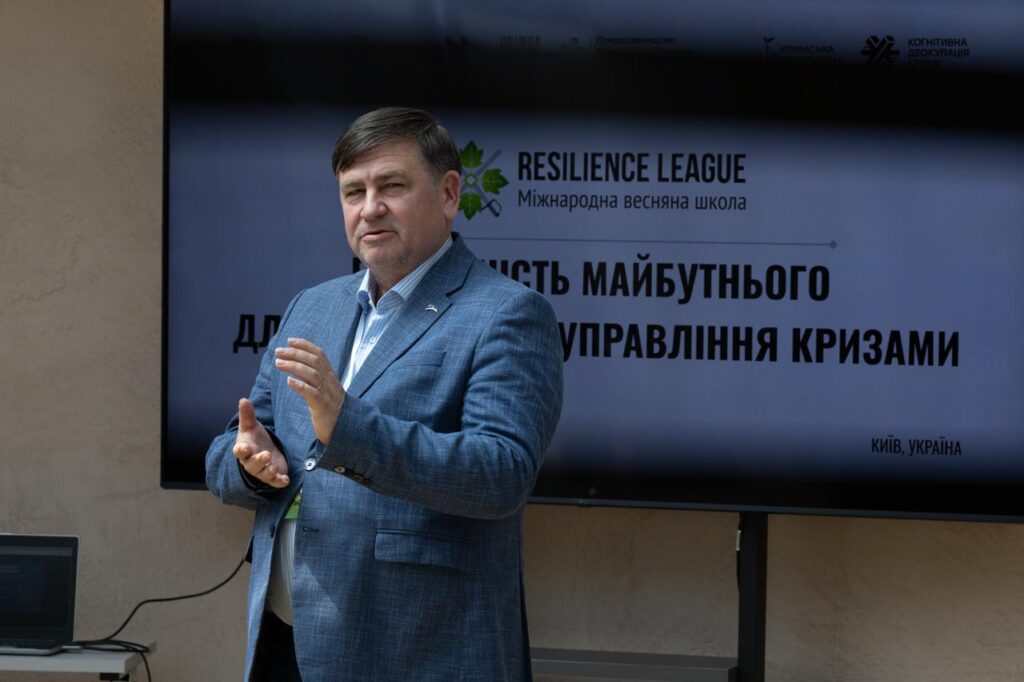
Mati Raidma, Member of the Estonian Parliament and Special Rapporteur of the OSCE PA Parliamentary Support Group for Ukraine, also addressed the participants with welcoming remarks:
“I am pleased that Estonia continues to support forward-looking initiatives on resilience, security, and the liberation of Ukrainian territories, including Crimea, which is extremely important in the international security context — both now and in the future.”
Yevhen Bondarenko, Head of the Information Department of the Mission, noted in his welcome address:
“It is very important that the Resilience League resumes its expert initiatives here in Ukraine. The first topic after the start of the full-scale invasion is that of temporarily occupied territories, particularly through the lens of Crimea. This is extremely valuable in the context of the work of the Council on De-occupation, where international expert Dmytro Teperik and other school participants play an active role. These developments are essential in shaping future foresight and a vision for implementing the strategy of Crimea’s return.”
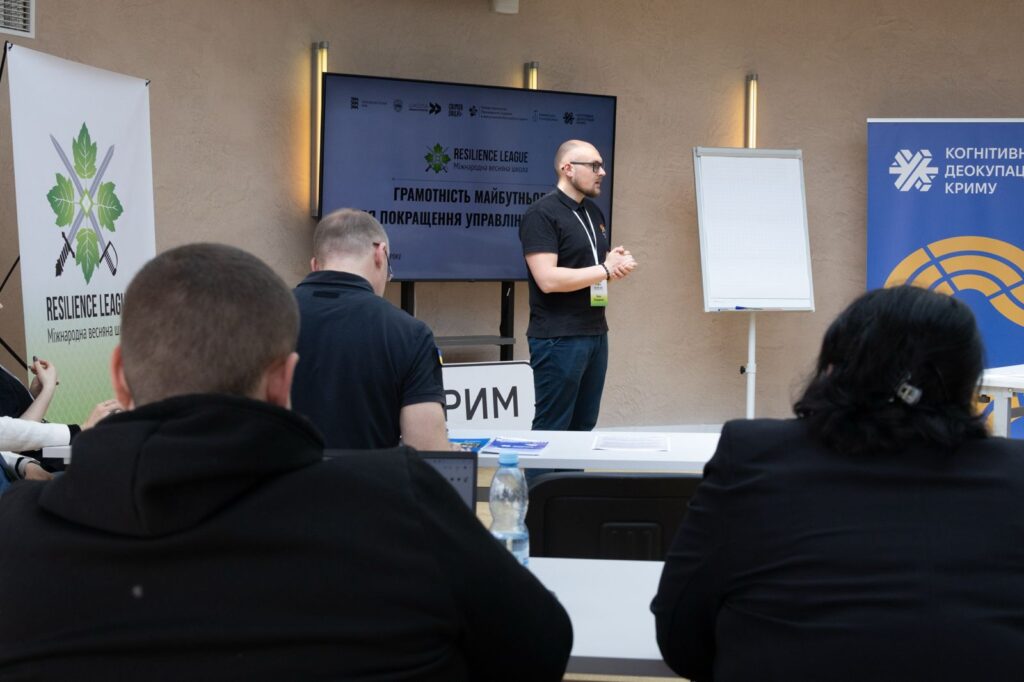
The School project was presented by an international expert on civic resilience and security, Head of the NGO Resilient Ukraine Dmytro Teperik, and Head of the NGO School of Media Patriots Yevheniia Yanchyk.
“Collective resilience is the art of thinking, planning, and moving forward together. A shared framework for the future helps build a common language, a common vision, and, most importantly, a shared responsibility. This is especially crucial not only for territorial reintegration, but also for cognitive liberation — freedom from disinformation, fear, and despair,” noted Dmytro Teperik.
“I’m glad to see such a strong and motivated community here. The opportunity to bring together representatives of different sectors is the path toward developing the steps each of us needs to take to reach a common goal,” welcomed Yevheniia Yanchyk.
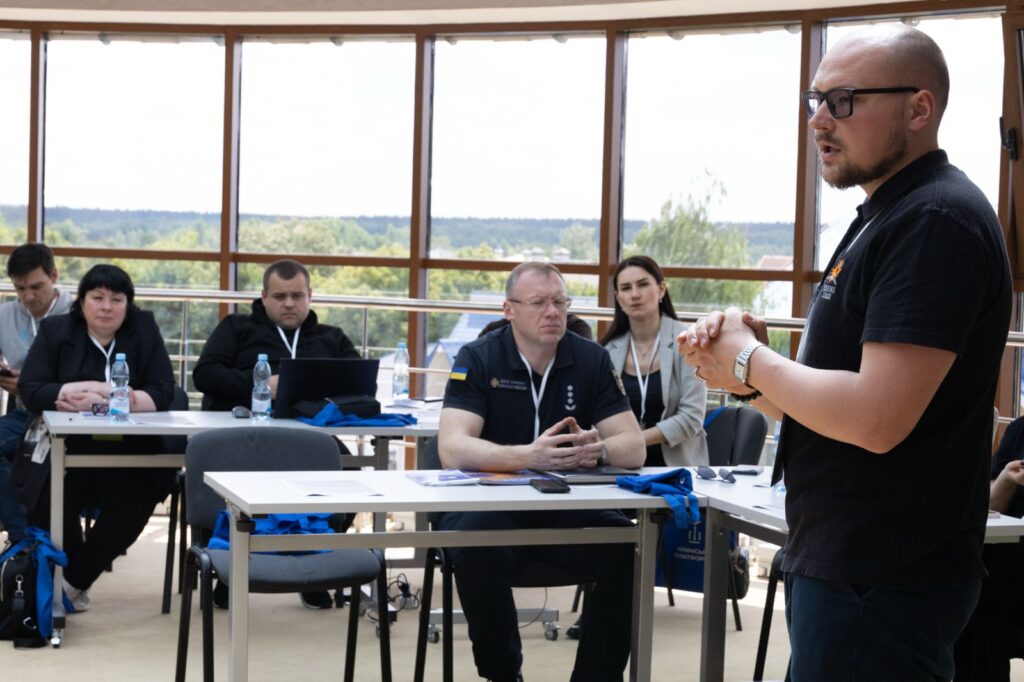
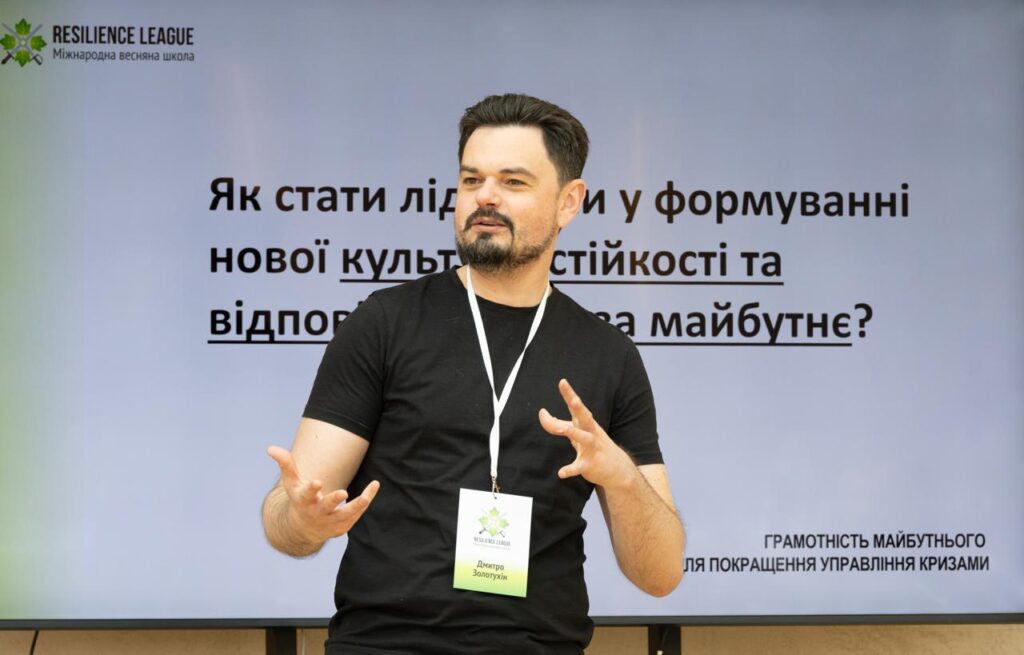
The first training session, “Strategic Context for Future Foresight,” was led by Dmytro Zolotukhin, Adviser to the Minister of Culture and Strategic Communications. He outlined the key factors that will influence civic resilience in the future.
The initiative “Multilogue on Civic Resilience” was presented by Yuliia Tyshchenko, Chair of the Board of the Ukrainian Independent Center for Political Research and Co-founder of the National Platform for Resilience and Cohesion. In her address, she outlined the main vectors for building inter-institutional cooperation in the post-war context. Later, participants had the opportunity to engage in a practical session.
The Spring School offers a platform for jointly developing approaches to the recovery and reintegration of Ukraine’s liberated territories. In the days ahead, participants will engage in experience-sharing, analysis, and practical work focused on shaping resilient solutions for the future.
The project is implemented in cooperation with the NGOs Resilient Ukraine and School of Media Patriots, in partnership with the media initiative Crimea Daily, and with the support of the Mission of the President of Ukraine in the Autonomous Republic of Crimea / Office of the Crimea Platform, the Council on Cognitive De-occupation of Crimea, and the Embassy of Estonia in Ukraine.