07 January 2026
The Military Campaign of Khan Qırım Geray against Russia in 1769
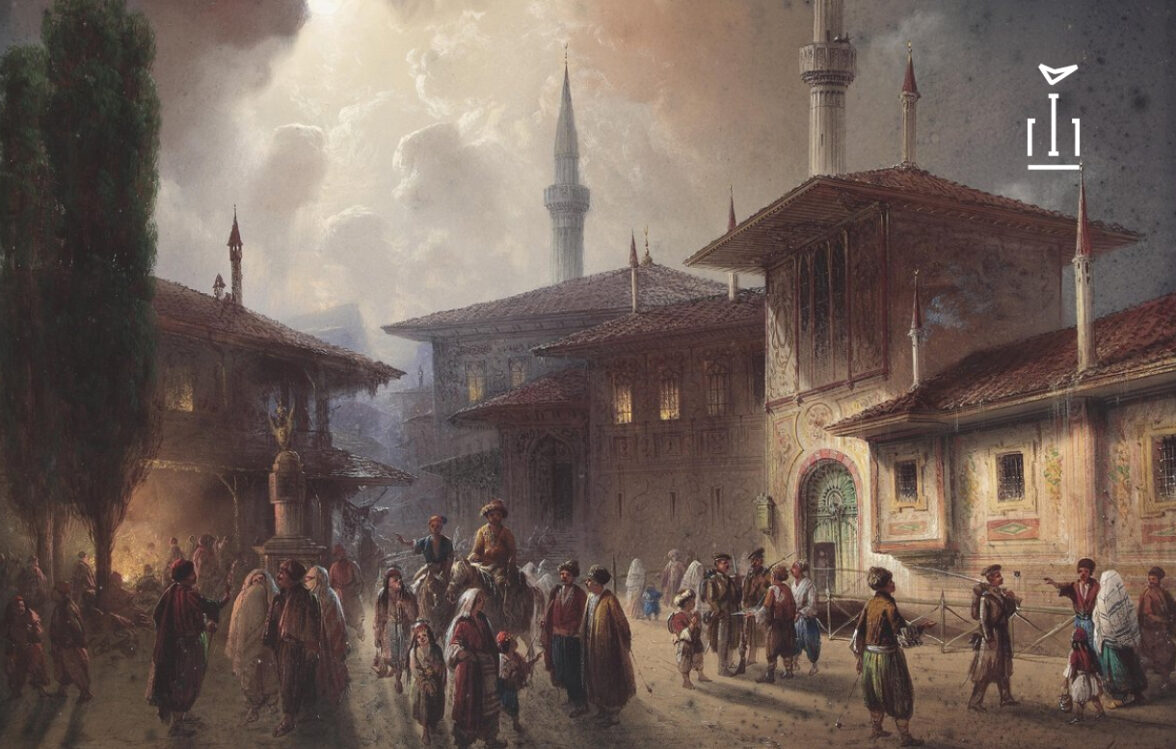
The winter campaign of 1769 led by Khan Qırım Geray became the last large-scale independent military operation of the armed forces of the Crimean Khanate against the Russian Empire. The campaign occurred at the outset of the Russo-Turkish War (1768–1774) and aimed to disrupt the Russian rear.
At the end of 1768, the Ottoman Porte tasked Crimea with neutralising the threat posed by the Novorossiysk Governorate. Qırım Geray, who ascended the throne for the second time in the autumn of 1768, began mobilisation. According to military historians, the Crimean forces numbered approximately 60,000–70,000 cavalrymen, including Nogai hordes (the Yedisan and Budjak hordes).
The main objectives of the campaign were the destruction of the Russian Empire’s border infrastructure (lines of fortifications and settlements), the diversion of regular Russian troops from the main offensive direction on the Danube, as well as the seizure of resources and captives (yasyr) to restore the economic potential of the Khanate.
On 7 January 1769, the Khan’s forces crossed the border. The primary target of the attack was the province of New Serbia (territory of present-day Kirovohrad Oblast). Instead of a frontal assault, the Khan employed a strategy of dispersing forces: separate mobile detachments (chai) swept across the territory of modern Kirovohrad Oblast and parts of Dnipropetrovsk Oblast.
In early February, the main Tatar grouping approached the Fortress of St. Elizabeth (Yelysavethrad). The Russian garrison under General Isakov’s command refused to engage in a field battle and concentrated behind the fortifications. Assessing the strength of the fortress artillery, Qırım Geray abandoned plans for a siege because Crimean cavalry was unsuited to storming fortified positions. Over the following two weeks, following the raid, most military settlements within the operational radius were destroyed or damaged.
The campaign took place under harsh weather conditions, with severe frost and deep snow. Researchers note that this led to significant losses of horses. At the same time, the mobility of the Crimean forces remained superior to that of Russian infantry and dragoon units, allowing the Khan’s detachments to avoid encirclement.
The campaign achieved its short-term objective: by the beginning of 1769, the Russian offensive was slowed by the need to redeploy forces to defend the southern borders.
In March 1769, after returning to Kaushan (Moldavia), Qırım Geray died suddenly. Contemporary sources, including the memoirs of Baron de Tott, who was present at the Khan’s headquarters, attribute his death to poisoning. Suspicion fell on a Greek physician who administered an unknown substance to the Khan under the guise of medicine. After the Khan’s death, the physician disappeared without receiving any reward.
The 1769 campaign demonstrated the effectiveness of traditional Crimean tactics in manoeuvre warfare, while simultaneously revealing the Khanate’s inability to conduct successful sieges of modern artillery fortresses without Ottoman infantry support and heavy weapons. These events also highlighted the dependence of the Crimean Khanate’s stability on the Khan’s personality: after Qırım Geray’s death, the state lost its military and political resilience.
The body of Qırım Geray was transported to Bakhchysarai and buried at the dynastic cemetery of the Gerays in the Khan’s Palace.