14 April 2026
Weekly update on the situation in occupied crimea on april 14, 2026
Main News of the Week
▶ Frank Peter Wilde, a German designer who actively supports Ukraine, became a mentor for Bohdan Ziza — a political prisoner whom the Russians sentenced to 15 years in prison for alleged “terrorism” and “vandalism with political motives.”
▶ Ukrainian writer Bohdan-Liubomyr Prytula from Simferopol became a laureate of the International German-Ukrainian Oles Honchar Literary Prize 2026.
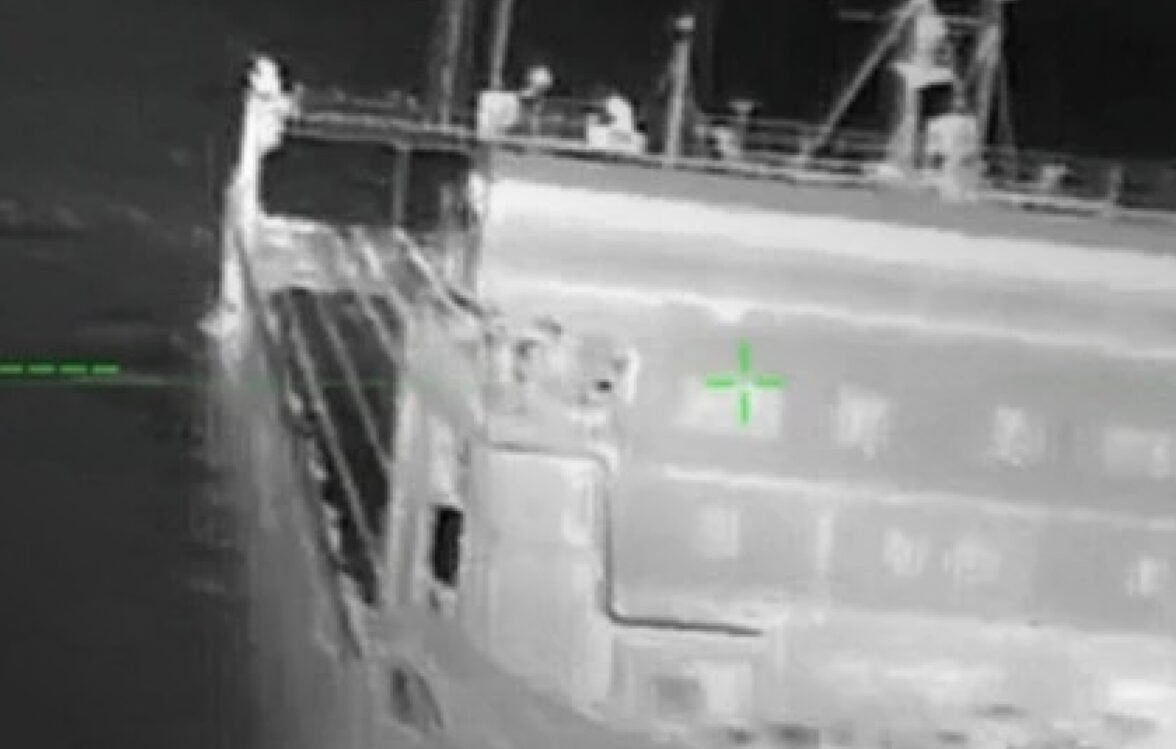
▶ Special forces of the Defence Intelligence of Ukraine (DIU) disabled the Slavyanin railway ferry — the last one in the Kerch Strait.
▶ Furthermore, the Ukrainian Security and Defense forces hit oil depots in Feodosia and Gvardiyske. They also struck a signals intelligence (SIGINT) station near Novooserne and a Bastion missile system position area near Sofiivka.
Crimes Committed by the Russian Federation
▶ As of March 11, 2026, 286 people in the territory of occupied Crimea are subject to political persecution, 159 of whom are Crimean Tatars.
▶ The Russian occupiers have intensified pressure on political prisoner Ivan Yatskin. Despite health problems, specifically trophic ulcers on his legs, he was transferred to a “special detachment for dangerous prisoners.” The occupiers detained him in 2019 and accused him of the so-called treason. He was later sentenced to 11 years in prison in a fabricated case. He is currently being held in Colony No. 5 in the Russian city of Kemerovo.
▶ An occupation court in Sochi upheld the sentence of Niyara Ersmambetova, who was previously accused of cooperating with the ATESH partisan movement and allegedly transmitting information regarding fuel composition and positions of Russian air defense systems. She was sentenced to 15 years in prison.
▶ The health of political prisoner Volodymyr Ananiev has deteriorated. Specifically, he is developing glaucoma; he has lost weight and requires a medical examination. Despite this, he is not provided with proper assistance, and the Russian court extended his detention for another 3 months. He was detained in February 2024 and accused of an alleged attempt on the life of the so-called head of Crimea Sergey Aksyonov.
The use of occupied Crimea as a springboard for attacks on Ukraine and the militarization of the peninsula
Since Russia launched a full-scale invasion and spread its armed aggression throughout Ukraine, occupied Crimea has been used by Russia as a military base for spreading aggression in various forms. From the peninsula, the occupiers continue to launch attacks on the territory of Ukraine, including on civilian infrastructure.
▶ The Air Force of the Armed Forces of Ukraine reported that the occupiers carried out another series of massive combined attacks on the territory of Ukraine during the week. In particular, they launched over 790 strike UAVs of the Shahed, Gerbera, and Italmas types, including from the territory of occupied Crimea and the Black Sea.
▶ The monitoring group Crimean Wind recorded the placement of a Russian fire group near the 330 kV Sevastopol electrical substation. According to the group, an anti-aircraft machine gun mount is installed in the bed of a military truck, and the equipment is occasionally moved.
▶ The occupiers in Sevastopol have again increased the one-time payment to attract even more residents to the war. For fighters who sign a contract with the Ministry of Defense of the Russian Federation for a year or more, the payment will increase from 900,000 to 1.5 million rubles. For contract soldiers serving in other units, the amount will increase from 700,000 to 1 million rubles.
The resistance movement of Ukrainian citizens in occupied Crimea
▶ Activists of the Yellow Ribbon movement once again distributed pro-Ukrainian symbols on the peninsula, congratulated Ukrainians on Easter, and emphasized that they are waiting for the de-occupation of Crimea.
The full-scale invasion was marked by a sharp increase in acts of solidarity and resistance by the residents of occupied Crimea against the Russian occupiers. Residents of the occupied territories unite in resistance movements, such as Yellow Ribbon, Zla Mavka, and ATESH, or act individually.
To suppress the resistance movement of local residents in the temporarily occupied territory of Crimea after February 24, 2022, the occupiers actively began to persecute and bring Ukrainian citizens to administrative liability under the article on the so-called discrediting the Russian army.
De-occupation of Crimea is an integral part of ending the war and restoring peace. Ukrainians are doing everything possible to stop the aggressor and protect the entire world from Russia’s criminal actions. Since this is not a local or regional problem, Russia’s aggression poses a threat to the entire world and the international order.