29 July 2025
WEEKLY UPDATE ON THE SITUATION IN OCCUPIED CRIMEA ON JULY 29, 2025
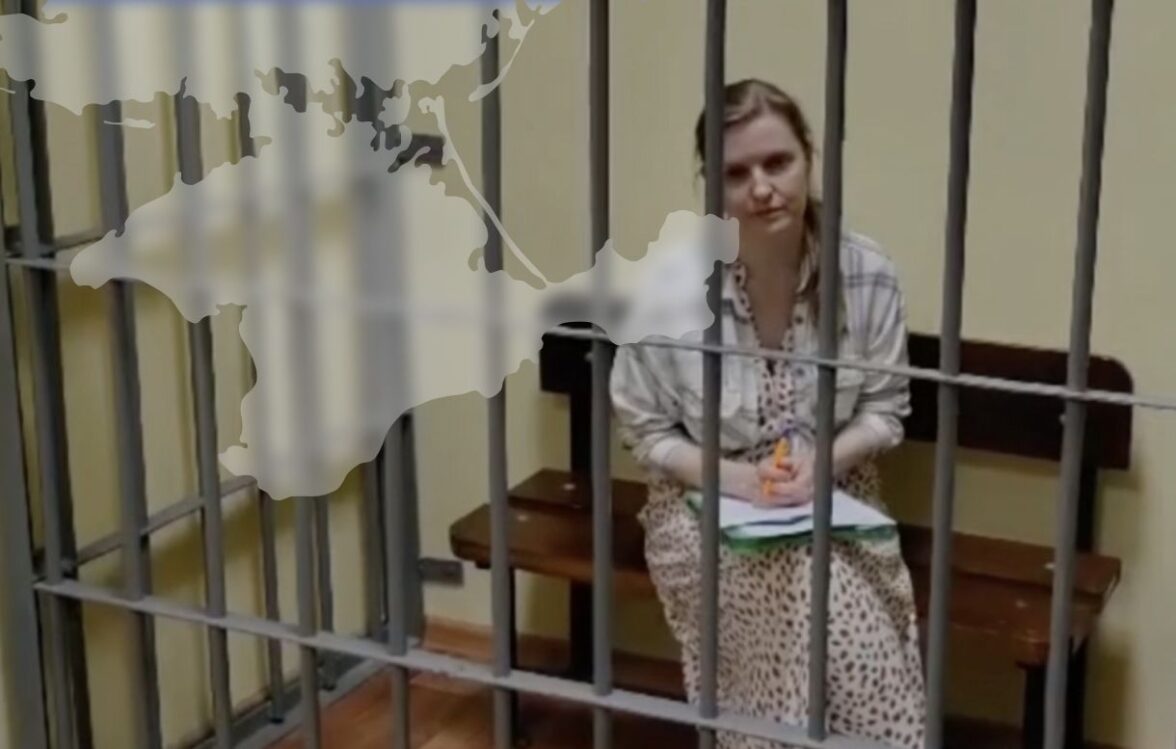
Main news of the week
▶ Political prisoner Iryna Horobtsova, sentenced by the occupation “court” in Kherson to 10.5 years of imprisonment, was unlawfully transferred to Women’s Penal Colony No. 2 in the village of Yavas, Republic of Mordovia (Russian Federation). The activist was abducted by occupying forces in Kherson in May 2022 and taken to occupied Crimea, where she was held for an extended period. She has been diagnosed with a brain aneurysm and has reported deteriorating health and a lack of medical care.
Crimes committed by the Russian Federation
▶ As of June 2025, Russia has illegally imprisoned 220 people in occupied Crimea on ethnic, religious, and political grounds, including 133 Crimean Tatars.
▶ Crimean Tatar Abibulla Smedliaiev, who is being unlawfully held in Pre-trial Detention Center No. 2 in Simferopol by the occupying administration, is reporting a severe deterioration of his eyesight. He had vision problems even before his arrest, and a doctor had prescribed glasses. However, during a raid, his glasses were broken, and it has not been possible to get new ones — a follow-up examination is needed, which is unlikely under detention conditions. He is being denied medical care, access to medication, and even eye drops, while visits with his family are severely restricted.
▶ Lenur Khalilov, an imam from Alushta and one of the defendants in the so-called “Alushta group” case, has been held since February 2024 in Penal Colony No. 1 in the Arkhangelsk region, Russian Federation. According to his wife, shortly after his unlawful transfer to Arkhangelsk, he was hospitalized in a prison medical facility, where he remained for over six months. His lawyer is currently working to clarify his diagnosis and overall health condition.
▶ The occupation administration in Crimea has put up for auction the seized resort facility Lvivskyi Zaliznychnyk in Sudak, which was renamed “Crimean Spring” after 2014. The facility is located in a protected area near the Genoese Fortress. Before the peninsula’s occupation, the resort was owned by JSC Ukrzaliznytsia and was one of the key recreational sites in the city. According to civil society observers, children forcibly taken from temporarily occupied territories in southern Ukraine have also been housed in camps run by this facility.
▶ Crimean political prisoner Vadym Siruk, part of the so-called “Yalta group” case, has reported serious dental health issues and a lack of proper medical care. There is no dentist at the Russian penal colony where he is held, which means he is not receiving adequate treatment. Over his nine years of imprisonment, he has received medical attention only once. He is currently facing severe dental problems, including inflammation and the need for extractions. Despite multiple requests, the administration has taken no action. His overall health condition is reported as stable.
The use of occupied Crimea as a springboard for attacks on Ukraine and the militarization of the peninsula
▶ Activists from the ATESH resistance movement reported that in Sevastopol, the command of Russia’s 12th Anti-Aircraft Missile Regiment has changed the deployment of personnel and equipment due to fears of strikes by Ukraine’s Armed Forces. According to ATESH, most of the troops were moved outside the base, and equipment — including S-400 air defense systems — was relocated to shelters. Only personnel on combat duty remain at the site.
▶ According to the Ukrainian Air Force, Russian occupiers carried out a series of massive combined attacks on Ukrainian territory over the past week. These included 506 strike UAVs of various types (Shahed, Shahed-Geran, Herbera) and 14 ballistic missiles such as Iskander M/KN-23. As a result of the heavy shelling on the night of July 21, residential buildings in several regions of Ukraine were damaged, with casualties and injuries reported.
▶ In temporarily occupied Crimea, the fourth session of field training camps for pre-conscription youth has begun. At a camp run by the “Volunteer Society for Cooperation with the Army, Aviation, and Navy of Russia” in Simferopol, children aged 10 to 17 — including cadet class students and members of military-patriotic clubs — are being taught the basics of military training. According to reports, instructors and participants in Russia’s war against Ukraine are leading the sessions. The program includes tactical firearms training, medical and drill exercises, mountain training, and topography lessons.
Since Russia launched a full-scale invasion and spread its armed aggression throughout Ukraine, occupied Crimea has been used by Russia as a military base for spreading aggression in various forms. From the peninsula, the occupiers continue to launch attacks on the territory of Ukraine, including on civilian infrastructure.
The resistance movement of Ukrainian citizens in occupied Crimea
▶ Russia has already prosecuted 1472 people in occupied Crimea for expressing solidarity with Ukraine, who are being subjected to administrative penalties in the form of illegal fines and arrests.
▶ A resident of occupied Crimea was accused in 2022 of allegedly passing information to Ukrainian intelligence about the locations of Russian military sites on the peninsula — including an oil depot, Rosgvardia units, and Russian Defense Ministry facilities. An occupation “court” issued an illegal sentence of 13 years in a maximum-security penal colony, followed by a 1-year and 10-month restriction of freedom.
▶ A resident of occupied Sevastopol was detained by occupation forces after posting social media comments calling for the elimination of the so-called president of Russia and strikes on the “Crimean Bridge.” He now faces an unlawful criminal case under charges of public incitement to commit a terrorist act, which carries a sentence of up to seven years in prison.
▶ Activists from the Yellow Ribbon resistance movement distributed patriotic leaflets and yellow ribbons in Simferopol, Sevastopol, Yalta, and Koktebel. They also report increased activity by Russian police in messengers and social media. Occupation forces are attempting to identify local chats with pro-Ukrainian sentiment or criticism of the occupation administration. To do this, they use fake accounts, subscribe to channels, join groups and chats, and collect information about participants. Additionally, activists are documenting a wave of so-called “raids” by Russian security forces on local businesses across Crimea — including shops, car services, salons, and workshops. While the official reason for inspections is checking documents and permits, the resistance movement reports that the true aim is extortion: business owners are being forced to either pay cash or close their establishments “pending clarification.”
▶ Activists from the Crimean Combat Seagulls continue exposing personal data of collaborators and Russian war criminals in occupied Crimea.
▶ The Zla Mavka movement posted stickers and posters reading “Ukraine is always here” in occupied Alushta.
The full-scale invasion was marked by a rapid increase in solidarity and resistance actions by residents of occupied Crimea against the Russian occupiers. Residents of occupied territories unite in resistance movements, such as the above-mentioned Yellow Ribbon, Crimean Combat Seagulls, Zla Mavka, and ATESH, or act individually. To suppress the resistance movement of residents in the temporarily occupied territory of Crimea after February 24, 2022, the occupiers actively began to prosecute and bring to administrative responsibility Ukrainian citizens under the article on the so-called “discrediting the Russian army.”
De-occupation of Crimea is integral to ending the war and restoring peace. Ukrainians are doing everything they can to stop the aggressor and protect the entire world from Russia’s criminal actions. This is not a local or regional issue but a threat to the world and international order.