20 March 2025
March 20 — The Release of the First Ukrainian Civilian Hostages of Russian Occupiers
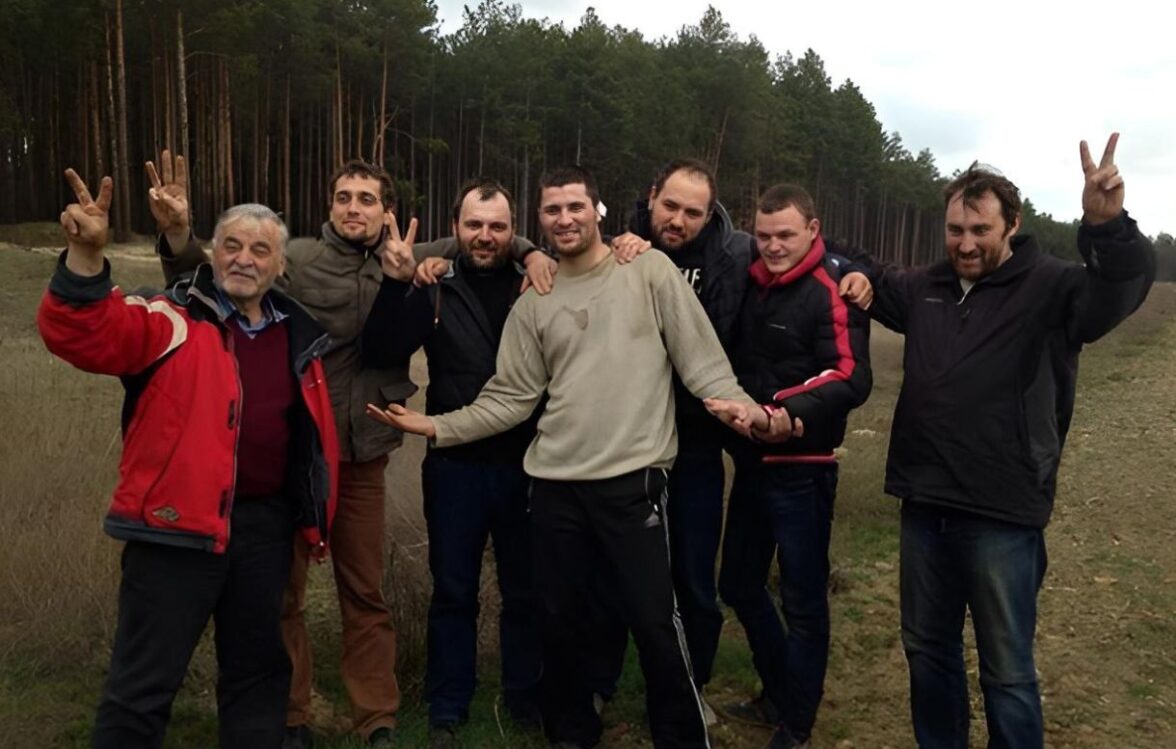
On March 20, 2014, the first release of illegally detained Ukrainian citizens in occupied Crimea took place.
From the very first days of Crimea’s temporary occupation, civilians became victims of illegal armed groups controlled by the Russian Federation. On March 3, 2014, the so-called “Crimean self-defense” abducted Reshat Ametov in the center of Simferopol. Twelve days later, his body was discovered bearing signs of brutal torture.
On March 12, 2014, Ukraine’s SBU counterintelligence detained a group of Russian agents in the Kherson region, led by Roman Filatov, an officer of the Main Intelligence Directorate of the General Staff of the Russian Armed Forces. In response to Ukraine’s proposal to release illegally detained Ukrainian citizens in Crimea, the Russian Ministry of Defense demanded the transfer of Filatov to their custody.
On March 20, 2014, the first release of hostages took place. However, some Ukrainian citizens abducted in Crimea in the spring of 2014 remain missing to this day. The Russian occupation administration continues its unlawful practices of abductions, torture, and politically motivated killings in the temporarily occupied territories, violating fundamental human rights and international humanitarian law. By March 20, 2014, several dozen Ukrainian citizens had disappeared in Crimea, including Euromaidan participants, journalists, and members of the Babylon’13 artistic collective. Paramilitary groups, including members of the so-called “self-defense forces,” former Berkut officers, and Russian Cossack units, carried out raids, blocked transport hubs, and persecuted activists and Ukrainian military personnel. This climate of fear was deliberately created to suppress resistance to the occupation.
Ukraine has provided the European Court of Human Rights with evidence of the Russian FSB’s involvement in supplying weapons to these illegal armed groups. Despite Russia’s attempts to conceal its crimes, many of them have been documented.
Some abducted individuals were released after beatings and abuse. Among them was Ukrainian politician Hennadii Balashov, who was abducted on March 4, 2014, near a police station in Simferopol, and Radio Free Europe/Radio Liberty journalist Levko Stek, who was kidnapped on March 18 near Bakhchysarai. Stek was blindfolded with a bag and taken to an open field. He was fortunate—although his video materials were confiscated, he was ultimately released unharmed.
Others were held for longer periods. On March 9, 2014, at the illegal Perekop checkpoint, occupation forces abducted Automaidan activists Kateryna Butko and Oleksandra Ryazantseva, as well as journalist Olena Maksymenko, photojournalist Oles Kromplias, and driver Yevhen Rakhno. They were beaten, robbed, and the journalists were held at the SBU building in Sevastopol, where they endured inhumane treatment. They were released on March 11.
Before the so-called “referendum” on March 15, 2014, student activists Marta Pohorila and Alik Sardarian were abducted. Former Berkut officers tortured them, and Pohorila was also subjected to sexual harassment. They were later released and fled to Kyiv.
Those who openly expressed a pro-Ukrainian stance were threatened or forced to leave. On March 10, in Balaklava, members of the Russian Block stormed the apartment of scholar Ihor Kyriushchenko and forced him to leave Crimea. On March 15, in Sevastopol, during a religious service, occupation forces abducted Mykola Kvych, the chief military chaplain of the Crimean Exarchate of the Ukrainian Greek Catholic Church, after which he was forced to leave the peninsula.
Some of the abducted individuals disappeared without a trace. On March 7, 2014, Valerii Vashchuk and Ivan Bondarets from Rivne went missing in Simferopol. On March 15, former SBU officer Vasyl Chernysh was abducted in Sevastopol, and his whereabouts remain unknown. On March 17, Valid Abu Yusuf (Serhii Selentsov) also disappeared.
Occupation security services brutally cracked down on protesters. On March 9, in Sevastopol, militants from the Russian Block detained Mykola Shyptur for participating in a pro-Ukrainian rally marking the 200th anniversary of Taras Shevchenko’s birth. He was arrested and imprisoned, spending nine years in a high-security penal colony before being released in May 2023. Other protesters, Vladyslav Polishchuk and Serhii Tkachuk, were beaten but later released.
Several cases of abductions and torture stand out. On March 9, 2014, in Simferopol, the so-called “self-defense” forces captured Andrii Shchekun, the coordinator of Euromaidan-Crimea, and Anatolii Kovalskyi. In the basement of a military commissariat, they were tortured with electric shocks, beaten, and shot with traumatic weapons. On March 14, near Simferopol, after their vehicle was fired upon, Automaidan activists Oleksii Hrytsenko, Nataliia Lukianenko, and Serhii Suprun were abducted. They were subjected to torture, with Suprun enduring prolonged abuse for several days.
Beyond civilian activists, Ukrainian servicemen also became targets of attacks. From late February 2014, Russian forces blocked and seized Ukrainian military units. On March 14, in Simferopol, occupation forces abducted Yevhen Pyvovarov, the head of a military hospital. On March 17, during an assault on a military facility, Lieutenant Colonel Oleksandr Kalian was captured, followed by Vladyslav Nechyporenko on March 18. That same day, in Simferopol, Russian troops took Andrii Andriushyn, the head of the Ukrainian Armed Forces’ Photogrammetric Center, prisoner. During the storming of the unit, Ukrainian serviceman Serhii Kokurin was killed, becoming the first Ukrainian military casualty of Russian aggression.
On March 19, 2014, in Sevastopol, pro-Russian military groups seized the Ukrainian Navy Headquarters. Commander Serhii Haiduk was detained as the occupiers attempted to force him to defect. His release was secured only after decisive actions by the Ukrainian authorities and international pressure.
As of April 7, 2021, according to the Ukrainian Parliament Commissioner for Human Rights, Russia unlawfully persecuted 133 Ukrainian citizens on political grounds, with 114 of them imprisoned—97 held in Russia and 17 in Crimea, including 78 Crimean Tatars. In the temporarily occupied territories of Crimea and Donbas, Russian-controlled armed groups detained 376 individuals. Human rights organizations recorded 45 cases of enforced disappearances in Crimea between 2014 and 2020, with the fate of 15 individuals still unknown. Experts believe that many of them may have been killed. Amid ongoing repression, Ukraine and the international community continue efforts to secure the release of unlawfully detained individuals. Between 2014 and 2020, three major prisoner exchanges took place: March 2014 – December 2015: The largest exchange freed 2,957 individuals, achieved through intensified international pressure and the implementation of the Minsk Agreements. 2016 – November 2017: Releases occurred sporadically, with 16 Ukrainian citizens returning in 2016. December 27, 2017: In a significant prisoner swap, Ukraine handed over 306 individuals to Russian-controlled militants, while 74 Ukrainians were returned. However, only 233 detainees chose to go to occupied territory, while 73 refused to return. One hostage remained in captivity after Russian forces refused to release them. In 2019–2020, more than 130 Ukrainian citizens were freed from Russian captivity.
Despite the occupation administration’s attempts to conceal war crimes, Ukraine continues to document all human rights violations in temporarily occupied Crimea. These documented cases are being used in international courts to ensure that those responsible are held accountable.