21 April 2025
21 April — 15th Anniversary of the Signing of the Kharkiv Pact
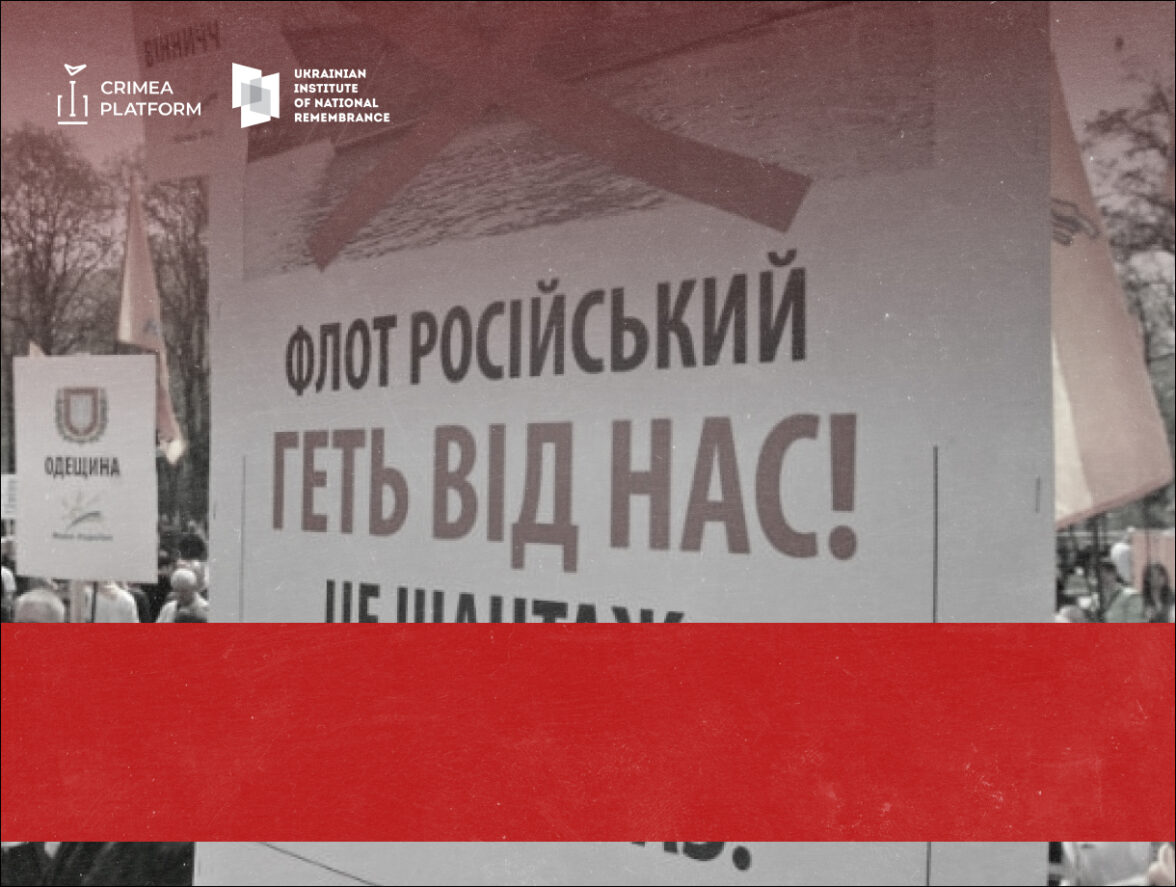
15 years ago, on 21 April 2010, representatives of Ukraine and the Russian Federation signed the so-called Kharkiv Pact. Officially, the agreement concerned the extension of Russia’s Black Sea Fleet presence in Ukrainian Crimea until 2042 in exchange for a minor discount on Russian gas. In reality, it was one of the key concessions made by Ukraine’s pro-Russian leadership in favour of the Kremlin, effectively laying the groundwork for the future occupation of Crimea.
The Russian Federation’s Black Sea Fleet — a successor of Soviet military power on the peninsula — has always been a tool of imperial policy. After Ukraine regained its independence in 1991, the issue of the fleet’s presence in Crimea became the subject of numerous disputes, blackmail, and direct threats from Moscow. The division of the Soviet fleet was accompanied by conflicts, ultimatums, and manipulations — particularly from the Black Sea Fleet’s command and Russian politicians who refused to recognise Ukraine’s sovereignty over Sevastopol.
Between 1992 and 1995, despite the Verkhovna Rada of Ukraine’s resolution No. 1431-XII of 24 August 1991, which stipulated that all military formations on Ukrainian territory, including the fleet, be subordinated to Ukrainian authority, the Black Sea Fleet remained effectively under Moscow’s control. Russian media and officials routinely promoted the idea of the fleet’s full subordination to Russia and referred to Sevastopol as a “city of Russian glory.” The Russian government openly supported anti-Ukrainian organizations in Crimea and issued threats of military intervention should Kyiv insist on the fleet’s complete withdrawal. In 1997, following years of complex negotiations and under mounting external pressure, the two sides signed foundational agreements permitting the temporary basing of the Russian fleet in Sevastopol until 2017. Though intended as a compromise, the decision proved extremely risky, ultimately allowing Russia to reinforce its military foothold on Ukrainian territory.
In 2010, the pro-Russian regime of Viktor Yanukovych — elected with the support of the Kremlin’s political and information apparatus — made yet another concession: the Kharkiv Pact. The signing of the agreement was accompanied by repression of the opposition, media censorship, and direct pressure on the parliament. The pact effectively legitimized the further expansion of Russia’s military presence in Crimea. Beneath its diplomatic phrasing, it served to intensify Russian control over part of Ukraine’s sovereign territory.
Following the agreement’s adoption, Russia began rapidly expanding its military infrastructure in Sevastopol, deploying new equipment and personnel, and extending its influence through loyal organizations and security services. This took place against the backdrop of weakened state oversight from official Kyiv. In practice, the Kharkiv Pact opened the door for Russia’s unimpeded preparation for future aggression.
In 2014, it was the forces of Russia’s Black Sea Fleet that served as the core of the military seizure of Crimea. Under the cover of naval infrastructure, they blocked Ukrainian military units, seized airports and administrative buildings, and ultimately staged a sham referendum. In this way, the Kharkiv Pact became part of Russia’s strategy of hybrid occupation — executed from within Ukraine through its network of agents and military units.
Following the onset of Russian aggression, the Verkhovna Rada of Ukraine denounced the Kharkiv Pact. Criminal proceedings were launched against senior government officials who had signed the agreement, on charges of state treason. In public consciousness, the pact remains a symbol of capitulation, the loss of political sovereignty, and the irreversible consequences of appeasement toward an aggressor state.