09 August 2025
August 9 — International Day of the World’s Indigenous Peoples
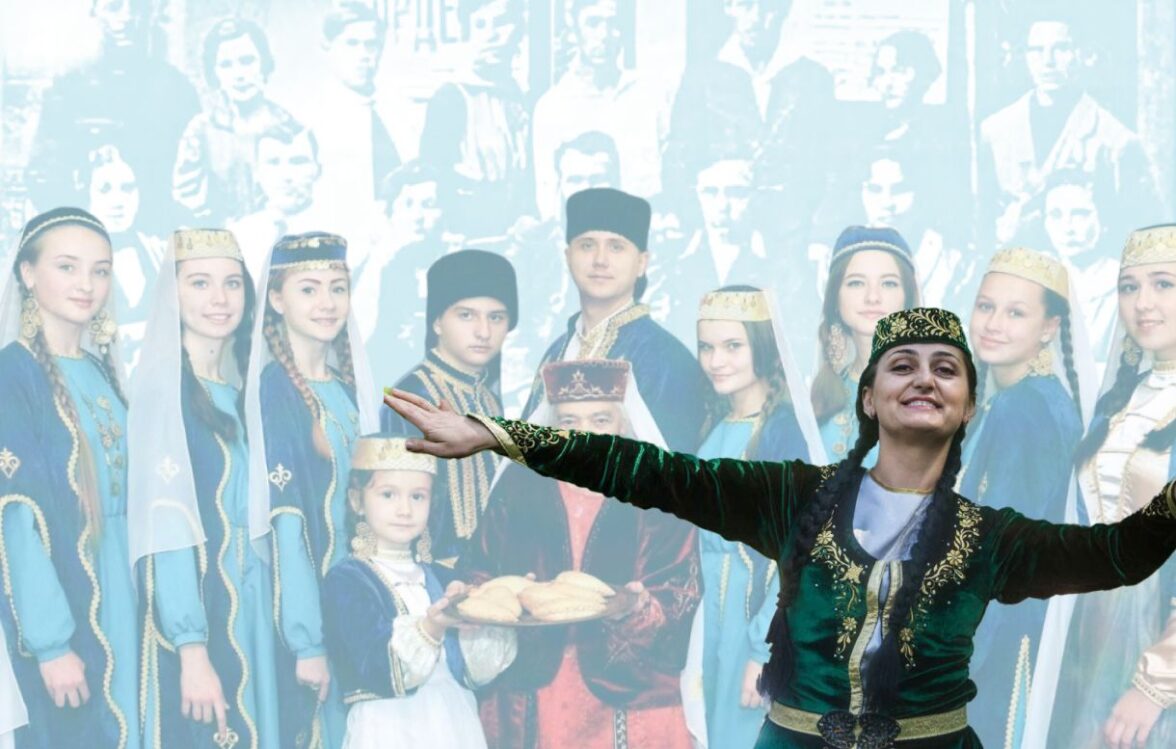
On August 9, the world marks the International Day of the World’s Indigenous Peoples — a date established by the UN General Assembly in 1994 to honor the rights, cultures, and heritage of Indigenous peoples. For Ukraine, this day holds particular significance, as since the beginning of Russia’s occupation of Crimea in 2014, it has become a symbol of the struggle of the peninsula’s Indigenous peoples — the Crimean Tatars, Karaites, and Krymchaks — to preserve their identity, culture, and right to live on their native land.
The Crimean Tatars, Karaites, and Krymchaks are officially recognized as Indigenous peoples in Ukraine. In communities for whom Crimea is their historical homeland and each of whom has made a significant contribution to the country’s cultural richness. The Crimean Tatars are a Turkic people who formed in Crimea, establishing the Crimean Khanate with a developed administrative, cultural, and spiritual infrastructure. Their architectural heritage — most notably the Khan’s Palace in Bakhchysarai — stands as a symbol of the peninsula’s deep historical roots and civilizational achievements. The Karaites are a Turkic-speaking ethno-religious group who follow Karaimism and have left behind unique religious monuments — kenesas — that still adorn the city of Yevpatoriia. The Krymchaks, descendants of Jews, developed a distinct identity with their own language, traditions, and religious practices, forming an integral part of Crimea’s historical and cultural landscape.
The Indigenous peoples of Crimea have endured numerous tragedies throughout history. In 1944, the Soviet regime forcibly deported the Crimean Tatars to Central Asia, stripping them of their right to live on their ancestral land — an act that led to the deaths of tens of thousands. The Karaites suffered under Stalin’s purges in the 1930s, while the Krymchaks were nearly exterminated by the Nazis due to their Jewish heritage: in 1941–1942, nearly the entire community in Crimea was executed. Despite these devastating losses, all three peoples preserved their identities. They returned to Crimea and began the long process of reviving their languages, traditions, and communities.
Since 2014, the occupation administration has carried out systematic repressions in Crimea, fabricating criminal cases against Crimean Tatar activists under false charges of terrorism or extremism. As of June 2025, of the 220 political prisoners from Crimea, 133 (around 60%) are Crimean Tatars — although they make up only about 15% of the peninsula’s population. Russian propaganda continues to promote a false image of improved conditions for Crimean Tatars while concealing the reality of repression, house raids, torture, and enforced disappearances. At the same time, aggressive Russification is underway: Ukrainian and Crimean Tatar languages are being removed from education and public life, and cultural heritage sites are being destroyed under the guise of “restoration.” A stark example is the interference at the Khan’s Palace in Bakhchysarai, where historical structures have been damaged, frescoes destroyed, and authentic architecture altered. These actions constitute serious violations of international law — including the Fourth Geneva Convention of 1949 and the 1954 Hague Convention on the Protection of Cultural Property in the Event of Armed Conflict.
Ukraine is actively protecting the rights of its Indigenous peoples. In 2021, it passed a law officially recognizing Crimean Tatars, Karaites, and Krymchaks as Indigenous peoples, guaranteeing their cultural, linguistic, and educational rights. A Strategy for the Development of the Crimean Tatar Language has been adopted, a Latin-based orthography is being implemented, and in 2025, an online platform was launched for learning both Ukrainian and Crimean Tatar languages. The Mission of the President in the Autonomous Republic of Crimea leads advocacy initiatives, organizes educational events, coordinates national policy on Indigenous issues, and commemorates significant dates — particularly May 18, the Day of Remembrance of the Victims of the Crimean Tatar Genocide. Ukraine’s Ministry of Foreign Affairs has initiated a mentorship program for Crimean political prisoners to draw international attention to the ongoing persecution in Crimea. In parallel, the Ukrainian Institute of National Remembrance and the State Service for Ethnopolitics are working to preserve historical memory and cultural heritage.
On this day, we remind the world that Ukraine’s Indigenous peoples are proud, resilient, and worthy of protection. They serve in the ranks of the Armed Forces of Ukraine, resist Russian occupation, and stand together with the entire Ukrainian nation in the fight for justice.