12 September 2024
Memorial to the Victims of the Crimean Tatar Genocide: More Than Just History
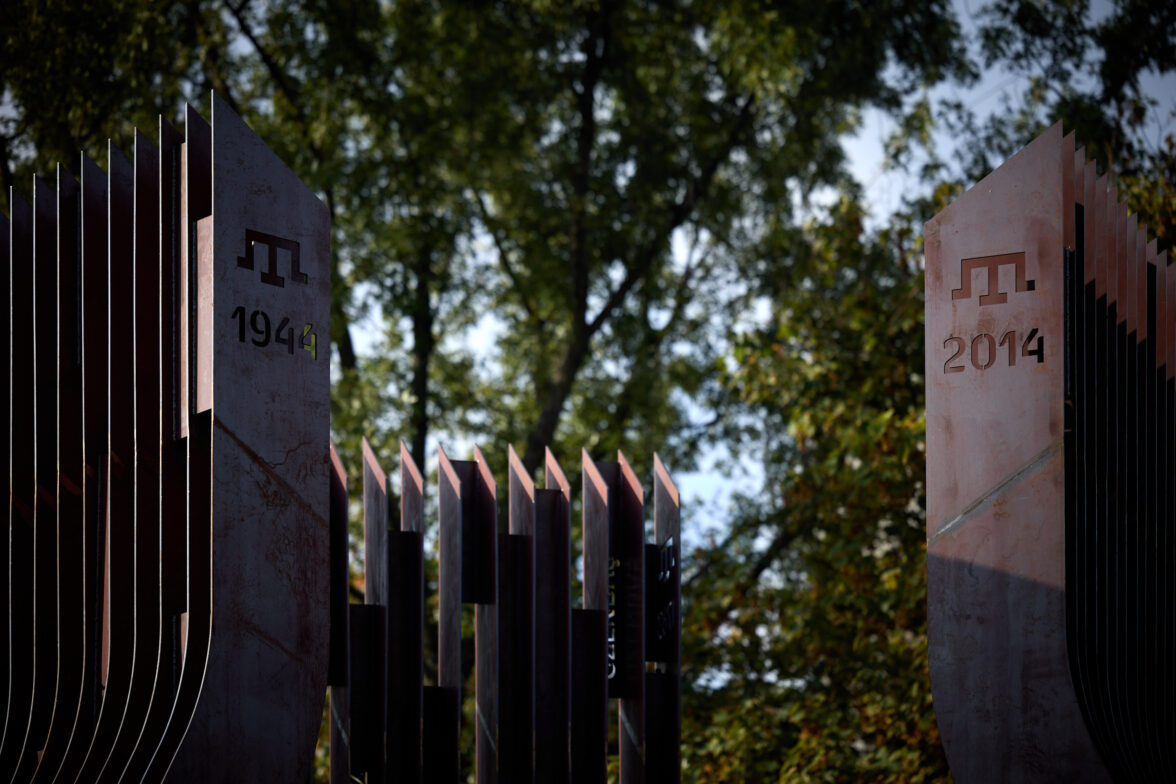
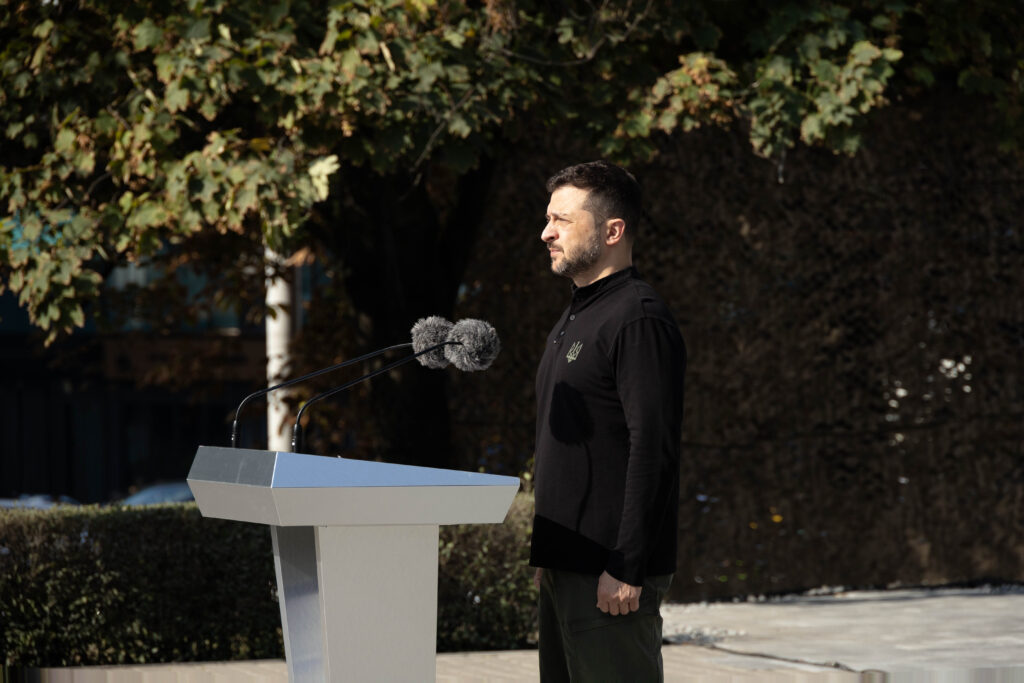
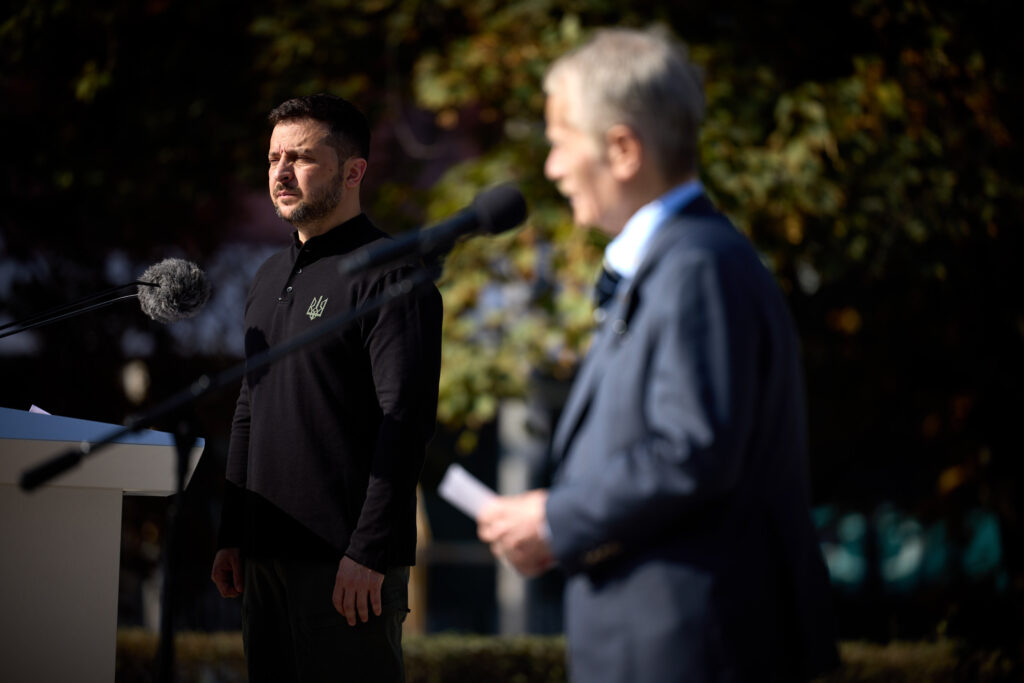
Yesterday, on the day of the Fourth Crimea Platform Summit, a Memorial to the Victims of the Crimean Tatar Genocide was unveiled in Kyiv. The opening ceremony was attended by the President of Ukraine, Volodymyr Zelenskyy, and the First Lady, Olena Zelenska. Alongside them, the memory of the Crimean Tatars was honored by Lithuanian President Gitanas Nausėda, Croatian Prime Minister Andrej Plenković, Latvian Prime Minister Evika Siliņa, President of the Senate of the Czech Parliament Miloš Vystrčil, Speaker of the Moldovan Parliament Igor Grosu, Ukrainian Prime Minister Denys Shmyhal, Chairman of the Verkhovna Rada Ruslan Stefanchuk, Head of the Office of the President Andriy Yermak, Permanent Representative Tamila Tasheva, Crimean Tatar leader Mustafa Dzhemilev, government officials, ambassadors, military personnel, and representatives of the Crimean Tatar community and the public.
What exactly does this Memorial symbolize, what deeper meanings are embedded in its design, and who are the key individuals behind this idea? We will explore these details today.
The concept of the Memorial belongs to the renowned Crimean Tatar architect Irfan Gafarovich Shemsedinov. Born in Yevpatoria, he studied and later taught at the Faculty of Architecture. Irfan Shemsedinov was not only the author of several monuments and memorials but also a talented artist. The Vokzalna metro station in Kyiv was built according to his design.
Once, Shemsedinov initiated the construction of a similar memorial in Crimea, but the idea was never realized. The materials of the late Irfan Shemsedinov were handed over by his granddaughter, Elmira Shemsedinova, a renowned Crimean Tatar painter and monumental artist.
The chief architect and author of the adaptation of the Memorial, based on Shemsedinov’s concept, is Mykola Semyrog-Orlyk.
Another key member of the exceptional team involved in the Memorial project for the victims of the Crimean Tatar genocide was Rustem Skibin, a Crimean Tatar ceramicist and Honored Master of Folk Art of Ukraine. Skibin’s works are well-known beyond Ukraine and are housed in museum and private collections. His unique style intertwines Crimean Tatar traditions with their significance in the modern world.
And most importantly, what does the Memorial tell us?
The monument to the victims of the Crimean Tatar genocide is an architectural form that brings together many significant images and symbols of the Crimean Tatars. It reflects the long-standing aspirations of Ukraine’s Indigenous People to properly honor the memory of hundreds of thousands of victims who suffered from the criminal actions of Russian authorities over the centuries, including the genocide deportation of 1944. This long-awaited and important memorial has gained special significance in Ukraine’s recent history, especially since 2014, when a new wave of repression began against the Crimean Tatars, the indigenous people of Ukraine, by the occupying forces.
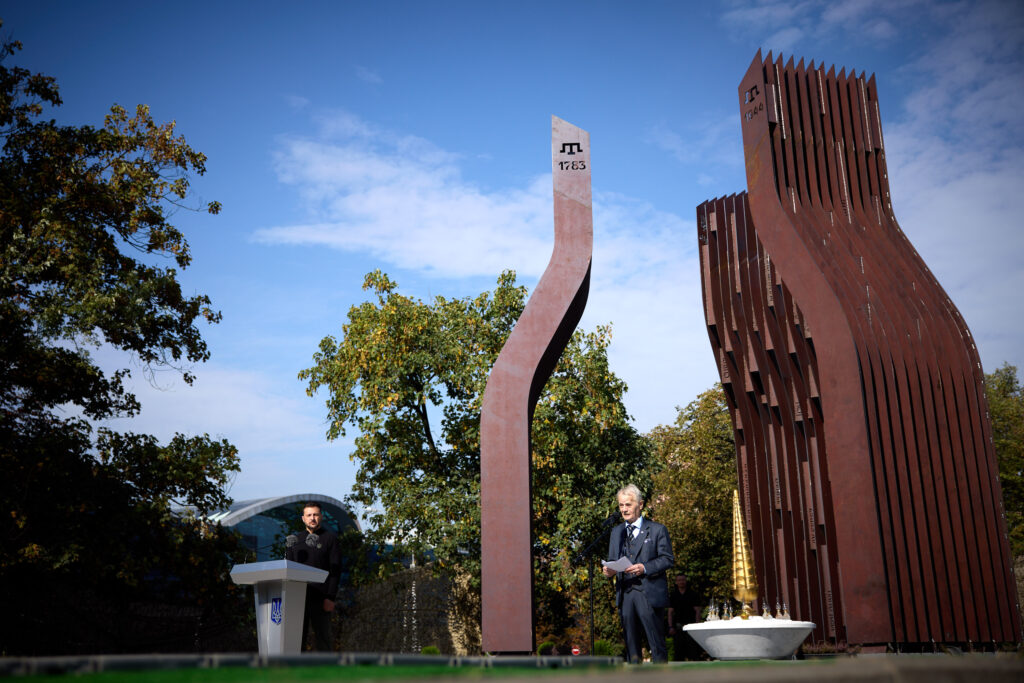
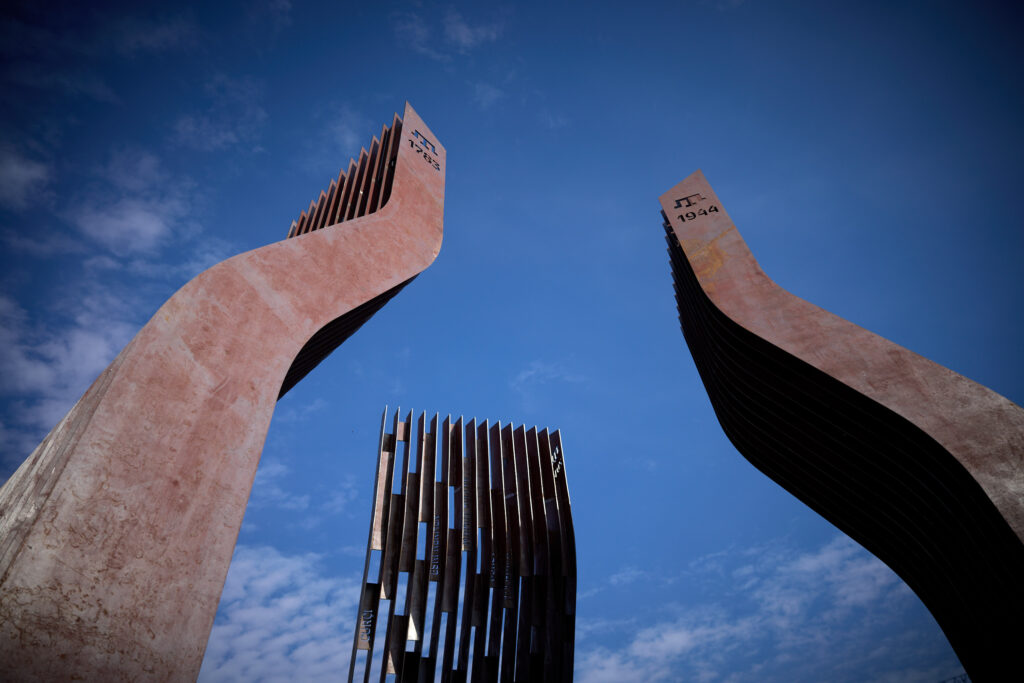
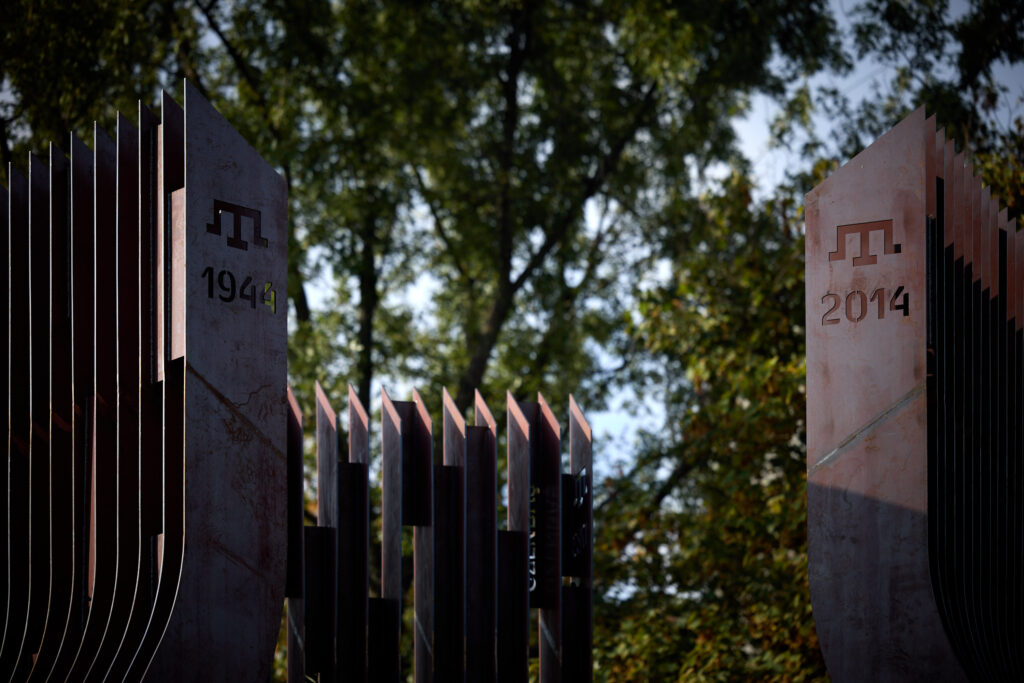
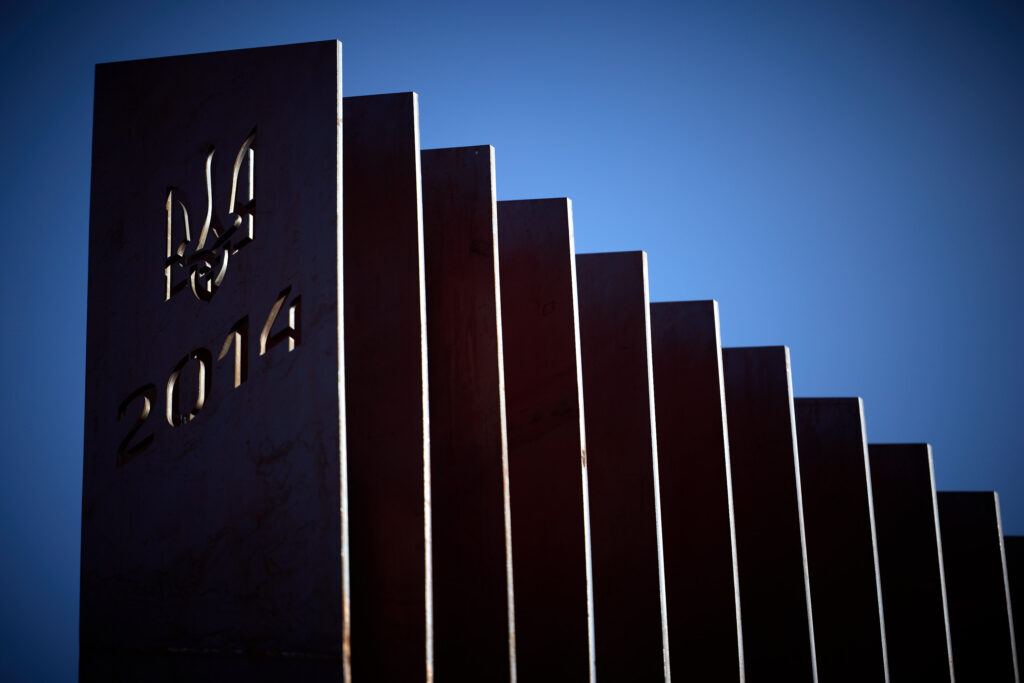
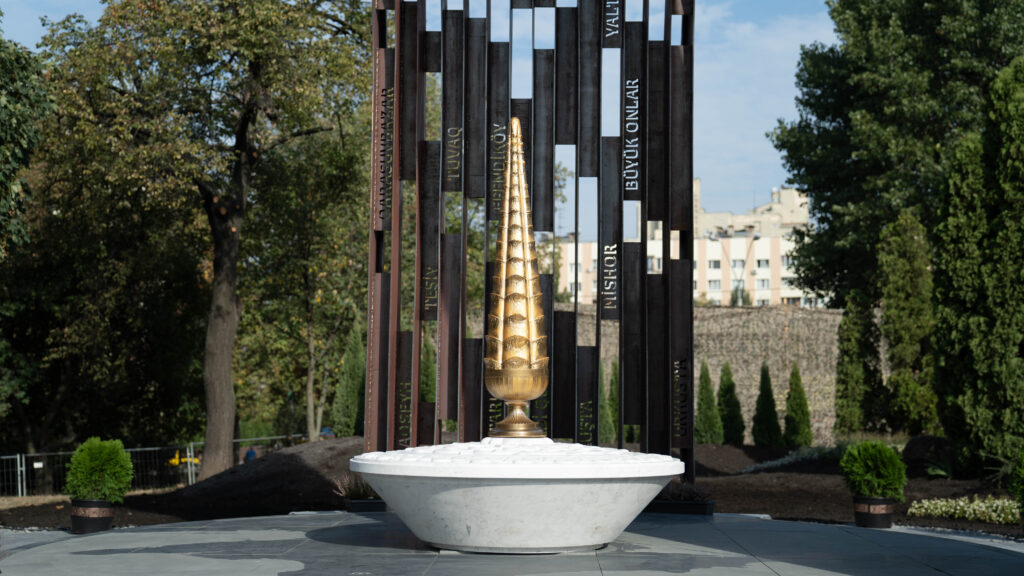
The Memorial consists of three stylized hands raised toward the sky in a prayerful gesture to the Almighty, asking for protection, help, and the establishment of justice. At the center between them stands a sculpture—a bowl with a cypress tree, symbolizing grief and sorrow. The base of the bowl is a home adorned with plant ornaments, representing the culture, traditions, and heritage of the Crimean Tatar people, whose roots run deep in Crimea. The silhouette of the Crimean Peninsula is placed at the center of the composition, with the sculpture at its heart. On the walls of the hands are rectangular vertical elements resembling freight wagons, the type used to deport the Crimean Tatars forcibly. Engraved on them are the original Crimean toponyms (before Soviet renaming) of the cities and villages from which the inhabitants were expelled.
It is important to note that the number of stelae relates to three waves of tragic events in Crimean Tatar history: the illegal annexation of Crimea by the Russian Empire in 1783, the forced deportation of the Crimean Tatars by Soviet authorities in 1944, and the occupation of Crimea by the Russian Federation in 2014. Together, these elements symbolize the pursuit of historical justice through the tragedy of genocide while also offering hope for the prosperity and development of the Crimean Tatar people in their native land, free from invaders.
Symbolically, the Memorial is located in Peace Square (near Lybidska metro station), where, until 2016, a monument to the Chekists stood. On May 18, 2024, on the 80th anniversary of the Crimean Tatar deportation, the President of Ukraine, Volodymyr Zelenskyy, initiated a ceremonial laying of the cornerstone of the future Memorial.
Countless meetings and communications took place to select and approve the location, with many negotiations and agreements involving various governmental and private stakeholders.
Of course, the significant work of colleagues from the Crimean National Welfare Fund/Qırım Milliy Varlıq Fondu and the Mejlis, who worked on the project’s physical implementation, cannot be overstated.
Our team from the Мission of the President of Ukraine in the Autonomous Republic of Crimea/The Office of the Crimea Platform actively worked on bringing the idea to life, involving different stakeholders, and solving various tasks. We organized the opening with the Office of the President of Ukraine, the Ministry of Foreign Affairs of Ukraine, and the Crimean National Welfare Fund and ensured its success.
We are grateful to everyone involved in this critical project, especially the President of Ukraine, Volodymyr Zelenskyy, the team of the Office of the President, specifically the Head of the Office, Andriy Yermak, and his deputies. We also thank the Ministry of Culture and Strategic Communications of Ukraine, particularly Nataliya Voytsechuk, Director of the Department for Monument Preservation, the Crimean National Welfare Fund, which worked on the project’s implementation, and all organizations within the united platform “Crimean Front.” Special thanks go to the Mejlis of the Crimean Tatar people, the State Enterprise “Crimean House,” TRO Media, and the donors who supported the project. We also appreciate the city authorities for assisting with all bureaucratic approvals.
We extend our gratitude to all those involved in creating this vital project, including Rustem Umerov, Lenur Mambetov, Elvina Seitbullaeva, Snaver Seithaliliev, Mustafa Ametov, Ali Bekirov, Felix Karaev, Akhtem Seitablaev, and many others. We also deeply appreciate the valuable contributions and support of Crimean Tatar leader Mustafa Dzhemilev, Head of the Mejlis Refat Chubarov, and other Mejlis members.
We also thank everyone who attended yesterday’s opening ceremony—diplomatic representatives, military personnel, public and political figures, and representatives of the Crimean Tatar people. Of course, we express our gratitude to the first dignitaries of our state and distinguished foreign guests who opened the Memorial on the day of the Fourth Crimea Platform Summit.
Many more people are involved in the project, and we want everyone who contributed, supported, and helped to know and hear these words of gratitude. We especially wish to thank our fellow citizens in temporarily occupied Crimea, as we have already received hundreds of messages from people who are aware of the Memorial’s opening, are waiting for Crimea’s liberation, and believe that a Memorial to the victims of the Crimean Tatar genocide will soon be built in their homeland, Crimea.
The Crimea Platform Summit also technically supported the opening of the Memorial through the Partnership Fund for a Resilient Ukraine, which was financed by the governments of the United Kingdom, Estonia, Canada, the Netherlands, the United States of America, Finland, Switzerland, and Sweden.
Memory must live on to prevent past mistakes from being repeated. The project to install the memorial sign for the victims of the Crimean Tatar genocide in Kyiv is the result of many years of aspirations and dreams by Crimean Tatar political, cultural, and public figures for the proper commemoration of hundreds of thousands of victims of Ukraine’s indigenous people, who have suffered for centuries from the criminal actions of Russian authorities on their native Crimean peninsula. It is crucial to realize such initiatives today when Russia continues its colonial policies, erasing the true history and identity of Crimea.