11 April 2025
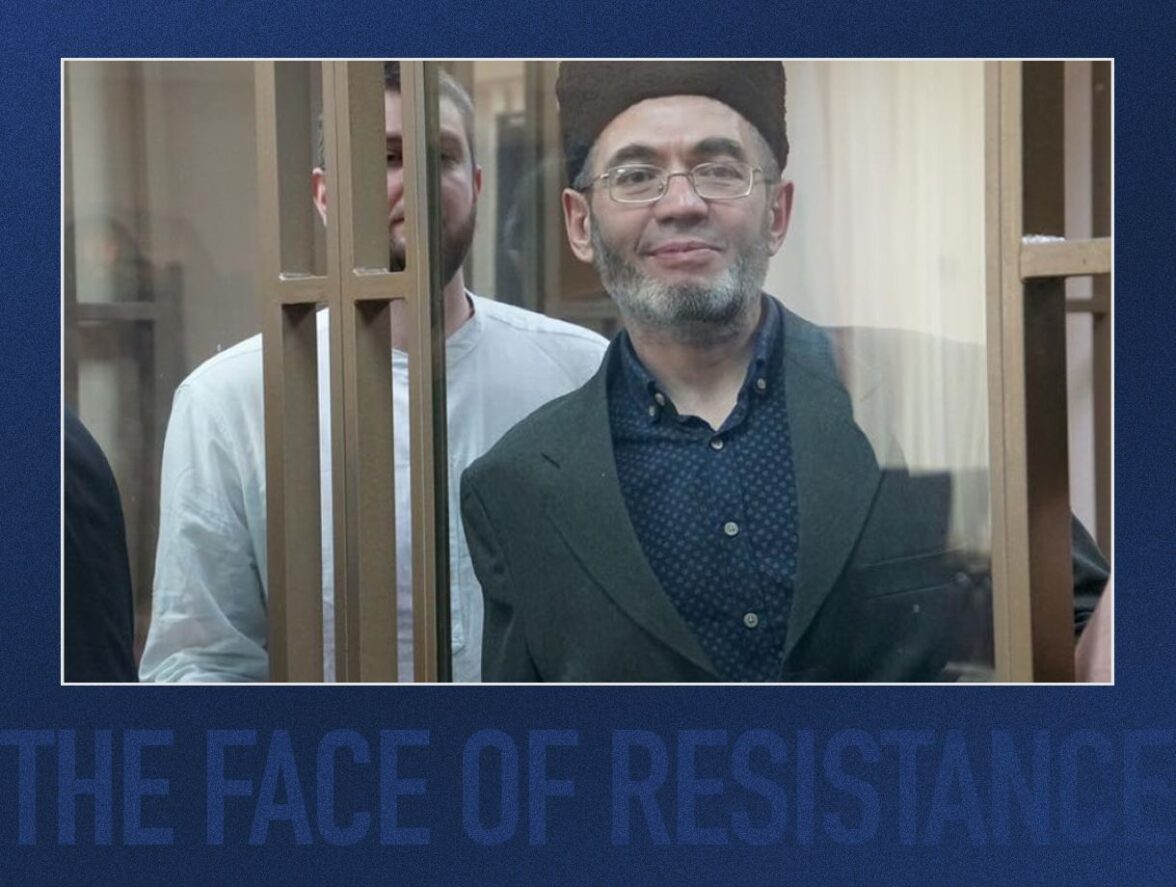
The Face of Resistance: The Story of Crimean Tatar Activist Edem Smailov
Life before the detention
Edem Smailov was born in Tashkent, Uzbekistan. After the totalitarian Soviet regime’s forced deportation in 1944, his family — like thousands of other Crimean Tatars — was compelled to live far from their homeland. Upon finishing school, he enrolled in the Moscow State Mining University, which he graduated from in 1992. That same year, following Ukraine’s restoration of independence, his family returned to Crimea. Edem settled in the village of Dolynne in the Bakhchysarai district.
Professionally, Edem worked in construction and interior finishing. At the same time, he served as head of the Topchyk religious community and was actively involved in civic life.
Persecution
After Russia’s occupation of Crimea in 2014, Edem Smailov — like many other members of the Crimean Tatar community — did not remain on the sidelines. He joined the Crimean Solidarity initiative, a network of lawyers, relatives of political prisoners, and activists that documents human rights violations, supports persecuted families, and organizes legal aid, awareness campaigns, and humanitarian assistance.
On 12 October 2017, the occupation administration in Crimea conducted another wave of mass searches and arrests targeting activists: Marlen (Suleiman) Asanov, Tymur Ibrahimov, Memet Bielialov, Seiran Saliiev, Server Zekiriaiev, and Ernes Ametov. Several months later, on 22 May 2018, Edem Smailov himself was arrested, along with Crimean Solidarity coordinator Server Mustafaiev.
Behind the bars
On 16 September 2020, a court in Rostov-on-Don, Russia, sentenced Edem Smailov to 13 years in a high-security penal colony, followed by one year of administrative supervision. After his release, he will be prohibited from leaving the territory of temporarily occupied Crimea, participating in public events, and will be required to report regularly to the police.
On 14 March 2022, a court in Vlasikha, Moscow region, denied the appeal of all political prisoners in the so-called “second Bakhchysarai group of the Crimean Muslims case.”
Following the appeal denial, Edem Smailov was held at Penal Colony No. 7 in Russia’s Kostroma region. Since February 2024, he has been subjected to harsh detention conditions, with repeated transfers to a punishment isolation cell and a cell-type facility. The colony administration has routinely imposed penalties on him under fabricated pretexts. For example, in February 2024, he was sentenced to 14 days in a punishment isolation cell for walking to the toilet at night, washing his face, and performing prayer. He received an additional 14 days for hanging a towel on his bed.
On 20 January, the political prisoner was transferred to Penal Colony No. 1 in the city of Kostroma, where, upon arrival, he was immediately placed in a cell-type facility — allegedly for a “gross violation of prison regulations” at his previous facility.
Today, like hundreds of other Ukrainian citizens unlawfully imprisoned by Russia, Edem Smailov remains over 2,000 kilometers from his homeland of Crimea.