14 March 2025
The Face of Resistance: Story of Crimean Tatar Activist Riza Izetov
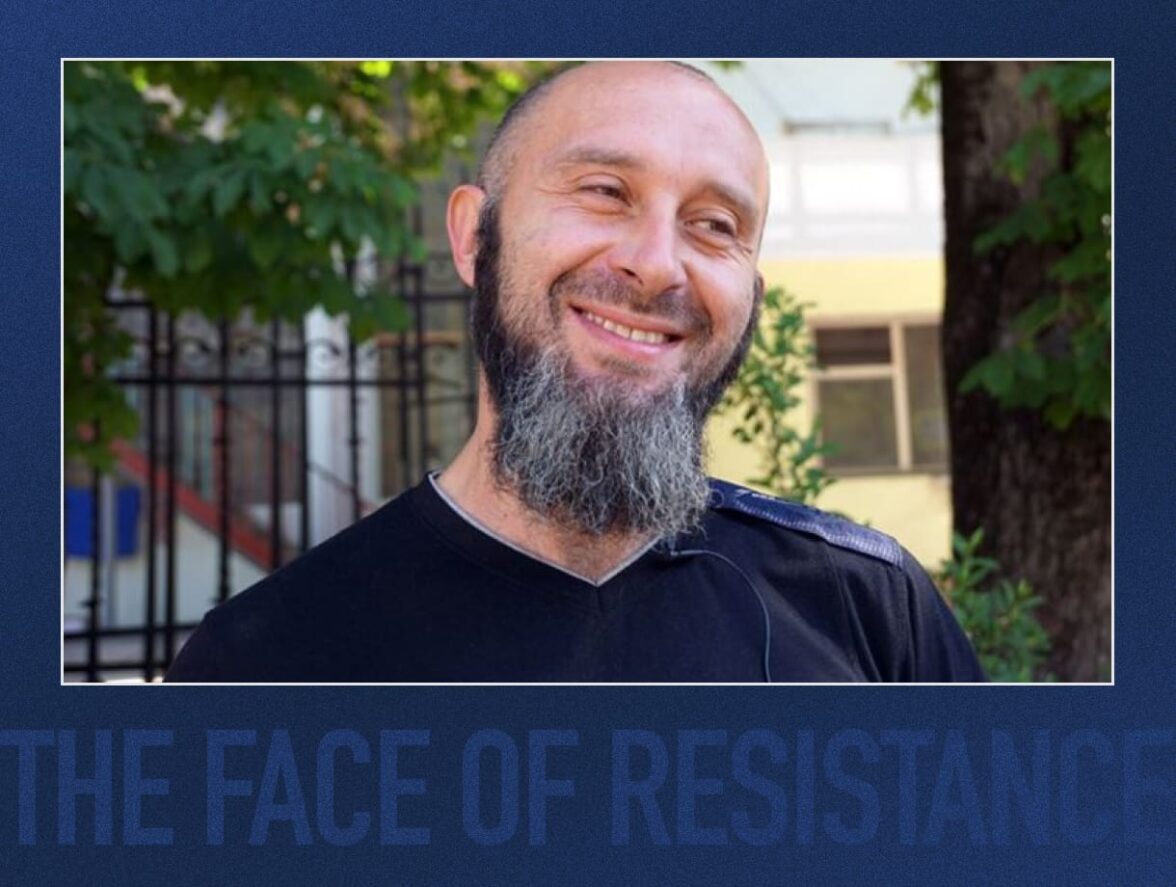
Life before the detention
The Izetov family, like thousands of other Crimean Tatars, was forcibly deported by the Soviet totalitarian regime in 1944. After decades of exile, they were able to return to Crimea only in 1991, following the restoration of Ukraine’s independence.
Riza Mustafaievych Izetov was born on January 21, 1979, in Fergana, Uzbekistan.
He received his secondary education at a school in the village of Lystvynne, Bilohirsk district, later continuing his studies at Simferopol Lyceum No. 24 with a legal specialization. After graduating, he enrolled in a law college in Simferopol, which he completed with honors. In 1998, he served in the missile forces in Yevpatoriia. Later, he was admitted to the Odesa Law Academy, but due to the passing of his father, he was forced to leave his studies and begin working.
Persecution
Following Russia’s occupation of Crimea, Riza Izetov actively engaged in human rights work, assisting Crimean Tatars persecuted by the occupiers. He provided legal consultations, attended court hearings, supported the families of political prisoners, delivered parcels to detainees in pre-trial detention centers, and documented human rights violations.
On June 4, 2015, unidentified individuals without insignia detained Izetov and forcibly took him to the Russian FSB office in Crimea. At the time, concerned Crimean residents had already gathered outside the building, demanding explanations. The occupation administration responded with force, detaining several people and later fining them.
The persecution of Riza Izetov only intensified. In 2017, he was detained three times on fabricated charges. On February 21, he was arrested for five days under the pretext of participating in an “unauthorized rally”—in reality, he had only filmed the unlawful detention of another activist. On March 30, he was arrested again for supporting human rights defender Remzi Bekirov. On May 11, the occupiers conducted an illegal search of his home, attempting to fabricate evidence of his alleged “extremist activities.”
This continued until March 27, 2019, when one of the largest waves of illegal searches took place in several districts of Crimea, including Kamianka and Strohanivka. Riza Izetov, along with dozens of other activists, was arrested on trumped-up terrorism charges. A total of 24 people were detained that day.
Behind the bars
On March 10, 2022, a court in Rostov-on-Don, Russia, sentenced Riza Izetov to 19 years of imprisonment: the first five years in prison, followed by the remainder in a high-security penal colony, with an additional one and a half years of restricted freedom.
On March 28, 2023, a court in Vlasikha, Moscow region, Russia, denied the appeals of Izetov, along with Shaban Umerov, Raim Aivazov, and Farkhod Bazarov.
In September 2024, he was transferred to the Penal Colony № 1, located 9,000 kilometers from Crimea, where he remains today.
On December 6, 2024, he was placed in a punishment isolation cell, where he spent over a month without any formal justification. Later, he was moved to a “single-type cell facility,” the harshest prison conditions, where four prisoners are confined in an 8-square-meter space.
He is subjected to constant unjustified punishments, including a disciplinary penalty for falling asleep during a hypertensive attack.
Riza Izetov is deprived of the right to phone calls and is forced to collect drinking water directly from the tap.