28 March 2025
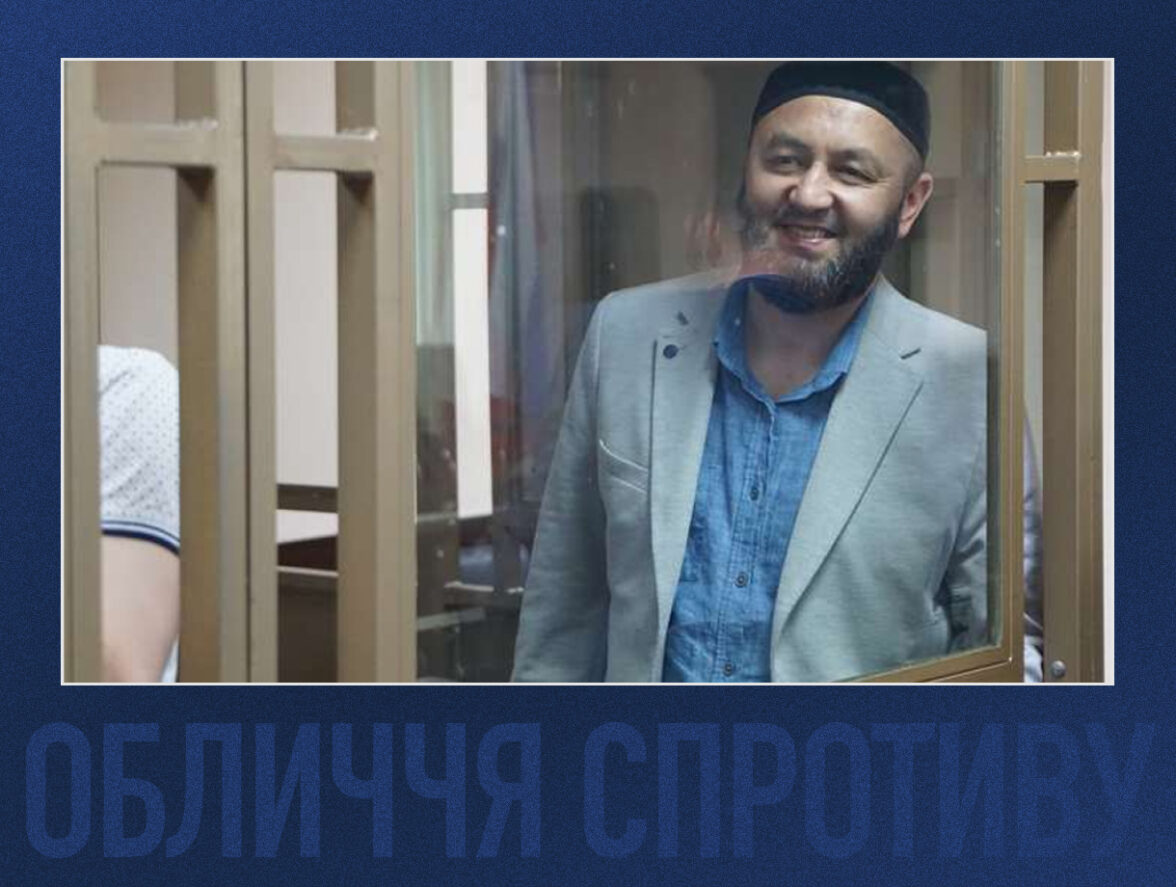
The Face of Resistance: The Story of Crimean Tatar Activist Suleiman Asanov
Life before the detention
Marlen (Suleiman) Asanov was born on 2 March 1977 in the city of Bekabad, Uzbek SSR. At birth, he was given the name Marlen, which he later changed to Suleiman. In the 1980s, his family returned to Crimea following a prolonged forced exile resulting from the unlawful deportation of the Crimean Tatar people by the Soviet totalitarian regime in 1944.
In 1994, Marlen graduated from the Holubynska Secondary School in Bakhchysarai District, after which he enrolled at the V.I. Vernadsky Taurida National University. In 1999, he obtained a higher education degree as a philologist and teacher of the Turkish and Crimean Tatar languages and literature. As a student, he actively participated in academic conferences and language competitions, earning the respect of his peers and professors.
Alongside his studies, in 1998 he completed a program at the Krymtur Training Centre and received a third-class tour guide certification.
From 1999 to 2003, he worked as a teacher of Crimean Tatar language and literature at his alma mater, Holubynska School. He applied contemporary teaching methods, organized public lessons and extracurricular activities, and promoted Crimean Tatar history. In 2002, he won the Teacher of the Year award.
Suleiman Asanov was deeply engaged in preserving Crimean Tatar culture. In 2000, he received a certificate from the Union for the Promotion of Rural Green Tourism in Crimea and founded the Kokkhoz cultural and ethnographic centre. In 2002, he opened the Salachyk caravanserai — a space recreating the atmosphere of a traditional hospitable rest stop, deeply rooted in Crimean Tatar history.
Persecution
After the occupation of Crimea by the Russian Federation in 2014, Suleiman Asanov began supporting the families of political prisoners, regularly attending court hearings and documenting human rights violations, including by publishing videos of searches on his YouTube channel. The Salachyk caravanserai became a gathering place for activists, particularly those involved in the Crimean Solidarity initiative. Suleiman not only offered the space but also provided meals to participants free of charge.
On 12 May 2016, the occupation administration conducted unlawful searches at Salachyk. That day, four residents of Bakhchysarai were detained on fabricated charges of “terrorism.” Although Suleiman Asanov was not detained, he was fined 5,000 rubles for alleged “violation of public order.” Despite this, he intensified his public engagement.
Eventually, in 2018, the Salachyk caravanserai was closed by decision of the occupational “court.”
Behind the bars
On 12 October 2017, the Federal Security Service of the Russian Federation conducted an illegal search at the political prisoner’s residence. He was arrested and charged with terrorist activity. Like other Crimean Tatars, he was prosecuted under the so-called “case of the Crimean Muslims.”
On 16 September 2020, a Russian court in Rostov-on-Don sentenced Suleiman Asanov to 19 years in a high-security penal colony. On 14 March 2022, the Supreme Court of the Russian Federation denied his appeal.
In September 2022, he was unlawfully transferred from a Russian pre-trial facility to Penal Colony No. 7 in the village of Sosnovka, Republic of Mordovia, Russian Federation — located over 1,000 km from his native Crimea.
On 9 August 2024, the occupation “court” rejected his request to be transferred to a facility closer to Crimea.
Following his arrest, he was nominated for the Volunteer Award – 2017 by the Euromaidan SOS initiative for his significant contribution to supporting the Crimean Tatar community under occupation.