30 May 2025
The Face of Resistance: The Story of Crimean Tatar Citizen Journalist Ruslan Suleimanov
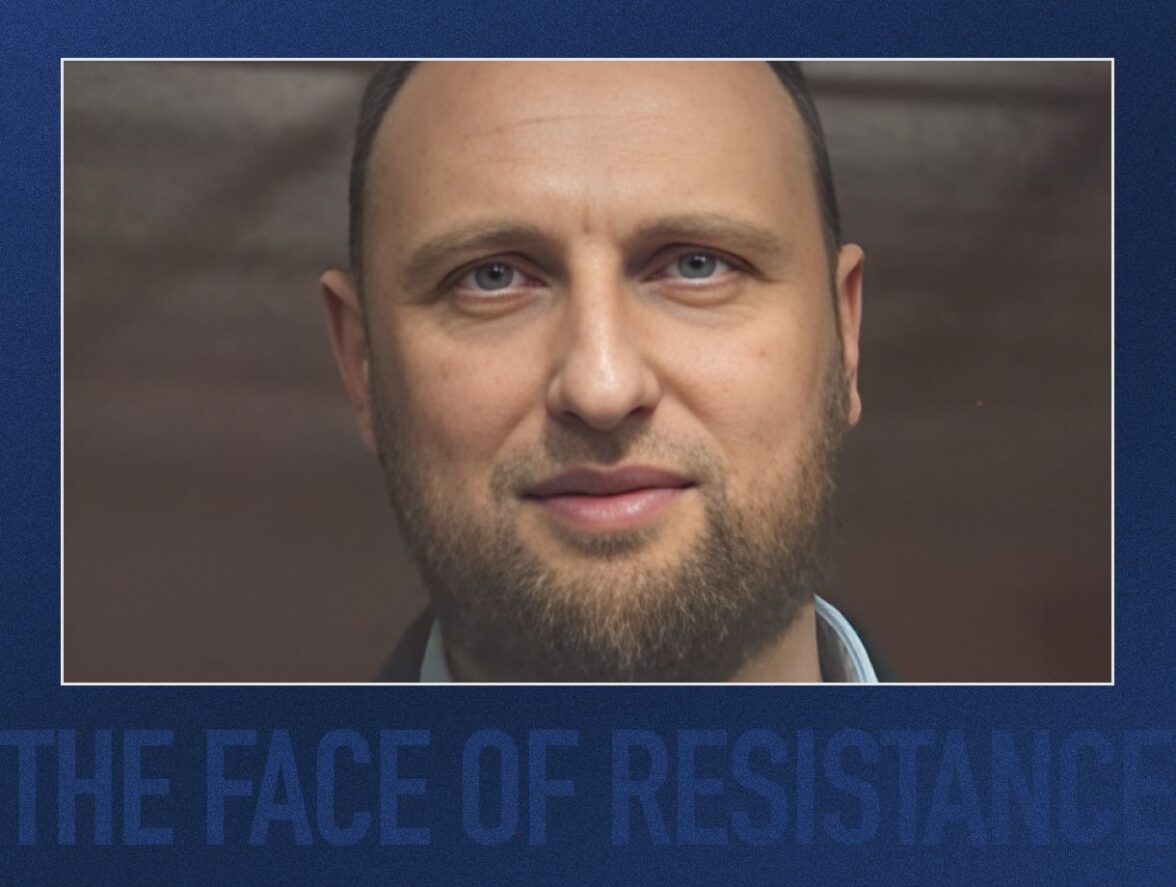
Life before the detention
Ruslan Serverovych Suleimanov was born on April 21, 1983, in the city of Kokand, Fergana Region, Uzbekistan, to a family of Crimean Tatars who had been illegally deported from Crimea in 1944 by the Soviet regime. In 1989, he started first grade at Secondary School No. 2.
After returning to Crimea in 1993, he continued his studies at Murom Secondary School in the Bilohirsk district, from which he graduated with a gold medal in 2000. That same year, he enrolled in the Faculty of Magnetic Phenomena Physics at V.I. Vernadskyi Tavrida National University, graduating in 2005.
From October 2004 to January 2006, he worked as a laboratory assistant at the Tavrida Environmental Institute. In 2012, he took a position as a programmer and later began tutoring children in physics.
He received multiple job offers abroad, but he consistently declined them on principle, believing it his duty to remain in Crimea and support the families of political prisoners who needed assistance and care. He was an active participant in the Crimean Solidarity civic association.
Persecution
In February 2017, Ruslan Suleimanov was detained near the home of political prisoner Marlen Mustafaiev. At that time, the occupation administration sentenced him to five days of administrative arrest for allegedly participating in an unauthorized protest.
On October 15, 2017, he staged a solo picket in support of repressed Crimean Tatars and was fined 10,000 rubles by the occupation “court.” He was forcibly fingerprinted, had his DNA samples collected, underwent palm scanning, was photographed, and then released without any procedural documents.
On March 26, 2019, the occupation forces detained Suleimanov at the Kalanchak checkpoint on the administrative border with Crimea, holding him for seven hours and damaging his passport. The very next day, on March 27, he was arrested.
On November 24, 2022, the Russian court in Rostov-on-Don sentenced Ruslan Suleimanov to 14 years in prison on fabricated charges of alleged “terrorism” and “attempted seizure of power.” Under the same verdict, other activists — Rustem Sheikhaliiev and Osman Arifmemetov — were also sentenced to 14 years in a high-security penal colony. The first four years are to be served in prison, followed by one year of restricted freedom.
Behind the bars
On February 1, 2024, the appellate court of the Russian Federation in the city of Vlasikha, Moscow Region, upheld the sentence of Ruslan Suleimanov, rejecting the defense’s appeal.
In March–April 2024, the political prisoner was unlawfully transferred from the pre-trial detention center in Novocherkassk to a prison in Verkhneuralsk, Chelyabinsk Region, Russian Federation. The transfer lasted 26 days and was accompanied by physical exhaustion, including acute illness and fever.
In May 2025, the prison administration in Verkhneuralsk placed him under special supervision, citing alleged “adherence to extremist ideology” and a “tendency to escape and attack.”
Ruslan has a congenital heart defect and suffers from tachycardia. Despite multiple requests for medical assistance to the prison staff, he was not provided with adequate care. In response to his complaints, medical personnel offered medications containing alcohol, which he was forced to refuse on religious grounds. The cell in which he was held had high humidity, poor ventilation, no heating, and no hygiene supplies.
Ruslan Suleimanov’s story is included in the book Free Voices of Crimea, presented in April 2025 in Kyiv. The publication is dedicated to 16 journalists from Crimea persecuted for their civic stance and journalistic activities. It was produced in collaboration with PEN Ukraine, The Ukrainians Media, the ZMINA Human Rights Center, and the Vivat publishing house.