04 July 2025
Russian Occupiers Accelerate Forced Land Seizures in Crimea
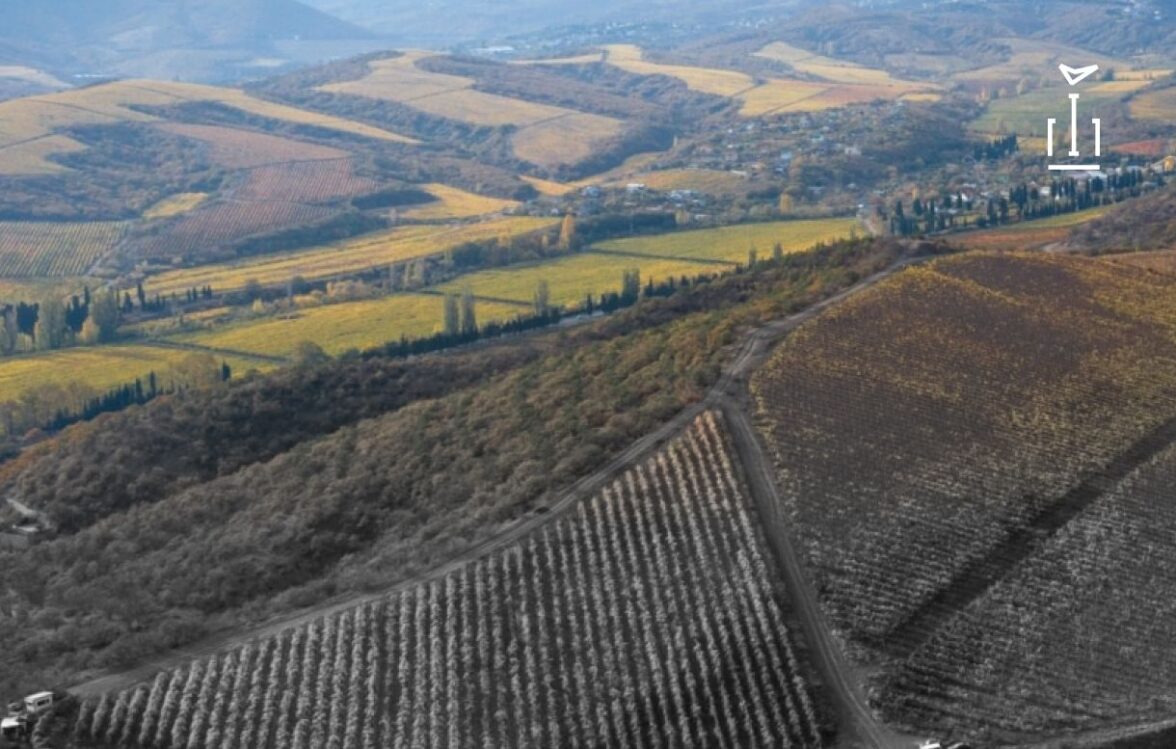
In 2025, the Russian Federation intensified its campaign of forced land seizures in the temporarily occupied territory of Crimea. This policy is being carried out through administrative pressure, judicial manipulation, and the application of Russian legislation — provisions that carry no legitimacy under international law in the context of occupation. As part of systematic monitoring of the situation in Crimea, at least three primary mechanisms used by the Russian occupation administration to expropriate land owned by Ukrainian citizens have been identified.
The first mechanism is based on a 2020 decree by the President of the Russian Federation, which prohibits “foreigners” from owning land in areas of Crimea declared as border zones. Ukrainian citizens who did not accept Russian citizenship after the 2014 occupation were classified as “foreigners” under this provision. They were given a limited timeframe to voluntarily sell their land plots, after which mass so-called “court cases” began, demanding the forced seizure of property or its sale through “public auctions.” Among those affected are not only Ukrainians, but also citizens of EU countries, Israel, the United Kingdom, Belarus, Kazakhstan, South Africa, and other nations. At least 135 such cases have been recorded, and the process is ongoing.
The second mechanism concerns land allegedly classified as having “historical” affiliation with the defense fund. These are plots that, during Soviet times, were transferred to the military for the establishment of training grounds but, after Ukraine gained independence in the 1990s, became the private property of citizens and were used for agricultural purposes. Since 2014, the occupation administration has begun reclassifying such land as defense property and transferring it to the Russian Ministry of Defense, disregarding valid Ukrainian ownership documents. In this way, over 25,000 hectares have already been seized.
The third mechanism, launched in 2025, concerns the seizure of so-called “unclaimed” land shares. These are agricultural plots allocated to collective farm members in the 1990s that were either improperly registered or not aligned with Russian legislation. As of 1 January 2025, the occupation administration gained the authority to classify such plots as “unclaimed” without court proceedings and transfer them to municipal ownership. A simple formal approval of a list is sufficient to initiate the process. Within six months, approximately 39,000 hectares have been seized.
These actions represent a blatant violation of international humanitarian law. They contradict the Fourth Geneva Convention, which explicitly prohibits the expropriation of property in occupied territories, and breach the right to property enshrined in the European Convention on Human Rights. The scale of these seizures, their targeting of Ukrainian citizens and foreign nationals, and their use as a tool for the militarization of the peninsula all point to a systematic and deliberate policy by the Russian Federation. The occupation administration attempts to create a façade of legality by invoking Russian legal constructs that have no recognition under international law.
Expropriation through decrees on “border zones,” the use of the “defense land” category, and the classification of land shares as “unclaimed” reflect a coherent strategy of property appropriation while disregarding Ukrainian ownership documents. These actions aim not only to solidify the occupation economically and militarily but also to alter the demographic and social composition of Crimea — constituting an additional violation of international law.
The international community plays a crucial role in responding to Russia’s unlawful policy of land expropriation in occupied Crimea. At the same time, Ukraine is implementing a comprehensive set of measures to document these cases, establish accountability, and develop mechanisms to compensate those affected. A systematic monitoring effort is underway, enabling the recording of actions by the occupation administration and the use of collected evidence in international legal proceedings. International cooperation strengthens the capacity to protect the rights of civilians in temporarily occupied territories and contributes to forming a unified legal stance on the actions of the occupying state.