18 February 2025
WEEKLY UPDATE ON THE SITUATION IN OCCUPIED CRIMEA ON FEBRUARY 18, 2025
Main news of the week
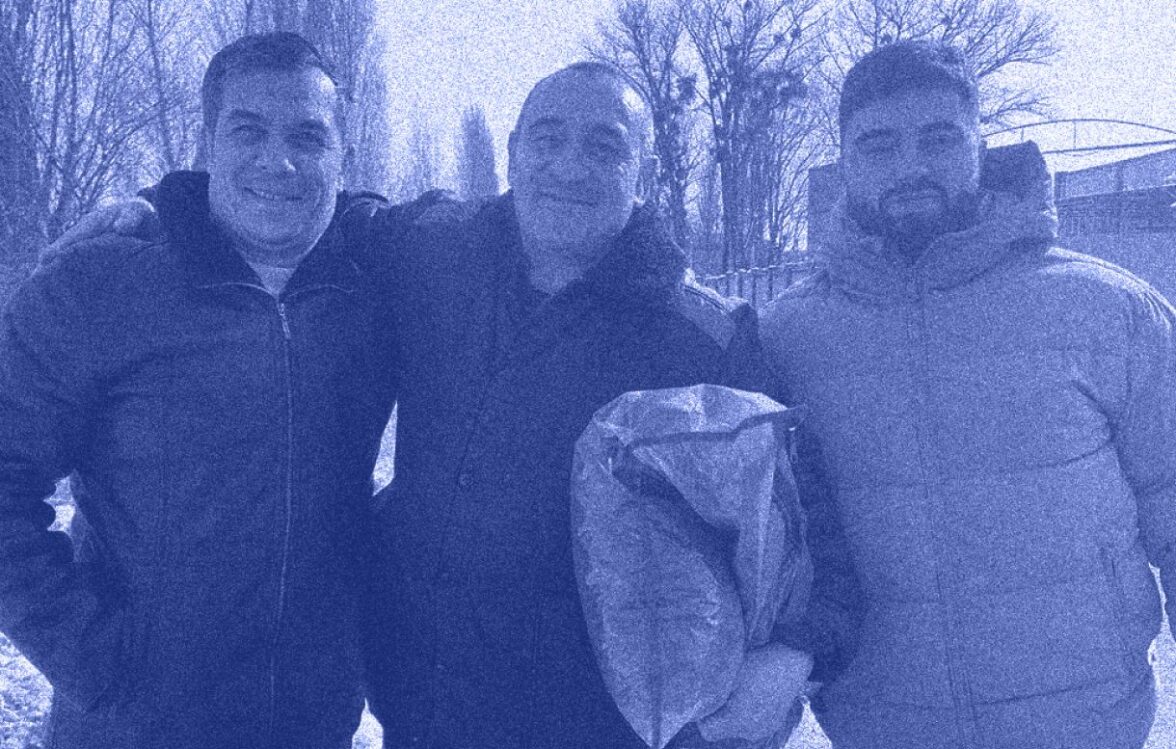
▶ After nine years of unlawful imprisonment by Russian occupiers, Crimean Tatar activists Rustem Abiltarov, Zevri Abseitov, and Remzi Memetov have been released.
Crimes committed by the Russian Federation
▶ As of February 2025, Russia has illegally imprisoned 221 people in occupied Crimea on ethnic, religious, and political grounds, including 137 Crimean Tatars.
▶ The health condition of Server Mustafaiev, a Crimean Tatar human rights defender unlawfully sentenced to 14 years in a high-security penal colony, continues to deteriorate in a Russian prison. He is experiencing worsening lower back pain, as well as scaling on his elbows and face, which may indicate the early stages of psoriasis. However, the occupation administrations refuse to provide him with adequate medical care.
▶ The occupation administrations have transferred the unlawfully imprisoned Crimean political prisoner Ruslan Abdurakhmanov from a Russian prison in the Tambov region. His whereabouts have remained unknown for over three weeks. Russian forces abducted him after the occupation of the Kherson region in 2022 and sentenced him to five years in a high-security penal colony on fabricated charges.
▶ Crimean Tatar journalist Asan Akhmetov has been forcibly transferred from the Russian Vladimir Central prison to an unknown location.
The use of occupied Crimea as a springboard for attacks on Ukraine and the militarization of the peninsula
▶ Agents of the ATESH movement are monitoring the transportation of fuel for occupation forces from Russia’s Novorossiisk to Crimea, tracking the volumes and delivery schedules. Recently, they have observed a decrease in the frequency of these shipments due to the effective strikes by Ukraine’s Armed Forces on oil refineries and fuel depots. At the same time, agents report that the occupying forces are attempting to reinforce Balaklava Bay by installing new boom barriers and mining the entrances to protect against uncrewed surface vessels (USVs) and underwater drones.
Since Russia launched a full-scale invasion and spread its armed aggression throughout Ukraine, occupied Crimea has been used by Russia as a military base for spreading aggression in various forms. From the peninsula, the occupiers continue to launch attacks on the territory of Ukraine, including on civilian infrastructure.
The resistance movement of Ukrainian citizens in occupied Crimea
▶ Russia has already prosecuted 1203 people in occupied Crimea for expressing solidarity with Ukraine, who are being subjected to administrative penalties in the form of illegal fines and arrests.
▶ 50-year-old Mykhailo Soloviov, a Kerch resident, criticized Russian occupation forces’ actions on social media. The occupation administration detained him, filed an administrative charge, and referred his case to the occupation “court.”
▶ The occupiers detained and fined a 43-year-old resident of Sevastopol 40,000 rubles for criticizing the occupation administration on social media.
▶ In Crimea, the occupation administration detained a 48-year-old woman for displaying Ukrainian symbols on her social media page. An administrative charge was filed against her, and the case was referred to the occupation “court.”
▶ Activists of the Yellow Ribbon movement marked Unity Day on February 16 by decorating cities across occupied Crimea. Leaflets, yellow ribbons, and slogans such as “Unity is Strength,” “Together We Are Unbreakable” appeared in Simferopol, Sevastopol, Bakhchysarai, Yevpatoriia, Yalta, Armiansk, Kerch, and Sudak.
▶ Activists of the Crimean Combat Seagulls movement continue to expose the personal data of Russian war criminals and collaborators, as well as gather intelligence on the locations of Russian military facilities in occupied Crimea.
▶ The resistance movement Zla Mavka continues to document daily life in occupied territories, sharing first-hand insights into the realities of life under occupation.
The full-scale invasion was marked by a rapid increase in solidarity and resistance actions by residents of occupied Crimea against the Russian occupiers. Residents of occupied territories unite in resistance movements, such as the above-mentioned Yellow Ribbon, Crimean Combat Seagulls, Zla Mavka, and ATESH, or act individually. To suppress the resistance movement of residents in the temporarily occupied territory of Crimea after February 24, 2022, the occupiers actively began to prosecute and bring to administrative responsibility Ukrainian citizens under the article on the so-called “discrediting the Russian army”.
De-occupation of Crimea is integral to ending the war and restoring peace. Ukrainians are doing everything they can to stop the aggressor and protect the entire world from Russia’s criminal actions. This is not a local or regional issue but a threat to the world and international order.