20 January 2026
WEEKLY UPDATE ON THE SITUATION IN OCCUPIED CRIMEA ON JANUARY 20, 2026
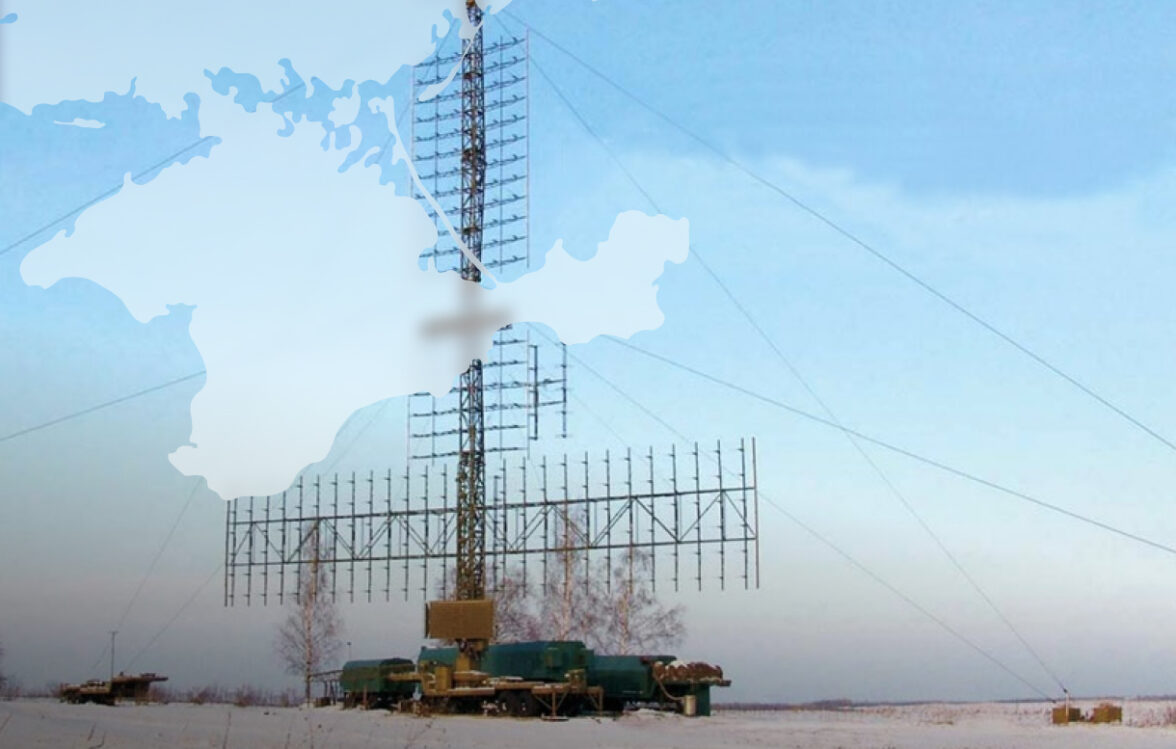
Main news of the week
▶ The General Staff of the Armed Forces of Ukraine reported strikes against the enemy’s air defence facilities, including a Nebo-U radar station and a Pantsir-S1 surface-to-air missile and gun system.
▶ The Unmanned Systems Forces carried out a strike on the Azovska substation, which is a critical element of energy supply for the region’s industrial sector.
▶ Activists of the Yellow Ribbon movement reported that prohibited antibiotics were used at the Semashko Hospital in temporarily occupied Simferopol. The drugs in question are Indian-manufactured Cefoperazone and Sulbactam Jodas, which have been on a “blacklist” since February last year due to identified violations and potential risks to patients.
Crimes committed by the Russian Federation
▶ As of 19 January, the occupying authorities have illegally imprisoned 224 individuals, including 133 Crimean Tatars.
▶ The wife of Crimean political prisoner Yashar Muiedinov reported that her husband, who was sentenced to 13 years of imprisonment, was transferred from Penal Colony No. 5 in Arkhangelsk Oblast of the Russian Federation to Pre-Trial Detention Centre No. 4 in the city of Arkhangelsk.
▶ The occupying “administration” of Crimea fined Crimean journalist and host of the Crimean Tatar talk show Merkez Plus, Lenora Diulber, 33,000 roubles (approximately 18,000 hryvnias) under two administrative charges. In particular, the grounds for the accusation of alleged “extremism” were a scholarly work entitled Crimean Tatars in the Context of the Transformation of the Political Space, co-authored by Diulber. The publication was stored at the Ivan Franko Crimean Scientific Library. So-called experts allegedly identified fragments that “justify the activities” of the organisation Hizb ut-Tahrir, which the occupiers use as a pretext for the so-called Crimean Muslims case, as well as the activities of the Mejlis of the Crimean Tatar People.
▶ The occupying administration illegally extended the confinement of political prisoner Volodymyr Yakymenko in a punishment cell of a Russian penal colony for another two weeks. According to his wife, due to constant cold, damp conditions and unsanitary environment, Yakymenko’s stomach pain has worsened; however, he is being denied medical assistance. She also noted that the colony administration prohibits the transfer of any food other than the minimum prison ration, and that a parcel from volunteers has not been delivered for more than three weeks, allegedly due to holidays and a “non-operational” postal service.
The use of occupied Crimea as a springboard for attacks on Ukraine and the militarization of the peninsula
▶ Activists of the ATESH movement conducted detailed reconnaissance of an enemy facility on the outskirts of Simferopol, which the occupiers use to monitor the radio spectrum and intercept signals in order to identify participants of the Ukrainian resistance on the peninsula.
▶ According to the Air Force of the Armed Forces of Ukraine, over the course of the week Russian occupying forces carried out a series of massive combined attacks against the territory of Ukraine. In particular, more than 541 attack UAVs of the Shahed, Shahed-Geran and Gerbera types, as well as 3 Iskander-M ballistic missiles, were launched, including from the territory of occupied Crimea and from the waters of the Black Sea. Russian aggressors continue to attack Ukraine’s energy infrastructure during the winter, carrying out yet another campaign of terror against the civilian population.
The resistance movement of Ukrainian citizens in occupied Crimea
▶ Activists of the Yellow Ribbon movement continue their activities in Crimea, reminding the world that it is an integral part of Ukraine. Despite constant pressure, inspections and surveillance, people maintain their clear and unwavering position.
The full-scale invasion has been marked by a sharp increase in acts of solidarity and resistance by residents of occupied Crimea against the Russian occupiers. Residents of the occupied territories unite in resistance movements such as the aforementioned “Yellow Ribbon,” “Crimean Combat Seagulls,” “Zla Mavka,” “ATESH,” or act individually. To suppress the local resistance movement on the temporarily occupied territory of Crimea after 24 February 2022, the occupiers began actively persecuting and subjecting Ukrainian citizens to administrative liability under the article on so-called discrediting the Russian Armed Forces.
The de-occupation of Crimea is essential to ending the war and restoring peace. Ukrainians are doing everything possible to stop the aggressor and protect the entire world from Russia’s criminal actions. This is not a local or regional issue — Russia’s aggression poses a threat to the whole world and the international order.