13 June 2025
Book Presentation Decolonizing Ukraine: How the Indigenous People of Crimea Remade Themselves after Russian Occupation Held in Detroit
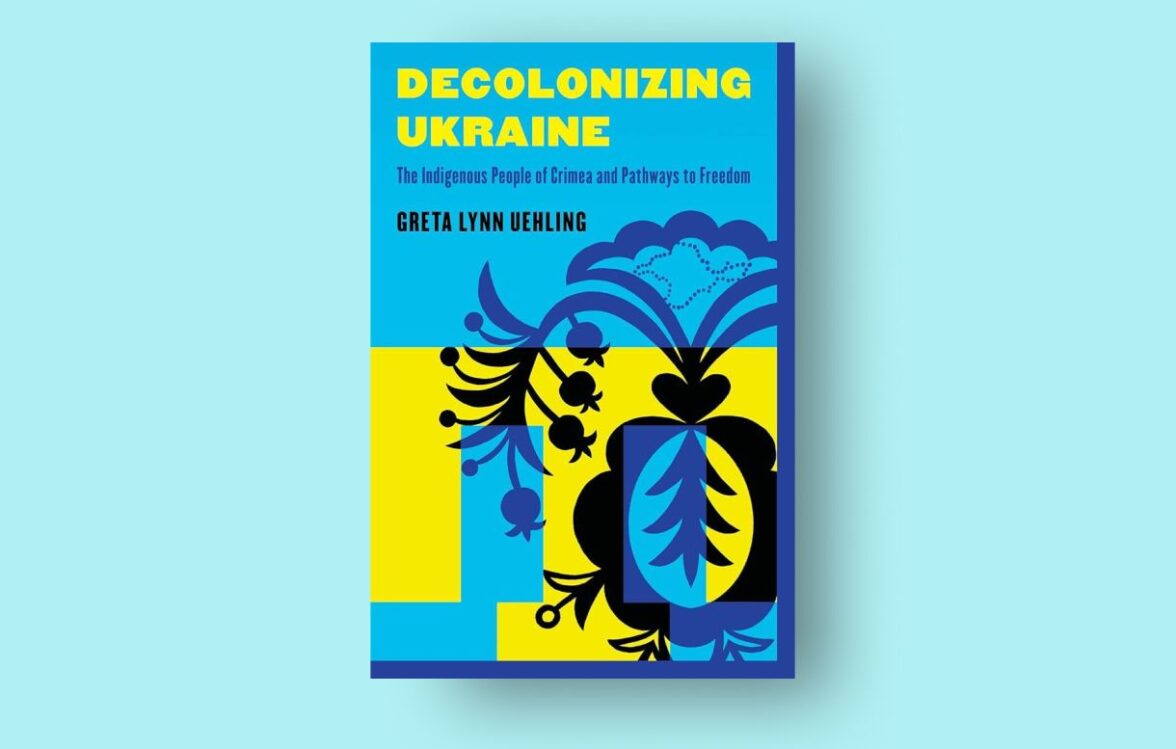
Today, during a gathering of the Shevchenko Scientific Society in Detroit, a presentation and discussion of the book Decolonizing Ukraine: How the Indigenous People of Crimea Remade Themselves after Russian Occupation by University of Michigan professor Greta Lynn Uehling took place. The event was held as part of an Atlantic Council initiative that also explored the role of Crimea and the Crimean Tatar people in the context of Russia’s war against Ukraine and the country’s broader struggle for liberation.
The book addresses complex and highly relevant issues: the restoration of identity, resistance to colonial practices, and the political self-determination of Crimea’s Indigenous people, the Crimean Tatars, under Russian occupation. Greta Lynn Uehling’s research makes a valuable contribution to decolonial humanities and inspires new academic approaches to the study of Crimea.
The professor focuses on the experience of the Crimean Tatars, who since 2014 have faced a renewed wave of repression, “silent deportation,” and persecution by the Russian occupation administration. Greta Lynn Uehling examines how these circumstances have catalyzed processes of self-organization, cultural preservation, and the development of political agency. Her research explores the experiences of Crimean Tatars and other Ukrainian citizens affected by the Russian occupation.
The book highlights the stories of individuals who fled the temporarily occupied territory of Crimea to areas under Ukrainian government control, analyzing how the occupation has reshaped their lives, social connections, and relationships. It underscores the importance of recognizing the Crimean Tatars as an Indigenous people of Ukraine — a recognition that is vital to protecting democratic freedoms and human rights.
As part of the book presentation, the author highlighted the activities of the Crimea Platform, an international consultation and coordination format aimed at strengthening the global response to Russian aggression, countering security threats in the region, increasing international pressure on Russia, preventing further human rights violations, and protecting those affected by the occupation regime.
Greta Lynn Uehling also referenced the work and strategies of the Mission of the President of Ukraine in the Autonomous Republic of Crimea, particularly the Strategy for the Cognitive De-occupation of Crimea. This strategy focuses on transforming the perception of Crimea through a value-based approach and reintegrating its residents into Ukraine’s sociopolitical and cultural space. It also envisions intensive social-psychological and intergenerational reintegration efforts, especially targeting beliefs shaped historically under Russian colonial rule and further reinforced by the 2014 occupation.
“The Ukrainian government has recognized the Crimean Tatars as an Indigenous people. It also officially recognized the deportation of the Crimean Tatar people as an act of genocide shortly after the beginning of the occupation. The Mission of the President of Ukraine in the Autonomous Republic of Crimea was established to ensure the state’s institutional presence in this sphere. Additionally, the Crimea Platform functions as a high-level international forum for discussing the issue of Crimea. Thus, Ukraine’s actions over the past decade in this regard are tremendously significant and deserve recognition. At the same time, we are at a critical juncture where these achievements must be scaled up and further reinforced,” Greta Lynn Uehling said in an interview with Atlantic Council TV.
It is important to highlight a notable shift within the academic and politico-cultural landscape in the United States: colleagues at Michigan State University successfully advocated for the renaming of The Center for European, Russian, and Eurasian Studies to The Center for European and Eurasian Studies. While this may appear to be a formal adjustment, it carries profound symbolic weight in the broader effort to reassess Russia’s role as an imperial actor within academic discourse. This symbolic “decentralization” of Russia is directly tied to the creation of a more just and polyphonic understanding of the region.
Such actions reflect the broader process of decolonization — not only of Ukraine, but also of Western academic traditions. Rethinking terminology, institutional names, and narrative frameworks is a way to restore visibility to countries and peoples that have long been marginalized by an imperial-centric perspective.