29 October 2024
As Part of the German-Ukrainian Festival in Cologne, the Exhibition LOMYKAMIN. WOMEN’S RESISTANCE IN CRIMEA Was Held
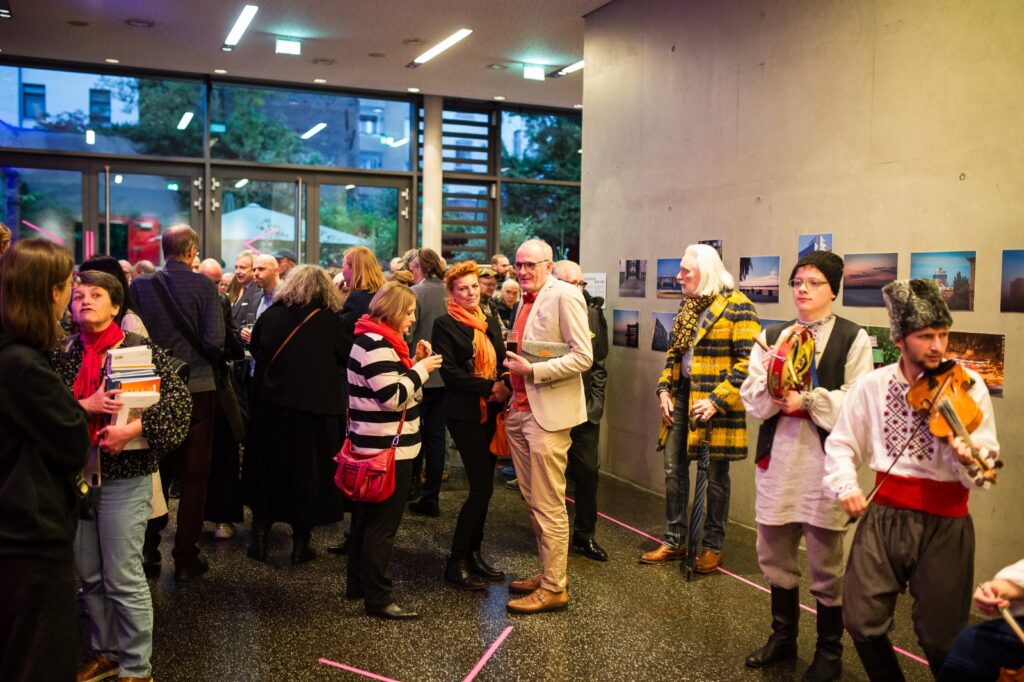
On October 14–15 in Cologne, as part of the German-Ukrainian festival “Immer wieder Aufbruch,” the art exhibition titled “Lomykamin. Women’s Resistance in Crimea” was presented, highlighting the experiences of women who have faced Russian aggression and occupation, particularly in Crimea, occupied since 2014.
The exhibition aimed to bring attention to the multifaceted roles and unique experiences of women who, amid war, fight for their rights and liberties. Risking becoming victims of repression, they demonstrate an indomitable spirit and dedication to the ideals of freedom and democracy. Additionally, the exhibition explores how women develop strategies of resistance under occupation, fighting not only for their own freedoms but also laying the foundation for the rights of future generations. Through artwork, photography, and personal stories, the exhibition captures the depth of their experiences and inspires those striving for change.
A central theme of the exhibition was an artistic exploration of the last decade of life in temporarily occupied Crimea, where women, despite the constant threat of arrest, openly stood up for their rights. The installations and works shared the stories of women activists who have found themselves in difficult situations and of others who, despite repression, continue their struggle:
- The installation The Beach by Lia Dostlieva and Julia Po delves into the deep psychological aspects of loss through small objects that once belonged to Crimean residents. Stones serve as carriers of memory, symbolizing loss and the fight for identity amid occupation, creating a bridge between what has been lost and what remains in memory.
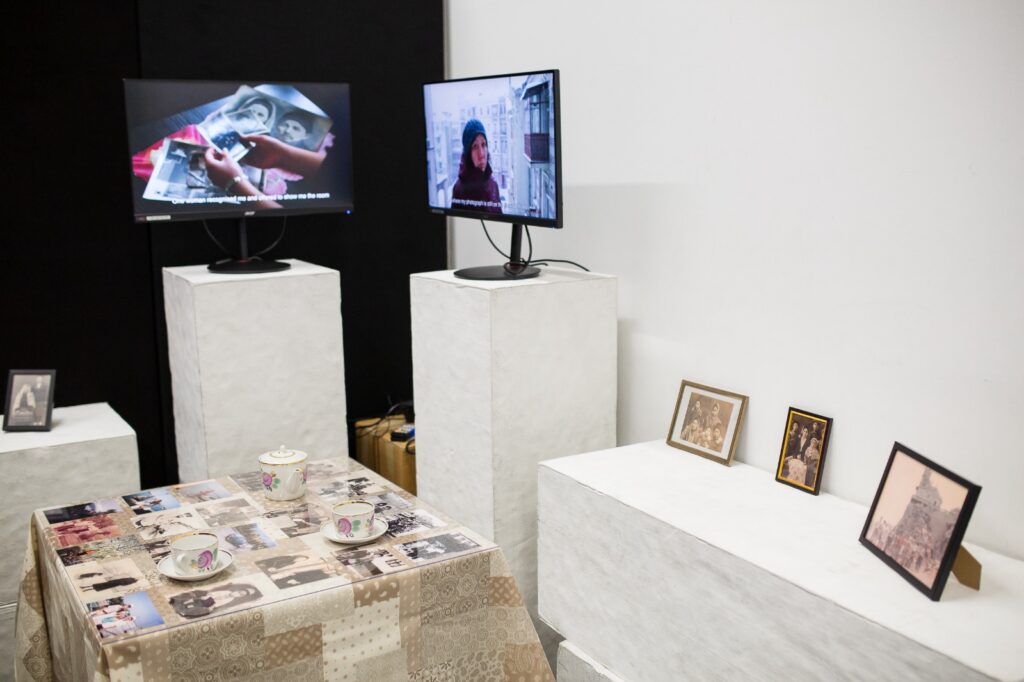
- The project Crimea. Home by Emine Ziyatdinova is a photo series capturing the lives of Crimean Tatars before and after Russia’s 2014 occupation of Crimea. Ziyatdinova’s photographs document everyday moments, where a calm exterior hides the invisible threat of political repression. Her photos are a means of exploring themes of home, identity, and loss, conveying instability and constant fear.
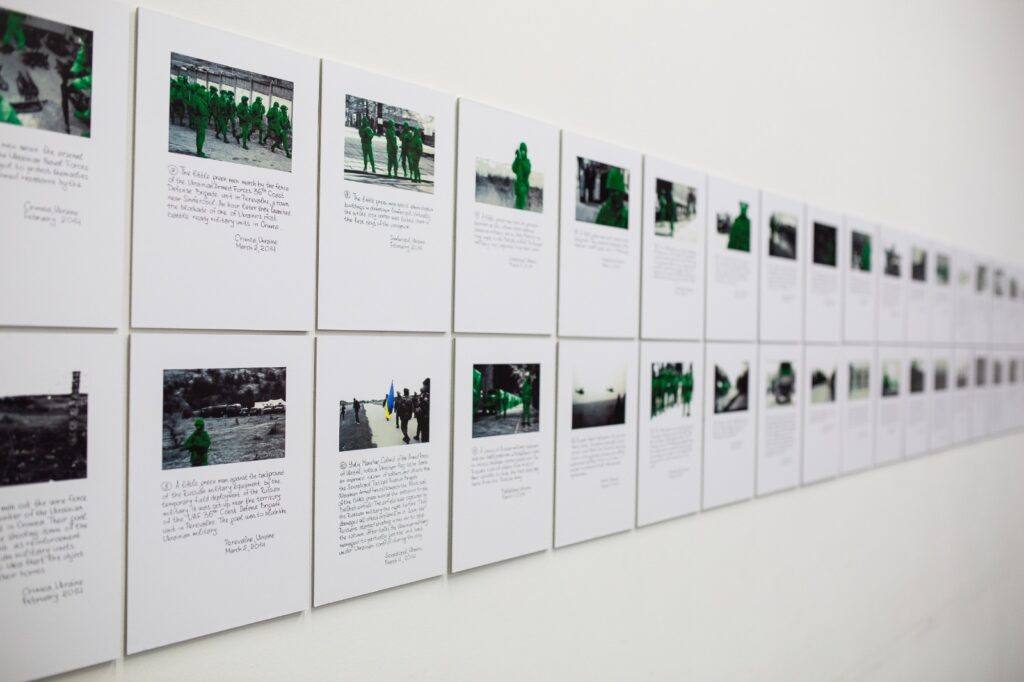
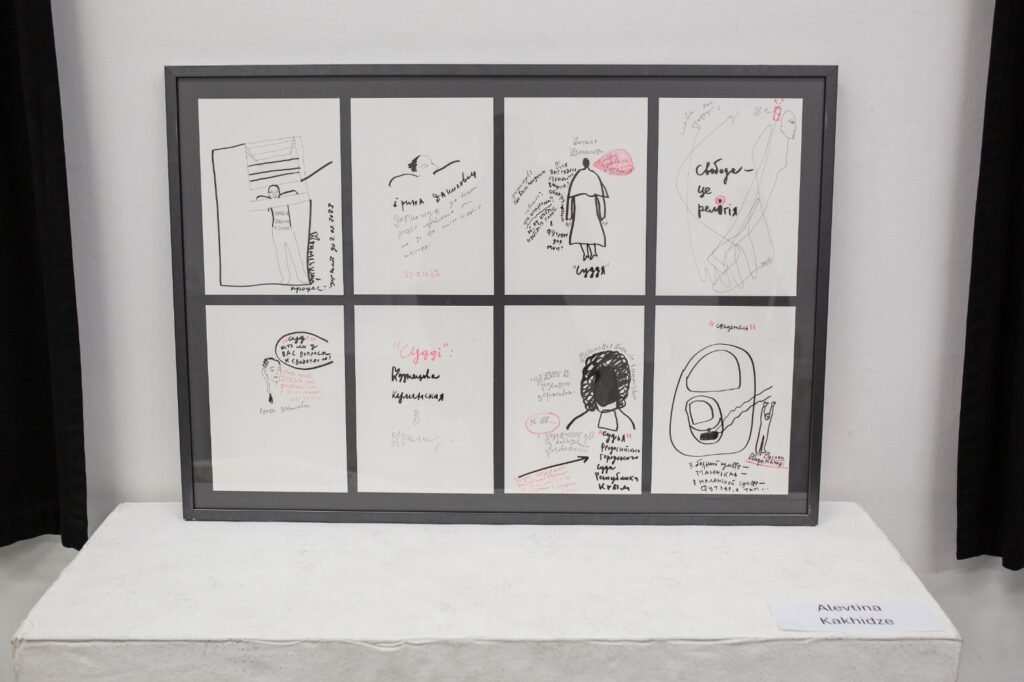
- Drawings by Alevtina Kakhidze, dedicated to the fates of women persecuted in temporarily occupied Crimea, address themes of political prisoners, forced detentions, and the conditions faced by activists and human rights defenders. She highlights the harsh conditions faced by those who openly oppose the occupation authorities.
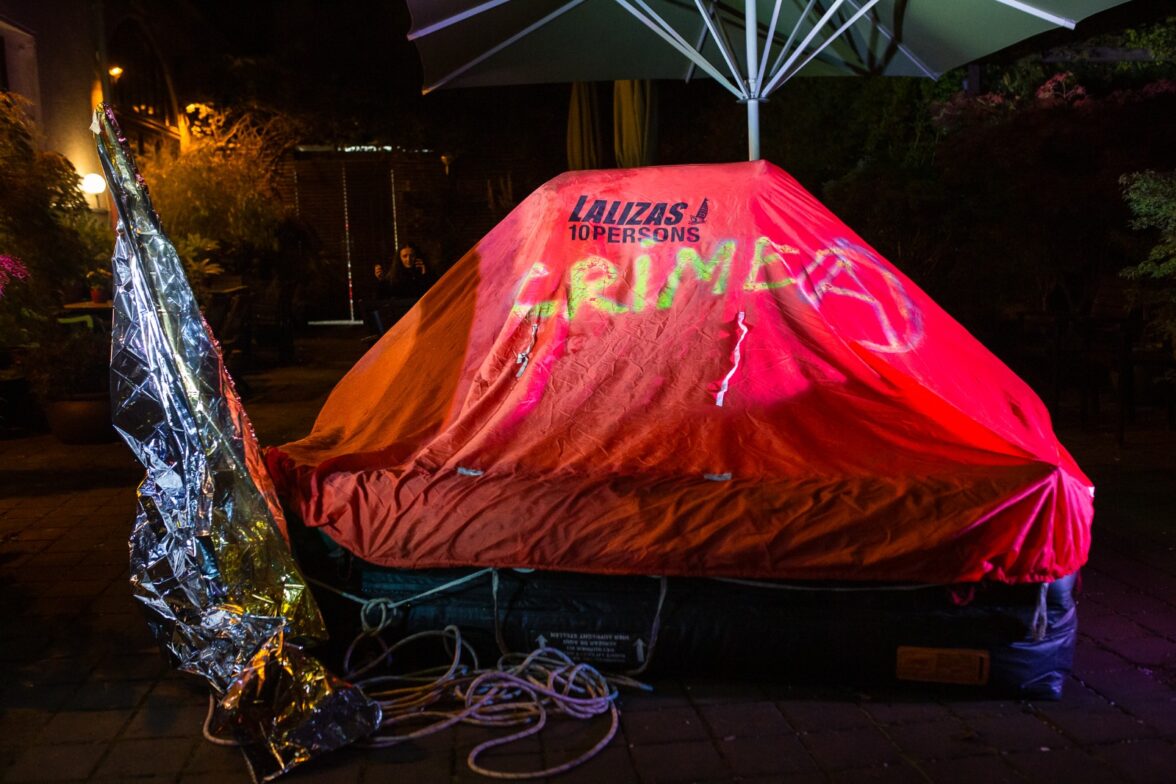
- Crimea Raft by Maria Kulikovska, a sculpture symbolizing the instability and vulnerability of the displaced, is created on an improvised raft with a neon sign representing the migrant parliament. Kulikovska, herself a displaced person after the occupation of Crimea, developed this project as a living installation and a space for solidarity.
The Lomykamin. Women’s Resistance in Crimea exhibition was not only a space for artistic expression but also a site for deeply rethinking the role of women during times of political crisis and war. Its displays and performances provided insight into experiences that often remain overshadowed by larger events, highlighting the strength of women’s resilience and their symbolic fight for freedom and memory under challenging circumstances..