23 October 2024
The Side Event Titled “Deportation of the Crimean Tatar People in 1944: From the Recognition of Genocide to the Restoration of the Rights of the Crimean Tatars in the Ukrainian State” Was Held as Part of the Third Parliamentary Summit of the Crimea Platform
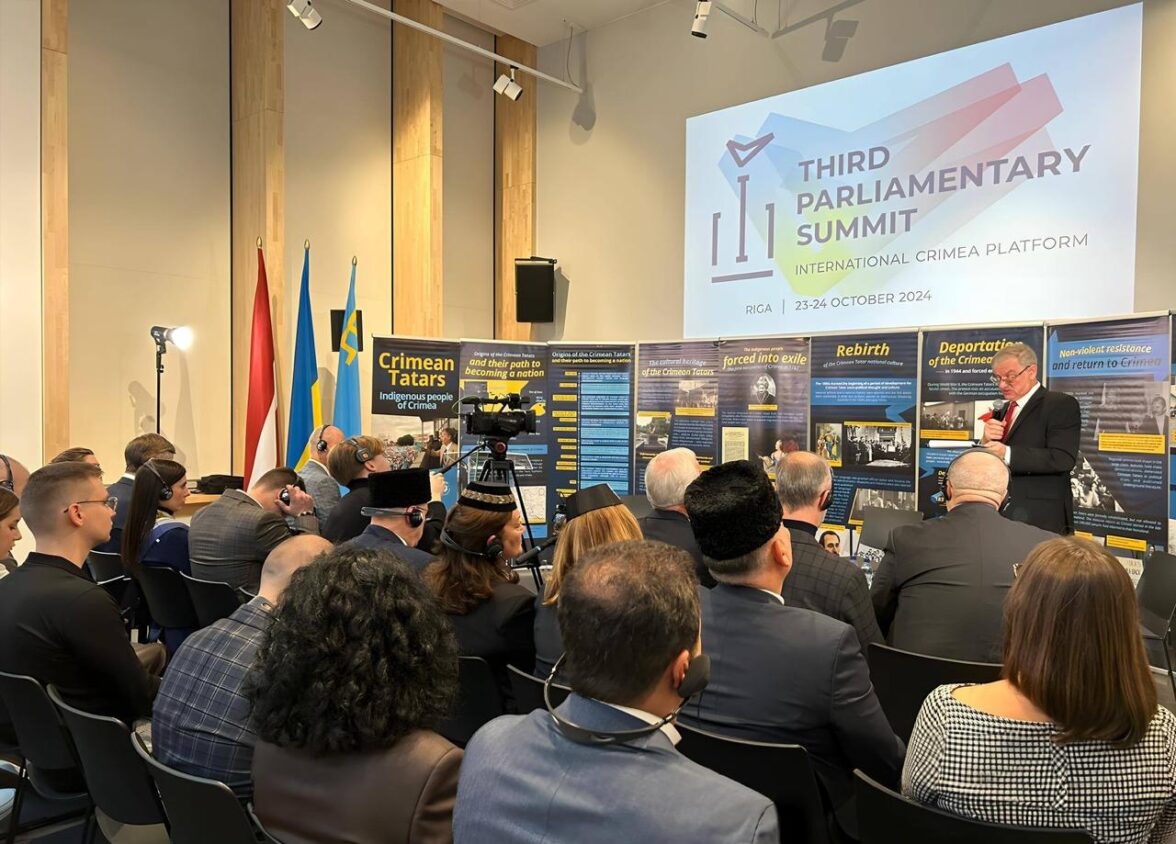
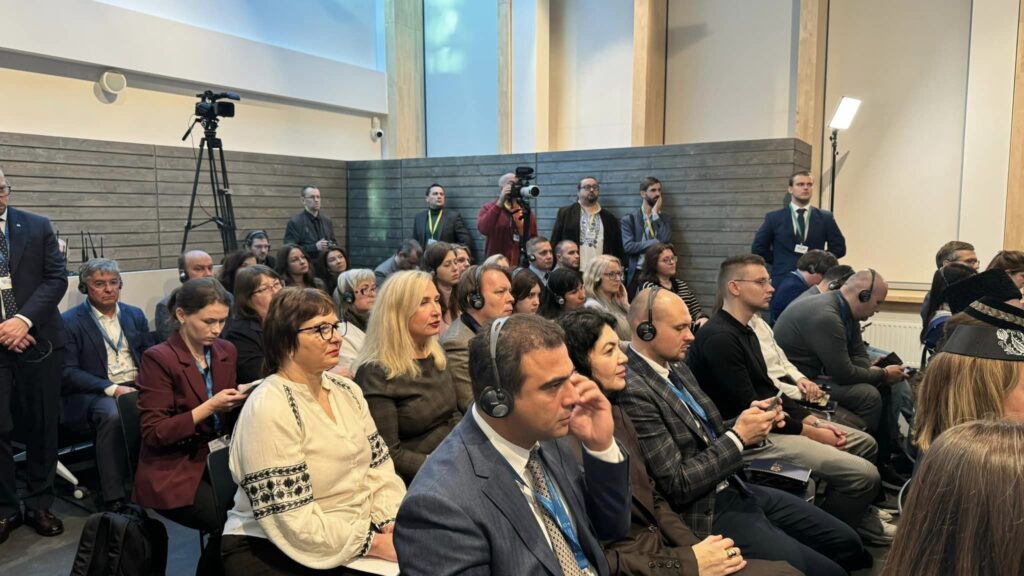
Today, within the framework of the Third Parliamentary Summit of the Crimea Platform, the Museum of the Occupation of Latvia hosted a discussion event, “Deportation of the Crimean Tatar People in 1944: From the Recognition of Genocide to the Restoration of the Rights of the Crimean Tatars in the Ukrainian State”, organized by the Mejlis of the Crimean Tatar people, the Crimean Tatar Resource Center NGO with the support of the Embassy of Ukraine in Latvia. The event was devoted to securing the recognition by the countries of the world of the deportation of the Crimean Tatar people in 1944 as an act of genocide and discussing ways to restore the rights of the Indigenous Crimean Tatar people in independent Ukraine.
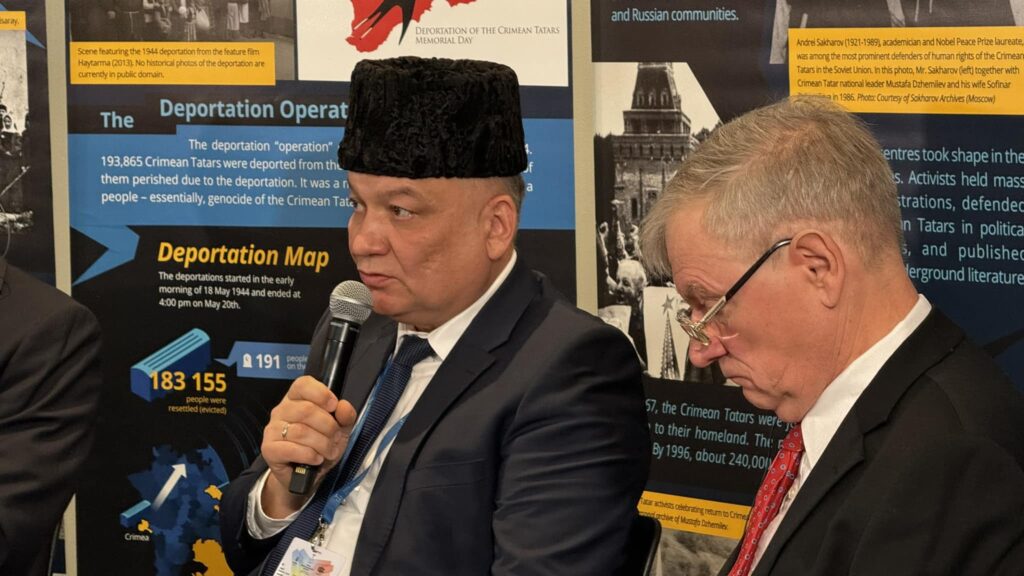
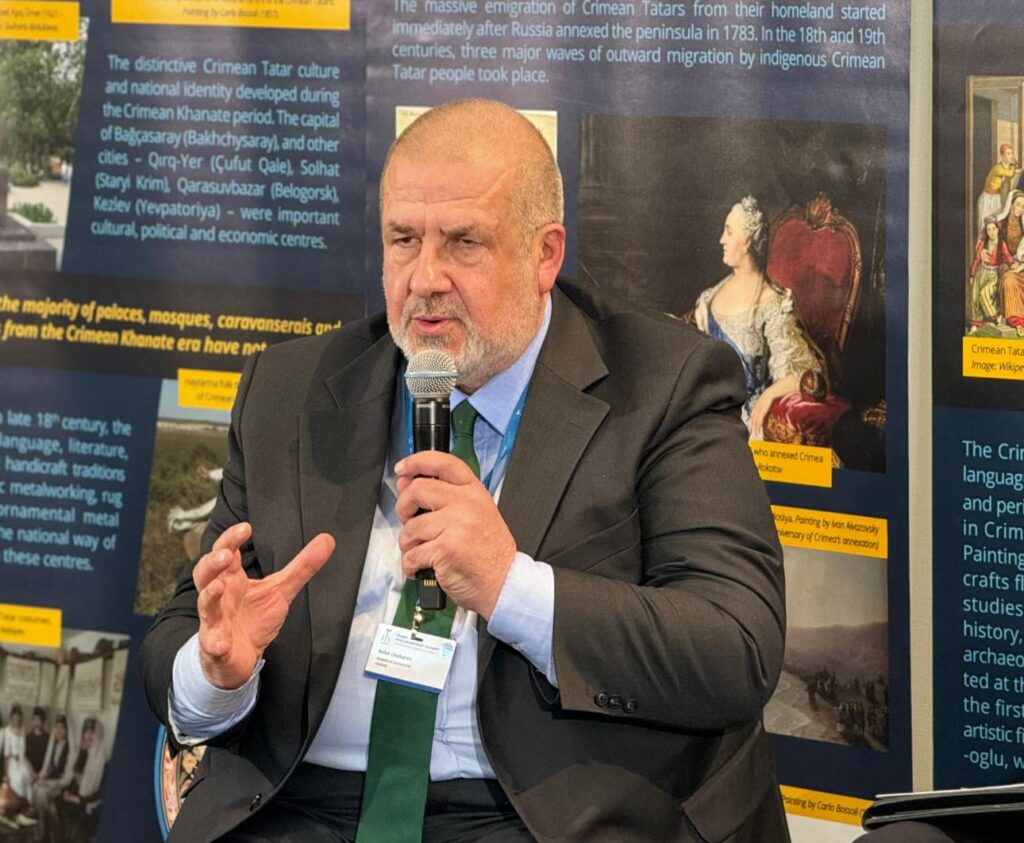
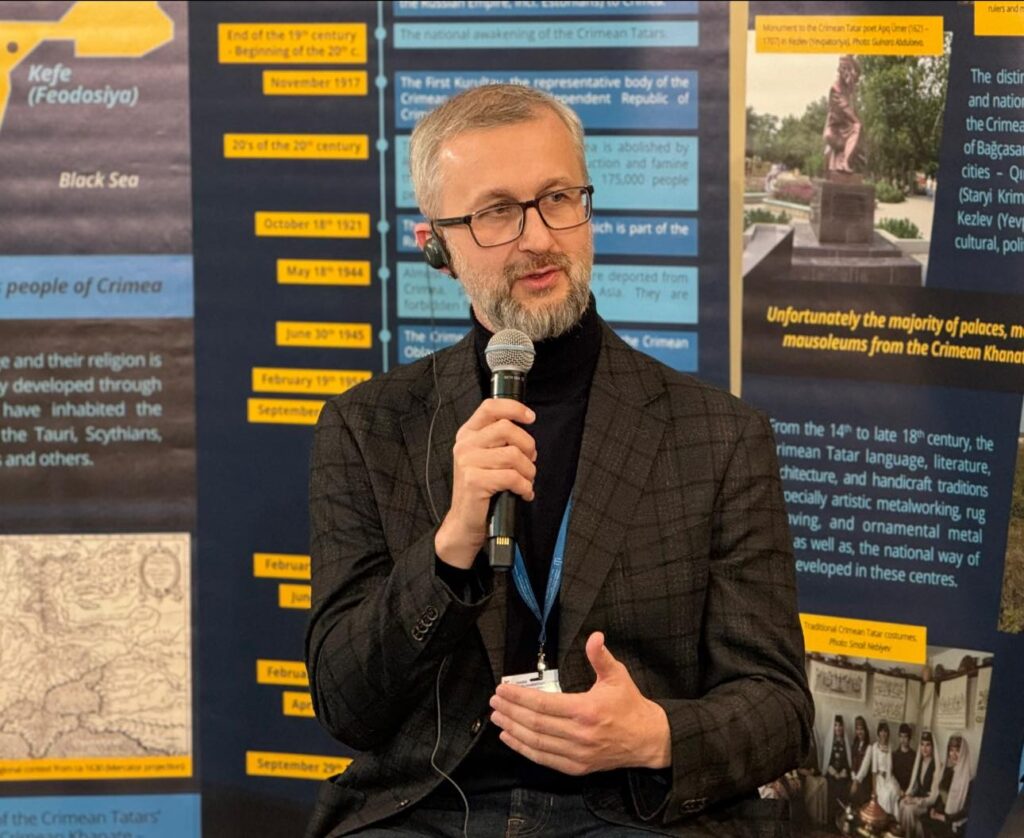
The discussion was attended by Chairman of the Mejlis of the Crimean Tatar people Refat Chubarov, First Deputy Chairman of the Mejlis of the Crimean Tatar people Nariman Dzhelyal, Chairman of the Board of the Crimean Tatar Resource Center Eskender Bariiev, and Latvian lawyer and diplomat Andris Teikmanis. Romualds Ražuks, a member of the Saeima of the 12th convocation, moderated the discussion.
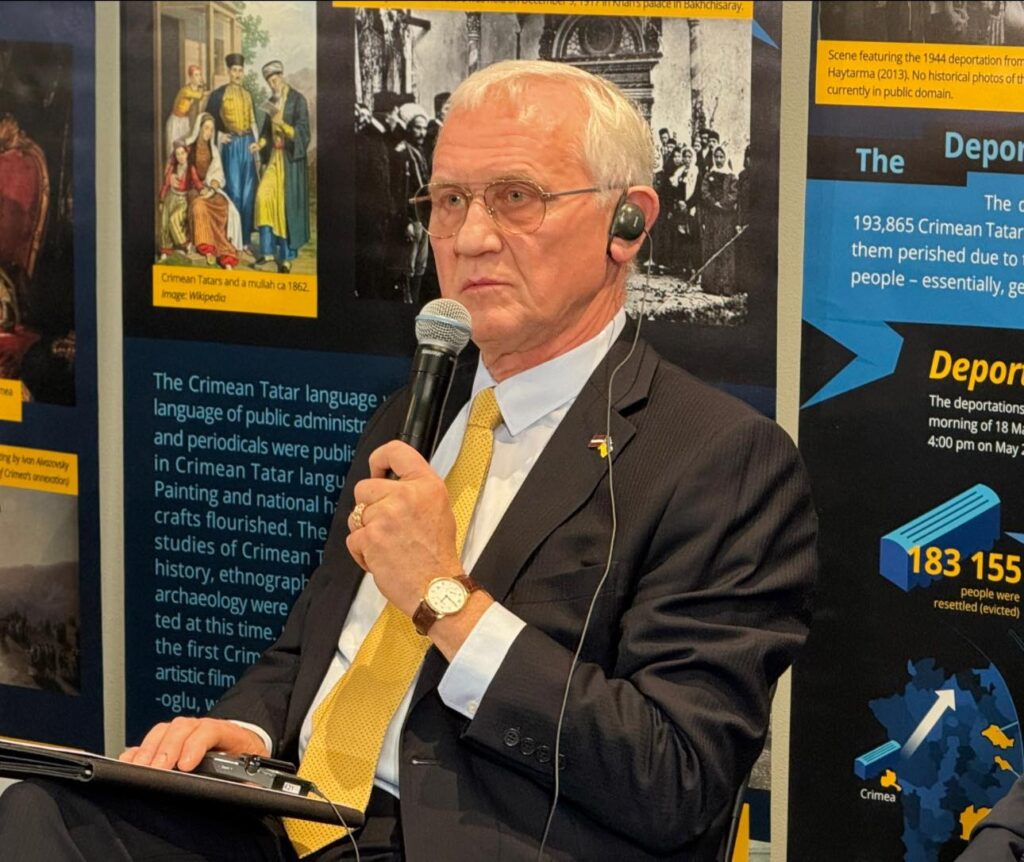
During the event, the Chairman of the Verkhovna Rada of Ukraine, Ruslan Stefanchuk, delivered a welcoming speech. He emphasized the importance of de-occupation of the Crimean Peninsula, overcoming Russian colonialism, and returning the Crimean Tatar people to their homeland:
“We remain steadfast in our belief that Crimea is Ukraine, that Crimea has the right to self-determination, and that the Crimean Tatars must be able to return to their homeland. We are committed to taking all necessary steps to achieve this goal,” Ruslan Stefanchuk emphasized.
Nariman Dzhelyal, First Deputy Chairman of the Mejlis of the Crimean Tatar people, in his speech, highlighted the cyclic nature of the crime of deportation committed by Russia and urged to recognize the deportation of Crimean Tatars as genocide, as well as to take practical steps to protect the rights of the Indigenous peoples of Ukraine now and after the de-occupation of Crimea. Nariman Dzhelyal emphasized that the occupiers are forcibly conscripting Ukrainians and Crimean Tatars into the Russian army, which is a violation of international law. He thanked the Ukrainian government and international partners for their support, emphasizing the importance of military assistance to return the occupied territories:
“A significant amount of work must be undertaken to ensure that our discussions encompass not only the past but also the future—specifically, how Crimea will be shaped moving forward and the measures we will implement to guarantee all rights and freedoms for every Ukrainian citizen residing in Crimea, as well as for the Indigenous peoples of Ukraine: the Crimean Tatars, Karaites, and Krymchaks,” the First Deputy Chairman of the Mejlis of the Crimean Tatar people emphasized.
During the event, the participants discussed the international recognition of the deportation of Crimean Tatars in 1944 as an act of genocide, as well as ways to restore the rights of the Indigenous people of Ukraine as part of an independent Ukrainian state. Special attention was paid to international mechanisms to reintegrate temporarily occupied Crimea into Ukraine.
Also, the cultural component of the side event of the Third Parliamentary Summit of the Crimea Platform was a photo exhibition, Crimea Through the Eyes of Civilian Journalists: 10 Years in Captivity, by the ZMINA Human Rights Center, which highlights the harassment of journalists in the temporarily occupied territory of Crimea, most of whom are Crimean Tatars. The exhibition also includes the photo project Qarşılıq / Resistance, which presents portraits of military personnel of Crimean Tatar origin and their motivation to fight for the liberation of the Crimean Peninsula and other temporarily occupied territories as part of the Armed Forces of Ukraine. Additionally, some of the artworks from the exhibition Lomykamin. Women’s Resistance in Crimea exhibition were presented, that focused on the fate of Crimean women who were subjected to political persecution.
The event became an essential platform for discussing the role of international organizations and member states of the Crimea Platform in restoring justice and protecting the rights of Crimean Tatars. Speakers also focused on the magnitude and consequences of the deportation and the importance of international recognition of this crime as an act of genocide to ensure that similar crimes are not repeated in the future.