08 March 2025
Women’s Resistance in Crimea: From Historical Leaders to Contemporary Struggle
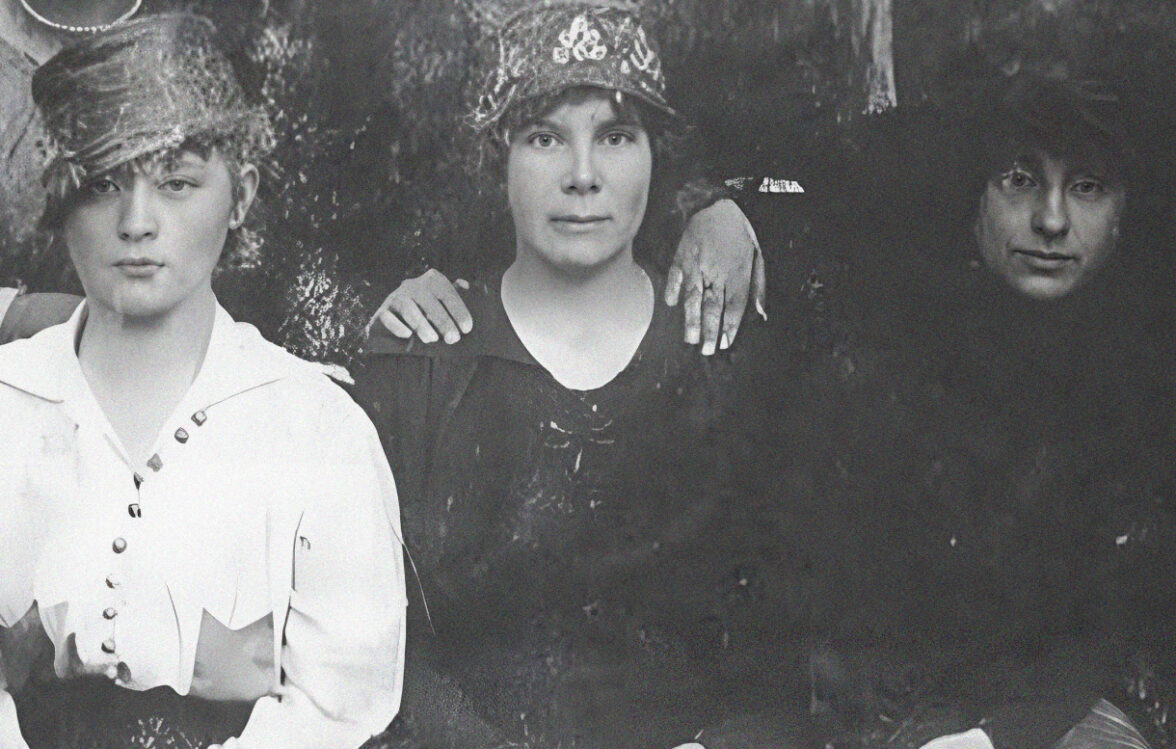
With the onset of Russia’s occupation of Crimea in February 2014, Crimean Tatar women became some of the most vocal representatives of nonviolent resistance. As early as March 3, protests under the slogan “Women of Crimea for Peace” began in cities such as Simferopol, Feodosiia, Saky, Staryi Krym, and Kerch Women of all ages, including mothers with children and elderly participants, took to the streets, lining the roads with Ukrainian and Crimean Tatar flags, holding banners calling for the withdrawal of Russian troops and the boycott of the illegal “referendum” scheduled for March 16, 2014. In total, more than 12,000 women participated in these demonstrations.
Crimean Tatar women are an inseparable part of their people’s struggle. Under temporary occupation, their resistance continues, expanding beyond a national cause to take on global significance.
On International Women’s Day, we honor the remarkable Crimean Tatar women of the 20th century who became symbols of resistance, their lives serving as examples and inspiration for today’s struggle. Their fight for rights and freedoms is significant not only for the Crimean Tatar people but also for the entire international community, as it embodies the preservation of democratic values, the protection of human rights, and the fight against repressive regimes.
Shefika Hasprynska (1886–1975) led the Crimean Tatar women’s movement in the early 20th century. The daughter of the renowned educator Ismail Hasprynskyi, she became a key figure in the women’s emancipation movement in Crimea. In 1905, Shefika became the editor of Alem-i Nisvan (Women’s World), the first women’s magazine in the Muslim world, which was published as a supplement to the newspaper Terjiman. She also served as the Vice Chair of the Central Committee of Muslim Women in Crimea and as the Director of the Simferopol Pedagogical School. In 1917, she was elected a delegate to the First Qurultay of the Crimean Tatar people, where she became the only woman on the presidium. Additionally, four other women were elected as members of the Qurultay.
Sabriie Eredzhepova (1912–1977) was a legendary Crimean Tatar singer and a Distinguished Artist of the Crimean ASSR and the Uzbek SSR. In 1950, she was sentenced to 25 years in labor camps as an “enemy of the people”—her only “crime” was being on the territory of another state. After her exoneration in 1956, she was released, having spent six years in the camps. Sabriie Eredzhepova performed with the Haytarma ensemble, promoting Crimean Tatar culture and music. Her legacy remains a crucial element in understanding the struggle of the Crimean Tatar people.
Vedzhyie Kashka (1934–2017) was a symbol of the unyielding spirit of the Crimean Tatar people. After being deported in 1944, she and her husband became active in the national movement in Tashkent. In 1967, she was among the first to return to Crimea, where her home became a gathering place for underground activist meetings. Vedzhyie took part in all major events, standing as a symbol of the people alongside Mustafa Dzhemilev. Until her last days, she supported political prisoners and opposed the repression faced by Crimean Tatars in their homeland.
Sabriie Seutova (1953–1998) was a dedicated activist in the struggle for the rights of the Crimean Tatar people, as well as a writer, journalist, and public figure. She was born in Kazakhstan, where her family had been deported from Crimea. Throughout her life, she fought tirelessly for the rights of the Crimean Tatar people and for the preservation of their cultural heritage. In December 1987, during a protest in Moscow, Sabriie was brutally beaten and detained, leading to a deterioration in her health. Despite this, she remained actively engaged, speaking at protests, giving lectures, and writing articles. After returning to Crimea in the early 1990s, she was diagnosed with brain cancer, a consequence of the injuries she had sustained. Sabriie Seutova passed away in February 1998, and her death was a significant loss for the Crimean Tatar people.
Zampira Asanova (1941–2018) was a prominent activist of the Crimean Tatar national movement. After her family was deported to Uzbekistan, she actively participated in the struggle for the return of Crimean Tatars to their homeland. Zampira was among the first to return to Crimea in 1968, where she continued her activism—supporting families denied residence registration and advocating for the restoration of national autonomy.
From the early 20th century to the present day, Crimean Tatar women have remained at the forefront of the struggle for their people’s rights. They establish civil organizations, defend political prisoners, support families of the persecuted, and work as citizen journalists, documenting raids and trials. Their activism is rooted in methods of nonviolent resistance, yet they have faced repeated arrests by the occupation administrations. However, these attempts at intimidation have only strengthened their resolve. Their struggle is not only about preserving their people but also about defending democratic values, rights, and freedoms.