10 December 2024
Destruction of Crimean Tatar Identity in Occupied Crimea: How Native Language Education Is Being Restricted
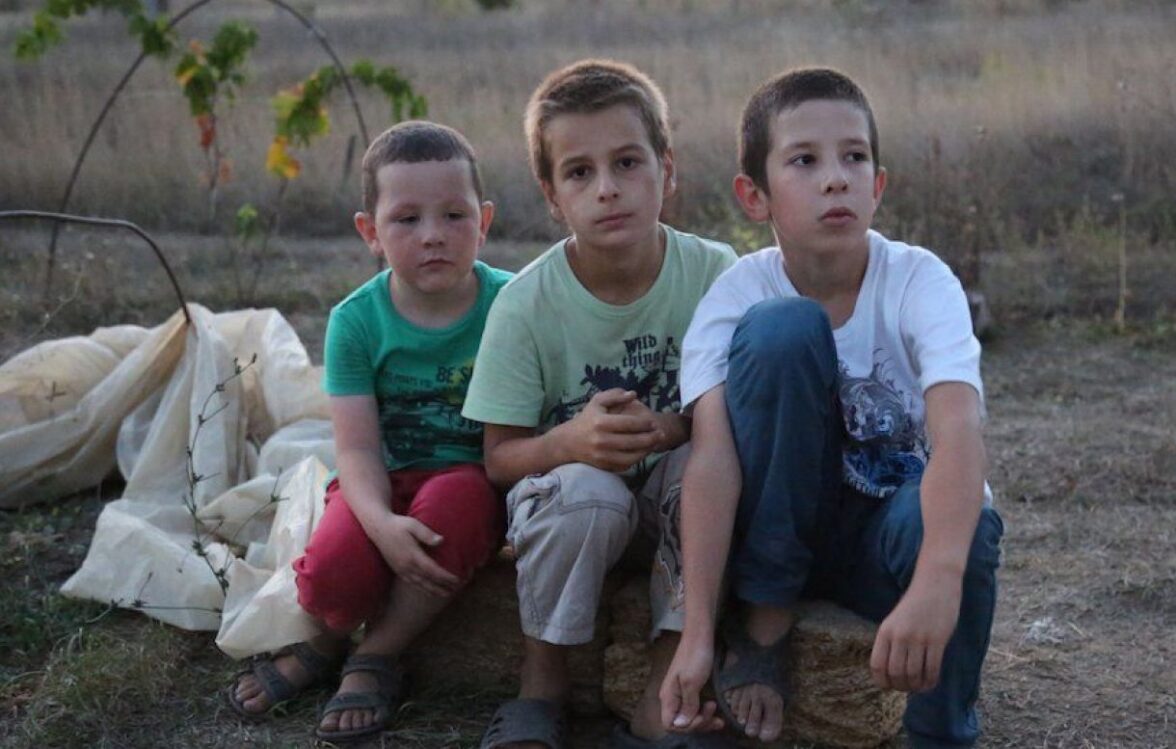
In occupied Crimea, the policy of displacing the Crimean Tatar language from the educational sphere is becoming increasingly apparent. Under the guise of “educational reforms” and “optimization of the learning process,” the occupation administration creates artificial barriers to providing children education in the Crimean Tatar language.
Despite official statements on ensuring access to education in native languages, the reality is quite different. Formally, 15 schools are recognized as institutions intended to provide education in the Crimean Tatar language. However, according to Ilmi Umerov, Deputy Chairman of the Mejlis of the Crimean Tatar People, the actual use of the language in the educational process is minimal. In most schools, the Crimean Tatar language is used only as an optional subject, while the primary instruction is conducted in Russian. This approach is part of Russia’s broader policy of assimilating the Crimean Tatar people.
One of the main methods of restricting native language education is reducing the number of courses taught in the Crimean Tatar language. Before the occupation, there were 384 such courses on the peninsula in 2014. Today, only 119 remain. This reduction creates additional pressure on parents seeking to ensure their children receive education in their native language.
The occupation administration employs various methods to reduce the number of Crimean Tatar courses. For instance, when parents submit applications, they are informed that there are no available places in the Crimean Tatar language courses. At the same time, they are offered an alternative — to enroll their children in Russian-language courses. As a result, children are deliberately directed toward Russian-language courses, even if their parents initially intended for them to study in the Crimean Tatar language.
Another restriction method is the artificial shortage of textbooks in the Crimean Tatar language. According to UNESCO data, only 37% of the demand for educational materials in this language is met. School administrations use this shortage to justify refusing to establish Crimean Tatar language courses. School principals argue that, without textbooks, the educational process would be impossible to organize.
Moreover, the system for incentivizing teachers is structured so that teaching in the Crimean Tatar language becomes economically disadvantageous. Teachers working in such courses do not receive additional payments, which are provided for teachers of Russian-language courses. As a result, many teachers are forced to stop teaching in their native language, further exacerbating the shortage of qualified educators for Crimean Tatar language courses.
In addition to technical restrictions, parents face direct psychological and administrative pressure. In many cases, parents are denied the right to submit an application to open a Crimean Tatar-language class, with the refusal justified by the “lack of available premises,” “lack of textbooks,” or “absence of teachers.”
A striking example occurred in the village of Tsvitochne, Bilohirsk district, where a group of parents demanded that the school administration open a Crimean Tatar-language class. The school principal categorically refused to accept the applications, citing a “lack of available places.” In some cases, school administrators resort to manipulation, trying to convince parents that studying in the Crimean Tatar language “makes no sense,” as future exams would still have to be taken in Russian.
The most high-profile case of language-based discrimination occurred at School No. 37 in Simferopol, where a group of parents requested the creation of a Crimean Tatar-language class. According to eyewitnesses, the school principal responded: “You are nobody here. There will be no Crimean Tatar class.” Despite complaints to the occupation administration’s police and the education department, no disciplinary action was taken against the principal. On the contrary, it was officially stated that she had not been at the school when the parents submitted their applications.
The systematic restriction of education in the Crimean Tatar language is part of a broader policy of assimilation pursued by the occupation administration in Crimea. The primary goal of this strategy is to create a generation disconnected from its native language, history, and cultural heritage. The refusal to open Crimean Tatar language courses, reduced teaching hours, and the artificial shortage of textbooks and teachers are tools to achieve this goal. As a result of these measures, Crimean Tatar children are deprived of the opportunity to receive education in their native language, which leads to the loss of cultural identity and a rupture in generational continuity.
These actions by the occupation administration violate international legal norms, including the United Nations Declaration on the Rights of Indigenous Peoples and the United Nations Convention on the Rights of the Child. The deliberate replacement of the Crimean Tatar language with Russian is an attempt to subordinate the Indigenous people to a foreign cultural system, posing a threat to the long-term survival of the Crimean Tatar national identity.
Photo by Taras Ibragimov